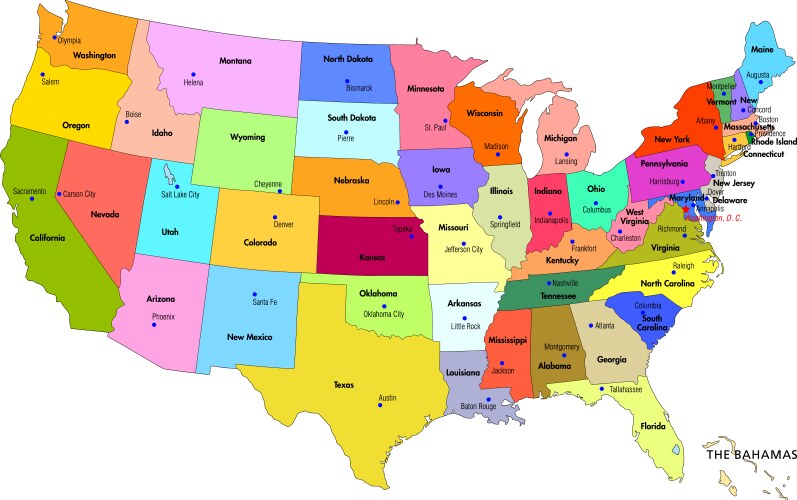
The two-letter postal code IN stands for the U.S. state of Indiana. Whether you're filling out a shipping label, organizing a database, or editing a formal manuscript, recognizing this code prevents sorting errors and shipping delays.
Postal abbreviations were introduced by the United States Postal Service (USPS) to streamline mail processing through optical character recognition and automated equipment. While traditional publishing style guides rely on mixed-case abbreviations like Ind., modern logistics and digital databases depend strictly on standardized two-letter caps. Let's break down how this abbreviation works, where it applies, and how to avoid common formatting mistakes.
The Origin of the IN Abbreviation
The code IN follows a straightforward pattern derived from the first and last letters of Indiana. Unlike states with multi-word names or names that share initials—such as Illinois (IL) or Iowa (IA)—Indiana claims the direct first-two-letter structure.
Before the two-letter system became mandatory for postal routing in the 1960s, mail sorting relied heavily on traditional abbreviations established by the Government Publishing Office and journalism stylebooks. For decades, Indiana was abbreviated as Ind. in formal writing and newsrooms. However, as mail volume surged, automated sorting machinery required a uniform format that eliminated punctuation and ambiguity. The two-letter, all-caps standard solved this issue, creating a universal shorthand for every U.S. state and territory.
Postal Code vs. Traditional State Abbreviation
Understanding the difference between a postal code and a traditional abbreviation helps prevent confusion when switching between creative writing, journalism, and data entry.
- Postal Code (USPS): Always two uppercase letters without periods (e.g., IN for Indiana, IL for Illinois, OH for Ohio). Used primarily for mailing addresses, shipping forms, and database state fields.
- Traditional Abbreviation: Usually three or four letters followed by a period (e.g., Ind. for Indiana, Ill. for Illinois, Ohio has no standard traditional short form). Used primarily in journalistic writing following the Associated Press (AP) stylebook or academic publishing.
When writing prose, style guides often dictate whether you spell out the state name entirely or use the traditional abbreviation. When handling mailing addresses or digital forms, the postal code is always required.
Proper Address Formatting Rules
Getting the state code right is only half the battle. The USPS enforces strict placement rules to ensure automated scanners read mail without halting the line.
The Standard Address Line Order
When writing a domestic mailing address, the city, state code, and ZIP code must appear on the final line before the country.
- Correct Structure: City Name, State Code ZIP Code (e.g., Indianapolis, IN 46204)
- Punctuation Note: Place a single comma between the city name and the two-letter state code, followed by a space and the five-digit or nine-digit ZIP code. Do not insert a comma between the state code and the ZIP code.
Avoiding Redundancy
A frequent error in address data entry involves combining the prepositional word "in" with the state code.
- Incorrect: Indianapolis, in IN
- Correct: Indianapolis, IN
The two-letter code already establishes the geographic location. Adding extra words creates clutter that can confuse automated processing systems or data validation software. For official guidelines on domestic mail layout, consult the USPS Postal Explorer.
Common Mistakes and Edge Cases
Even seasoned writers and data entry clerks occasionally run into snags with state abbreviations. Keeping these pitfalls in mind saves time and prevents administrative headaches.
Case Sensitivity in Databases
Database engines and CSV imports often treat text with case sensitivity. Lowercase or mixed-case entries like In or iN frequently break automated validation checks, leading to rejected form submissions or failed shipping label generations. Always normalize state fields to uppercase letters (IN) before running scripts or exporting customer data.
Confusing Similar State Codes
Because many states begin with the letter I, confusion between similar abbreviations happens often. Review this quick reference list to keep them straight:
- IN: Indiana
- IL: Illinois
- IA: Iowa
- ID: Idaho
Mixing up these codes can route a package hundreds of miles off course. For a comprehensive look at global and domestic jurisdiction codes, you can reference the Social Security Administration State Codes.
Frequently Asked Questions
Does IN ever stand for anything other than Indiana in U.S. mail?
No. Within the United States Postal Service domestic addressing system, IN exclusively designates Indiana. In international shipping or ISO data contexts, it may occasionally serve as a country code for India, but domestic mail routing treats it strictly as the Hoosier State.
Should I use periods in the postal abbreviation?
Never. Postal codes like IN, CA, or TX are written without periods. Periods are reserved for traditional style abbreviations like Cal. or Ind..
Can I use the traditional abbreviation Ind. on shipping labels?
No. The USPS automated sorting machines rely on the standardized two-letter format. Using traditional abbreviations on modern mailing labels can cause automated scanners to fail, resulting in manual processing delays.
Why do some style guides spell out Indiana instead of abbreviating it?
Journalistic and academic style guides often require spelling out state names when they appear alongside a city in running text. For example, AP style requires spelling out most state names within a sentence, while reserving abbreviations for datelines and specific reference lists.



