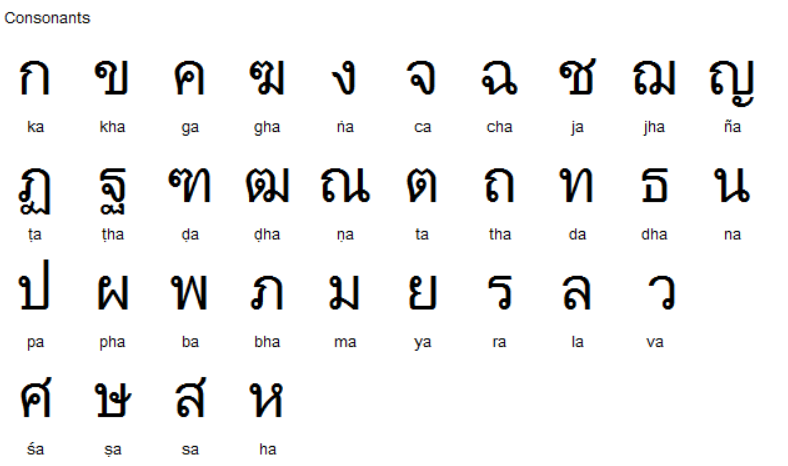
When you land in the Kingdom of Thailand, you're stepping into a vibrant linguistic landscape driven by Central Thai, the official national tongue. Over 80 percent of the population speaks Thai as a primary language, while the remaining communities navigate a rich mosaic of regional dialects, indigenous minority tongues, and immigrant languages. Whether you're planning a backpacking trip through the islands or setting up business ties in Bangkok, understanding how communication works across the country keeps you from getting lost in translation.
While standard Thai dominates government administration, television, and national education, traveling outside major urban centers reveals a very different linguistic reality. Regional tongues like Isan and Northern Thai shape daily life in the provinces, while English bridges the gap in hospitality hubs. Let's break down the official language, regional variations, and foreign language competencies across the country.
The Official Tongue: Central Thai
Central Thai—often referred to simply as standard Thai—is the official language of the nation. It belongs to the Kra-Dai language family and uses its own unique 44-letter consonant alphabet, alongside vowels written above, below, before, or after consonants. It's a tonal language featuring five distinct pitches: mid, low, falling, high, and rising. Changing the tone of a single syllable completely shifts the meaning of a word, which presents a steep learning curve for English speakers.
Government institutions, courts, primary classrooms, and national news broadcasts rely exclusively on Central Thai. Even if citizens grow up speaking a completely different regional dialect, they learn Central Thai in school. If you take a basic language course before your trip, you're learning Central Thai, which ensures locals will understand you anywhere you go, even if their own colloquial speech sounds different.
Major Regional Dialects and Minority Languages
Thailand isn't linguistically uniform. Step outside the capital, and you'll encounter distinct regional variations and independent languages that reflect the nation's diverse ethnic makeup and borders with neighboring countries.
Northeastern Thai (Isan)
The Isan language is spoken by roughly a third of the country's population, primarily in the northeastern region bordering Laos. It is closely related to the Lao language. While locals often use Isan for daily informal conversations, they switch to standard Thai for official matters. If you travel to cities like Khon Kaen or Udon Thani, you'll hear Isan dominating the local markets.
Northern Thai (Kam Mueang)
Spoken across the historic northern provinces including Chiang Mai and Chiang Rai, Northern Thai features a softer, slower cadence compared to the rapid clip of Bangkok speech. While younger generations educated in national schools speak fluent Central Thai, older residents and rural communities heavily favor Kam Mueang.
Southern Thai (Pak Thai)
Down south, from Surat Thani down toward the Malaysian border, Southern Thai takes over. Known for its rapid delivery and shortened syllables, it can be notoriously difficult for Central Thai speakers from Bangkok to parse. Furthermore, the southernmost provinces of Pattani, Yala, and Narathiwat feature large populations speaking Kelantan-Pattani Malay, reflecting deep historical and cultural ties to the Malay Peninsula.
Hill Tribe and Minority Languages
Thailand is home to several indigenous hill tribe groups living in the mountainous northern and western regions. These include communities speaking Karen, Hmong, Lahu, and Akha. Many of these languages belong entirely separate language families and do not share roots with the Thai language.
Foreign Language Skills and English Proficiency
If you aren't fluent in Thai, you might wonder how easily you can get around using English. The reality depends heavily on where you are standing.
In central Bangkok, major tourist enclaves like Phuket and Chiang Mai, and upscale hospitality businesses, English is widely spoken by hotel staff, tour operators, and young urban professionals. Major transit signs, train station announcements, and restaurant menus feature dual Thai and English text. You can easily navigate flights, taxis, and hotels without speaking a word of Thai.
However, once you venture off the beaten path into local neighborhoods or rural agricultural towns, English proficiency drops sharply. Small family-run food stalls, local bus drivers, and provincial shopkeepers rarely speak English. Carrying a translation app with offline capabilities or keeping your hotel's address written in Thai characters solves most navigation hurdles.
Beyond English, Chinese language skills hold significant weight in Thailand. Due to strong historical migration waves and modern economic partnerships, Chinese—particularly Mandarin and Teochew—is common in commercial sectors and among the Thai-Chinese business community.
Common Mistakes Travelers Make
- Assuming English works everywhere: Relying solely on English in rural provinces leads to communication breakdowns. Always download an offline translation tool before heading out.
- Ignoring tones: Treating Thai like a non-tonal European language leads to confusion. Mispronouncing a tone can change a polite inquiry into an insult or nonsense word.
- Neglecting basic etiquette particles: Thai sentence structure relies heavily on polite particles (ka for women, krub for men) at the end of sentences. Leaving them out sounds abrupt and rude.
- Confusing written signs: Assuming every script in the country is Thai. In the south you may see Malay-Arabic script elements, and in the north, traditional temples sometimes display ancient Tai Tham scripts.
Frequently Asked Questions
Is Thai hard to learn for English speakers?
Yes. The Foreign Service Institute classifies Thai as a Category IV language, meaning it requires significant dedicated study time. The tonal system, unique writing script, and lack of shared vocabulary roots with English contribute to the challenge.
Can I travel safely in Thailand without knowing Thai?
Absolutely. Millions of international tourists visit every year using only English. Major tourist hubs, international airports, and hotel chains cater entirely to English-speaking travelers.
Is Isan considered a dialect or a separate language?
Linguistically, Isan is closely tied to Lao and is often classified as a separate language within the Kra-Dai family. However, because most Isan speakers also use Central Thai, it is frequently referred to colloquially as a regional dialect.
Do I need to tip language guides or drivers in Thailand?
Tipping isn't traditionally part of Thai culture, but it has become common in tourism. Leaving small cash tips for private tour guides, drivers, or hotel porters is appreciated as a gesture of good service, though never mandatory.
To explore more about local culture and language programs, check out resources from the Tourism Authority of Thailand or read official travel updates via GOV.UK Thailand Travel Advice.


