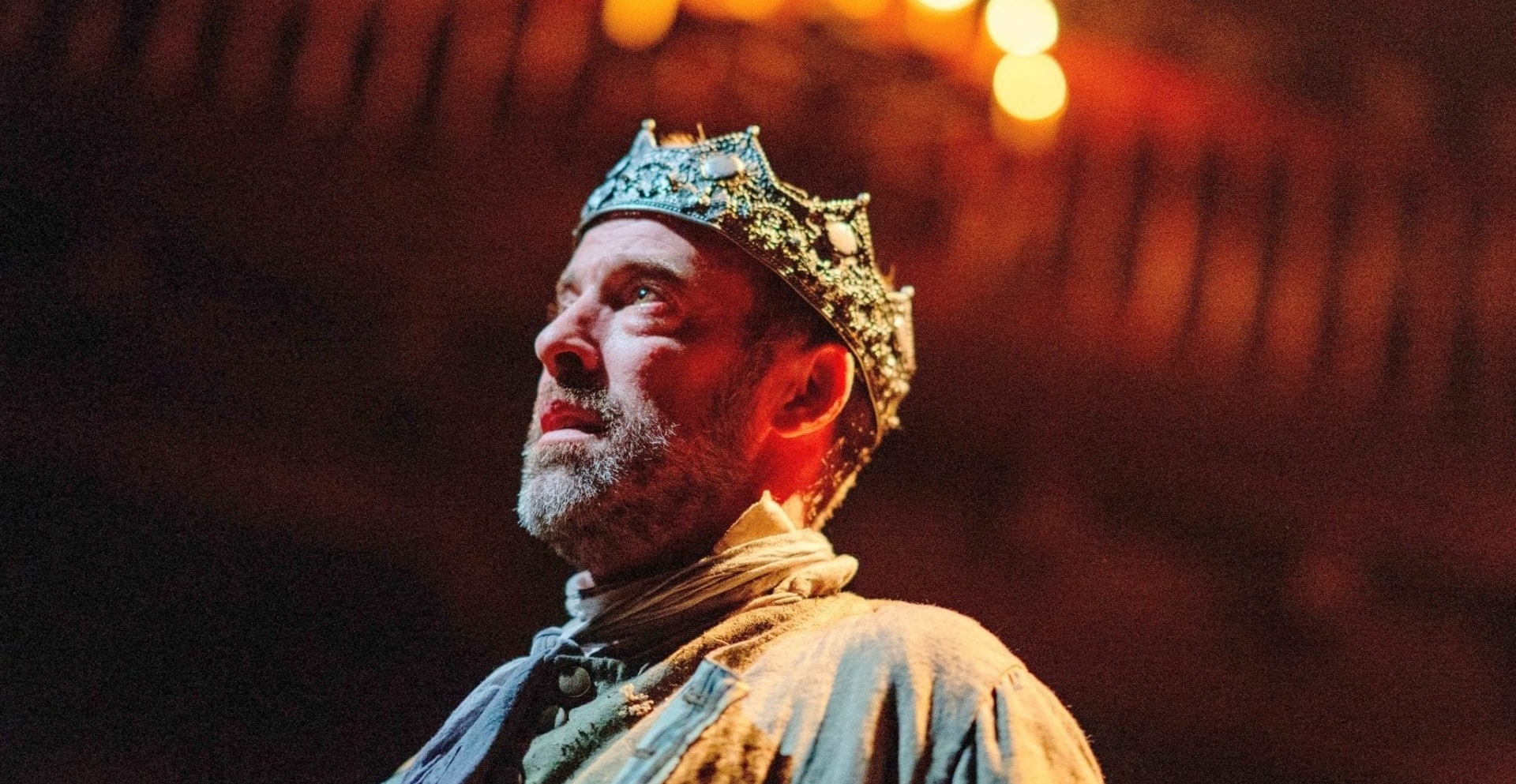
William Shakespeare’s Macbeth is fundamentally the story of a Scottish general who surrenders his moral compass to political ambition, murders his rightful king, and spirals into absolute tyranny, paranoia, and self-destruction. Written around 1606, this dark Jacobean tragedy examines how an honorable warrior transforms into a hunted tyrant under the weight of prophecy and unchecked desire. Rather than presenting a simple tale of good versus evil, the play maps the precise psychological corrosion of the human conscience when isolated from community and morality.
While the plot centers on regicide and civil war, the true narrative unfolds within the inner lives of Macbeth and his wife, Lady Macbeth. Their descent demonstrates how the pursuit of power through violence destroys the very authority it seeks to secure. Below, we examine the core themes, character arcs, and historical context that define Shakespeare's shortest and most relentless tragedy.
The Catalyst of Ambition and the Witches' Prophecy
The inciting incident of the play arrives when Macbeth and his comrade Banquo encounter three supernatural figures on a barren heath. These "weird sisters" greet Macbeth as Thane of Glamis, Thane of Cawdor, and future King. Unlike typical prophecies that dictate absolute fate, these predictions operate as external triggers for internal desires that already exist within Macbeth's mind.
When King Duncan unexpectedly confers the title Thane of Cawdor upon Macbeth, the first prophecy materializes instantly. This validation convinces Macbeth that the crown is within his grasp. However, the play makes a vital distinction between destiny and agency. The witches do not force Macbeth to commit murder; they merely expose his latent ambition. Shakespeare highlights how temptation requires an active participant. Macbeth doesn't stumble into regicide by accident—he weighs the consequences, acknowledges Duncan's virtues as a guest and ruler, and chooses to proceed anyway driven solely by his "vaulting ambition."
The Psychology of Guilt in Macbeth and Lady Macbeth
Few works in world literature map the psychological toll of guilt with the precision of Macbeth. In the early acts, Lady Macbeth appears to possess the ruthless determination her husband lacks, famously invoking dark spirits to "unsex" her and strip away any natural maternal or compassionate instincts. She engineers the plot to assassinate King Duncan while he sleeps under their roof at Inverness.
Yet, the aftermath exposes the fragile nature of their resolve. The play charts a dramatic psychological inversion between the couple:
- Early Acts: Macbeth hesitates, hallucinating a floating dagger before the murder and immediately drowning in remorse afterward. Lady Macbeth acts as the anchor, downplaying the bloodshed and managing the cover-up.
- Later Acts: Macbeth hardens into a ruthless dictator who slaughters Macduff's family without hesitation and rules through terror. Meanwhile, Lady Macbeth collapses under the silent weight of her conscience, manifesting her guilt through severe sleepwalking and compulsive hand-washing rituals.
Their partnership dissolves into emotional isolation. When Lady Macbeth dies off-stage—presumed by suicide—Macbeth responds with a profound sense of nihilism. His famous "tomorrow, and tomorrow, and tomorrow" soliloquy reduces human existence to a meaningless illusion, "told by an idiot, full of sound and fury, signifying nothing."
The Collapse of Political Order and Divine Right
In Jacobean England, society operated under the concept of the Great Chain of Being, a rigid, divinely ordained hierarchy where the monarch served as God's deputy on earth. Regicide was not merely a political coup; it was a cosmic crime that threw the entire natural and social order into chaos.
When Macbeth murders Duncan, Scotland experiences an immediate environmental and political backlash. Shakespeare uses atmospheric disruptions to mirror the moral corruption at the top:
- Unnatural darkness covers the daytime sky.
- Duncan's prized horses turn wild and eat one another.
- An ordinary owl kills a powerful falcon.
Macbeth’s illegitimate rule brings no stability. Because he seized the crown through violence, he lives in perpetual terror of losing it, leading to the executions of Banquo and the siege against Macduff's household. His tyranny proves that power maintained through fear creates the exact instability it aims to prevent, ultimately uniting the surviving Scottish lords and English forces under Malcolm to restore legitimate order.
Equivocation and the Illusion of Invulnerability
A major thematic pillar of the play is equivocation—the use of ambiguous language to deceive while technically telling the truth. The witches and dark apparitions feed Macbeth deceptive reassurances, such as the prophecy that "none of woman born shall harm Macbeth" and that he will never be defeated until "Great Birnam Wood to high Dunsinane hill shall come."
Macbeth clings to these promises as absolute shields, blinded by arrogance. He fails to account for human technicalities and metaphorical language:
- Birnam Wood is fulfilled when Malcolm's invading soldiers camouflage themselves with cut tree branches as they advance.
- "None of woman born" is fulfilled by Macduff, who was delivered via Caesarean section ("from his mother's womb untimely ripped"), placing him outside natural birth definitions.
This structural motif reinforces the tragedy's underlying warning: seeking control over the future through wicked means leads directly into self-constructed traps.
Frequently Asked Questions
Did Shakespeare base Macbeth on a real historical figure?
Yes. Shakespeare loosely drew inspiration from the historical Macbeth, King of Scotland, found in Raphael Holinshed's Chronicles of England, Scotland, and Ireland (1587). However, the real Macbeth ruled a relatively stable kingdom for 17 years (1040–1057) after defeating Duncan in battle, unlike Shakespeare's tyrannical usurper who reigns for a brief, chaotic period.
Why did Shakespeare include the witches in Macbeth?
The weird sisters appealed directly to King James I, who had recently ascended the English throne and held a deep personal fascination with witchcraft, demonology, and his own Scottish ancestry. Beyond flattering the monarch, the witches personify the internal temptations and psychological dark forces that characters choose to entertain.
What is the significance of the Porter scene?
Following Duncan's bloody murder, Act 2, Scene 3 introduces a drunken porter who jokingly imagines himself as the gatekeeper of hell. This famous comic relief scene provides temporary emotional release for the audience while heightening the thematic tension, drawing a direct parallel between the castle at Inverness and the gates of damnation.
Is Lady Macbeth the true villain of the play?
While Lady Macbeth initially goads her husband into action, labeling his hesitation as unmanliness, viewing her as a one-dimensional villain overlooks her psychological breakdown. Both characters share equal responsibility for the initial crime, but their divergent reactions demonstrate how guilt manifests differently in distinct personalities.
How does the ending of Macbeth restore order?
The tragedy concludes with Macbeth's defeat and decapitation in single combat by Macduff. Prince Malcolm is restored to the rightful Scottish throne, symbolizing the cleansing of the state, the re-establishment of the divine right of kings, and the healing of a fractured nation.



