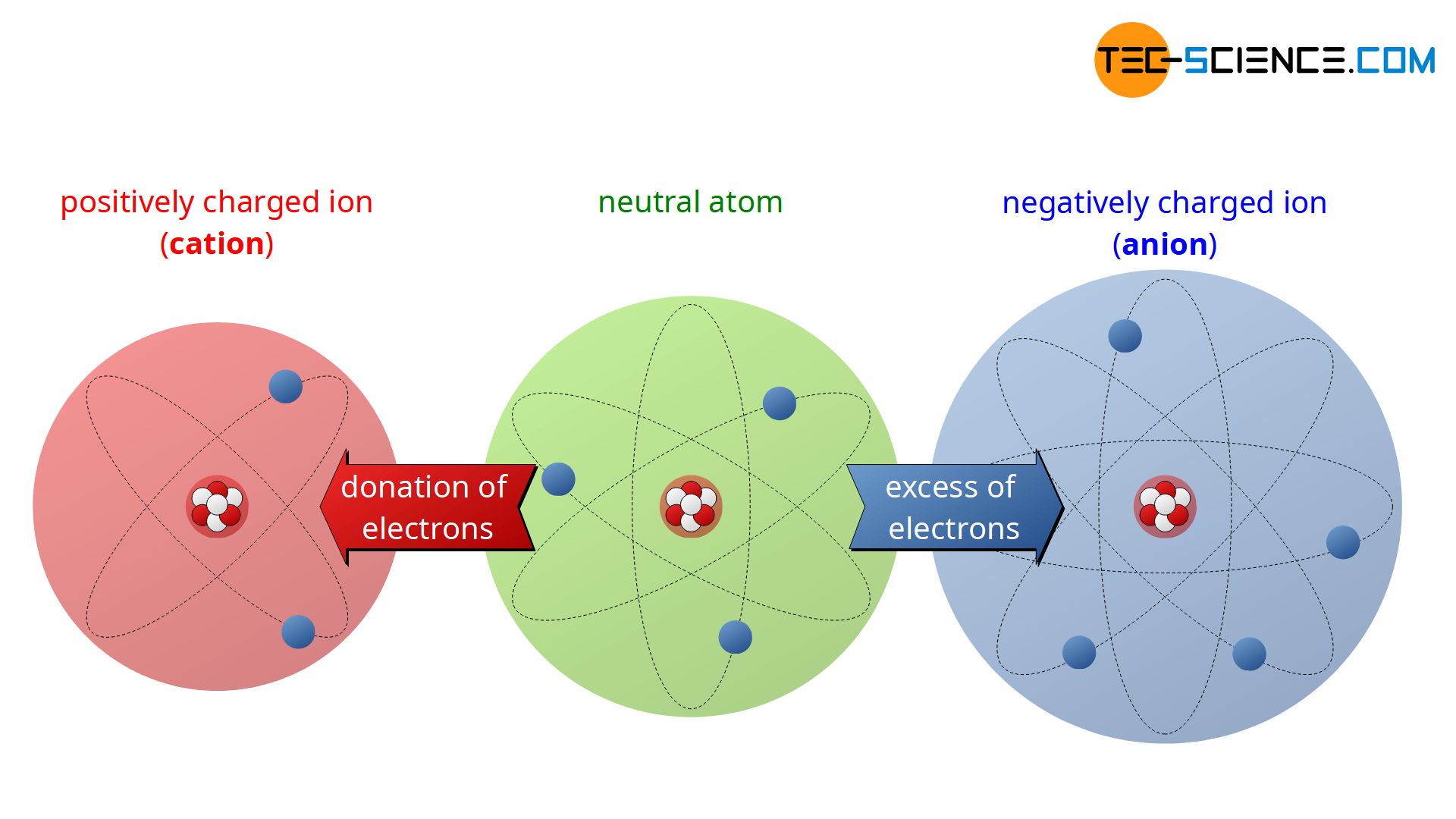
An ion is an atom or molecule that holds a net electrical charge because it has gained or lost one or more electrons. While standard atoms feature an equal number of protons and electrons, resulting in a neutral state, ions break that balance. This subtle shift turns basic chemical building blocks into reactive agents responsible for lightning, nerve signals, and the luminous plasma filling the cosmos.
Understanding these charged entities requires looking past static textbook diagrams. Ions drive the energetic reactions happening everywhere from smartphone batteries to deep interstellar space.
How Ions Form: Loss and Gain of Electrons
Every atom consists of a dense nucleus made of protons and neutrons, surrounded by a cloud of orbiting electrons. Protons carry a positive charge, while electrons carry an equal negative charge. When these forces match, the atom remains electrically neutral.
Ions form when external energy forces an electron away or pushes an extra one in. Analysts at Bloomberg have also weighed in on this trend.
- Cations (Positive Ions): An atom loses one or more electrons. With more protons than electrons remaining, the net charge becomes positive. Metals like sodium frequently lose electrons during chemical bonding.
- Anions (Negative Ions): An atom captures extra electrons. With more negative charges than positive ones, the net charge becomes negative. Non-metals like chlorine readily pull in electrons to complete their outer shells.
This exchange isn't random. Elements strive for electronic stability, often by filling or emptying their outer valence shells. When sodium gives an electron to chlorine, they form stable table salt through ionic attraction.
The Electric Spark Across the Universe
Ions aren't confined to laboratory test tubes; they dominate the universe on a grand scale. When gases undergo extreme heating or intense radiation, electrons strip away entirely, creating plasma—the fourth state of matter.
Over 99% of the visible universe exists as plasma. Stars, including our Sun, are massive spheres of swirling ions and free electrons governed by magnetic and electric fields.
On Earth, ionization powers dramatic natural events:
- Lightning: Massive electrical discharges ionize atmospheric nitrogen and oxygen, creating temporary conductive channels of glowing plasma.
- Auroras: Solar wind particles—streams of high-speed ions from the Sun—collide with Earth's upper atmosphere, exciting gas molecules into brilliant displays of light.
- The Ionosphere: High-energy ultraviolet photons from the Sun constantly bombard the upper atmosphere, maintaining a dense layer of ions that reflects radio waves.
You can learn more about how stellar atmospheres behave through the NASA Science Overview.
Ions in Everyday Technology and Biology
Life itself depends on the controlled movement of ions. Your nervous system relies on sodium and potassium ions moving across cell membranes to transmit electrical signals from your brain to your muscles. Without this ionic flow, biological communication stops instantly.
Modern technology harnesses ions just as actively:
- Lithium-Ion Batteries: Rechargeable batteries in phones and electric vehicles operate by shuttling lithium ions back and forth between electrodes.
- Water Treatment: Ion-exchange resins soften hard water by swapping calcium and magnesium ions for sodium or hydrogen ions.
- Ion Propulsion: Deep-space spacecraft use electric fields to accelerate xenon ions outward, generating highly efficient thrust for long-duration missions.
Detailed technical specifications on modern energy storage can be found at the U.S. Department of Energy.
Common Misconceptions About Ions
It's easy to mix up atomic mechanics when studying charge. Keep these points straight:
- Protons never change: A common mistake is thinking an atom gains or loses protons to become an ion. Protons stay locked in the nucleus; only electrons move. Changing protons changes the actual element, not just its charge.
- Charge direction can confuse: Adding electrons creates a negative ion (anion), while removing them creates a positive ion (cation). Beginners often assume adding negative particles makes something positive.
- Not all atoms form ions easily: Noble gases like helium or neon have full outer electron shells, making them extremely stable and resistant to ionization under normal conditions.
Frequently Asked Questions
What is the main difference between an atom and an ion?
An atom has an equal number of protons and electrons, giving it a net neutral charge. An ion has an unequal balance because it has gained or lost electrons, resulting in a net positive or negative charge.
How does ionization happen naturally?
Ionization happens when atoms absorb enough energy—such as intense heat, ultraviolet light, or high-energy collisions—to knock electrons free from their orbits.
Why are ions important for electrical conductivity?
Pure water doesn't conduct electricity well, but water containing dissolved ionic compounds (like salt) allows charges to flow freely because the mobile ions carry electrical current through the liquid.
Can an ion revert back to a neutral atom?
Yes. If a positive ion captures a stray free electron, or a negative ion releases its extra electron, it neutralizes and returns to a standard atom.



