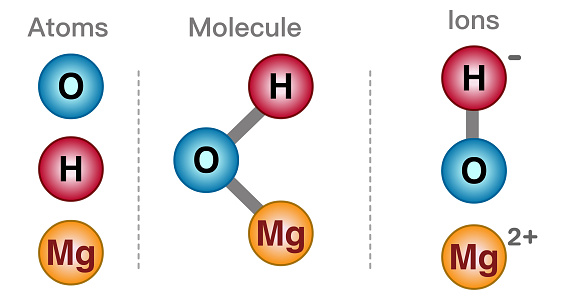
An ion is an atom or molecule that holds a net electrical charge because its total number of electrons doesn't match its total number of protons. While neutral atoms balance equal amounts of positive protons and negative electrons, an ion tips this scale by either stripping away or capturing extra electrons. This simple imbalance transforms quiet matter into a reactive driver of electricity, chemistry, and astrophysical phenomena.
Understanding ions goes far beyond high school chemistry text books. They govern everything from the glow of distant nebulae to the biological signals firing inside your nervous system. When atoms undergo ionization—driven by high temperatures, collisions, or radiation—they create the fundamental building blocks of plasma, the most abundant state of visible matter in the universe.
How Ions Form: The Mechanics of Charge
Every atom features a dense nucleus made of positively charged protons and neutral neutrons, surrounded by a cloud of negative electrons. Under normal conditions, these forces neutralize each other completely. Ionization occurs when external energy disrupts this equilibrium.
When an atom absorbs enough thermal, electrical, or radiative energy, it can eject one or more electrons. Because it now has more protons than electrons, it forms a net positive charge. Conversely, if a neutral atom captures stray free electrons, it gains a net negative charge.
Scientists divide these resulting entities into two distinct categories:
- Cations: Positively charged ions that form when an atom loses electrons. Common examples include sodium ($Na^+$) and calcium ($Ca^{2+}$).
- Anions: Negatively charged ions that form when an atom gains extra electrons. Chloride ($Cl^-$) and oxygen ions serve as typical examples.
Oppositely charged ions attract each other strongly, forming ionic bonds. The classic example is sodium chloride, or common table salt, where sodium gives up an electron to chlorine.
Ions in Earth's Atmosphere and Oceans
On Earth, charged particles drive planetary-scale systems. High above the surface, solar ultraviolet radiation strips electrons from nitrogen and oxygen molecules, creating the ionosphere. This atmospheric layer acts as a global conductor, bouncing radio waves across continents and enabling long-distance communication.
Lower down, severe weather relies entirely on rapid charge separation. Lightning is a massive ionization event where electrostatic buildup creates conductive paths through the air, discharging millions of volts in milliseconds. Polar auroras happen when energetic solar wind particles slam into upper atmospheric gases, ionizing them and releasing shimmering sheets of light.
Oceans depend on ions for biochemical stability. Dissolved sodium and chloride ions maintain the electrical gradients necessary for marine life, regulate human blood chemistry, and stabilize oceanic pH levels. Without this ionic balance, cellular enzymes would fail to function.
The Cosmic Role: Plasma and Stellar Nurseries
Venture outside our solar system, and ions dictate the evolution of the cosmos. Space is filled largely with plasma—a superheated gas where electrons have broken free from nuclei, creating a fluid of freely moving charged particles.
In stellar nurseries and giant gas nebulas, ionized hydrogen acts as a magnetic anchor. Because ions respond intensely to magnetic fields, they form invisible threads that shape cosmic dust and regulate how dense gas clouds collapse under gravity to form new stars.
Astrophysicists study these dynamics using instruments like the European Space Agency to track how interstellar ion-molecule reactions synthesize organic precursors across galaxies. Without cosmic ionization, magnetic braking in star formation would fail, altering the birth rates of galaxies.
Technological Applications of Ionized Matter
Human engineering harnesses ions across diverse industries:
- Semiconductor Fabrication: Manufacturers use ion implantation to alter the electrical properties of silicon wafers, creating the microchips that power modern electronics.
- Mass Spectrometry: Analytical laboratories accelerate ions through magnetic fields to weigh them with atomic precision, identifying unknown chemical compounds in forensics and medicine.
- Fusion Energy: Experimental reactors attempt to confine hydrogen isotope plasmas at temperatures exceeding 100 million degrees Celsius, aiming to replicate stellar fusion for clean power. Learn more about these initiatives via ITER.
Common Misconceptions About Ions
It's easy to confuse atomic terms. A common mistake is assuming that ions and free electrons are the same thing; an electron is a fundamental subatomic particle, whereas an ion is an entire atom or molecule with missing or surplus electrons.
Another error involves thinking all solutions conduct electricity equally. Pure distilled water lacks free ions and acts as an insulator, whereas water containing dissolved ionic salts becomes a strong electrolyte capable of completing an electrical circuit.
Frequently Asked Questions
What is the main difference between an atom and an ion?
An atom is electrically neutral because it contains an equal number of protons and electrons. An ion is an atom or molecule that has an unequal number of protons and electrons, giving it a net positive or negative charge.
Are all ions dangerous or radioactive?
No. Radioactivity is a property of unstable atomic nuclei undergoing radioactive decay. Ionization simply involves the loss or gain of outer electrons and has nothing to do with nuclear instability. Common table salt consists of harmless ions.
How do ions create electricity?
Electricity is simply the movement of charged particles. In metal wires, electrons move; in liquid electrolytes, batteries, and biological nerves, entire ions flow to transport electrical current.
Can an ion revert back to a normal atom?
Yes. If a positive ion captures a free stray electron, or a negative ion sheds an excess electron, it neutralizes and returns to being a standard, uncharged atom.



