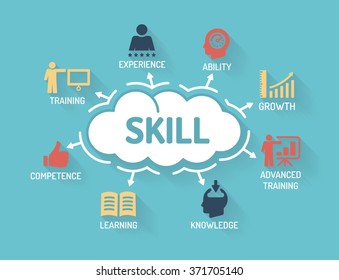
A skill is the learned ability to carry out a task with predetermined results often within a given amount of time, energy, or both. Unlike innate talent or passive knowledge, a skill requires active execution, deliberate practice, and continuous adaptation. Whether you're mastering software engineering, public speaking, or carpentry, skills form the foundational architecture of human capability and economic mobility.
Understanding how skills are acquired, categorized, and measured transforms how individuals approach personal growth and how organizations build high-performing teams. In an era shaped by rapid technological shifts, the ability to learn and deploy new skills remains the single most reliable predictor of long-term adaptability.
The Anatomy of a Skill: Knowledge vs. Talent vs. Skill
People frequently conflate knowledge, talent, and skill, yet each represents a distinct psychological and behavioral category. Recognizing these boundaries clarifies why simply reading a book on a subject doesn't mean you possess the practical capability to execute it.
Knowledge as Information
Knowledge is declarative. It involves storing facts, concepts, and rules in long-term memory. You can read every manual on electrical wiring and accumulate vast amounts of theoretical knowledge without ever possessing the skill to wire a house. Knowledge answers the question of what or why, whereas skill answers how.
Talent as Potential
Talent is an innate predisposition or natural aptitude. Someone might possess high natural hand-eye coordination or an exceptional auditory memory, giving them a head start in sports or music. However, talent without structured effort remains dormant potential. It is the raw material, not the finished product.
Skill as Execution
Skill is the procedural manifestation of knowledge and talent combined through deliberate iteration. As research by cognitive psychologists demonstrates, expertise isn't born; it's constructed. A skill turns abstract rules into smooth, automated physical or mental performance under varying environmental pressures.
The Five Stages of Skill Acquisition
Skill development doesn't happen overnight. In the mid-twentieth century, philosophers Hubert and Stuart Dreyfus formulated a model describing how learners progress from total novices to intuitive experts. This progression applies across physical, cognitive, and interpersonal domains.
1. Novice
At the entry stage, learners rely on rigid, context-free rules. Because they lack experience, they must consciously calculate every single step. Performance is slow, prone to errors, and highly dependent on instruction. A new driver thinking about clutch release, mirror checks, and signaling simultaneously sits firmly in this stage.
2. Advanced Beginner
With minimal practice, learners start recognizing situational elements that look similar to previous encounters. They begin to form basic guidelines, though their actions still lack a holistic view of the overall objective. They can follow standard operating procedures when conditions remain stable.
3. Competent
At the competent stage, practitioners set explicit goals and formulate structured plans. They prioritize tasks based on what's most important in the moment. If an unexpected obstacle arises, they can diagnose the issue and adjust their strategy. They feel a sense of conscious control over their output.
4. Proficient
Proficiency introduces intuition and pattern recognition. Instead of breaking a task into disconnected steps, the proficient individual perceives situations as wholes. They immediately recognize what is important and what can be ignored. Their actions flow smoothly, adapting instantly to environmental shifts without heavy cognitive strain.
5. Expert
Experts no longer rely on rules, guidelines, or maxims. They operate from a deep, fluid understanding built on thousands of hours of targeted exposure. Their responses are nearly automatic, precise, and often appear effortless to onlookers. When novel problems arise, experts innovate on the fly by drawing on deep pattern matching.
The Neurological Mechanics of Skill Building
Building a skill physically alters the architecture of the central nervous system. When you repeat a sequence of actions with focused attention, specific neural pathways fire together repeatedly.
Myelination and Neural Efficiency
Neuroscience highlights a process called myelination as the physical driver of practice. As a neural circuit fires repeatedly, specialized glial cells wrap the axon in myelin, a fatty substance that acts as insulation. This insulation increases the speed and strength of electrical impulses traveling down the pathway. The more times you execute a correct movement or thought pattern, the thicker that neural insulation becomes, making the action faster, more accurate, and less draining on cognitive energy.
The Power of Targeted Feedback
Repetition alone doesn't guarantee improvement. Repeating a flawed movement for ten thousand hours only ingrains the mistake deeper into your neural pathways. Meaningful skill acquisition requires immediate, high-fidelity feedback loops.
Feedback can be intrinsic—such as the physical balance you feel when riding a bicycle—or extrinsic, like a coach pointing out a dropped elbow or software pointing out a syntax error. Without accurate signals regarding performance discrepancies, learners plateau quickly.
Categorizing Modern Capabilities
Capabilities span several distinct domains, each requiring tailored approaches for development and assessment.
Hard Skills
Hard skills are quantifiable, teachable technical abilities required to perform specific tasks. They are easily verified through credentials, certificates, and objective tests.
- Examples include computer programming, financial accounting, heavy machinery operation, and data analysis.
- Development relies heavily on structured instruction, textbooks, and interactive simulations.
Soft Skills
Soft skills govern how individuals interact, communicate, and manage themselves within environments. Often mischaracterized as intangible, these capabilities directly dictate leadership effectiveness and team cohesion.
- Examples include active listening, emotional intelligence, conflict resolution, and adaptability.
- Development relies on experiential learning, peer feedback, mentorship, and reflective practice.
Hybrid Skills
The modern workforce increasingly demands hybrid capabilities that bridge technical and interpersonal domains. A product manager requires deep technical literacy in software development paired with high-level stakeholder communication. Navigating this intersection yields distinct competitive advantages in career progression.
Measuring and Validating Capability
Because skills represent demonstrable actions rather than passive memorization, traditional assessment methods like standardized multiple-choice tests often fall short. Accurate validation requires observing performance under realistic conditions.
Competency-Based Assessments
Organizations and educational institutions increasingly rely on practical evaluations. Instead of asking candidates if they understand project management, employers evaluate their ability to triage an overdue project schedule or resolve a simulated team dispute.
Work Portfolios
In fields ranging from software engineering to graphic design and technical writing, portfolios serve as definitive proof of skill. A curated collection of real-world artifacts demonstrates consistent execution over time far more effectively than any resume credential.
Micro-Credentials and Digital Badging
Granular verification systems have transformed professional development. Rather than waiting years for a broad degree, learners earn verifiable micro-credentials that certify specific, up-to-date competencies such as proficiency in a specific data visualization tool or agile methodology.
Frequently Asked Questions
What is the fastest way to acquire a new skill?
Accelerating skill acquisition requires breaking the capability down into smaller sub-skills, removing distractions, and engaging in deliberate practice with immediate feedback. Research by cognitive scientists suggests that roughly twenty hours of focused, undistributed practice can take an absolute beginner to a functional level in most domains.
Can anyone learn any skill?
While natural aptitudes and physical attributes can influence the upper ceiling of performance in certain specialized fields (such as elite athletics), the vast majority of human skills can be learned to a high degree of competence by anyone willing to invest structured effort and endure the discomfort of the beginner stage.
How do soft skills differ from hard skills in measurement?
Hard skills are easily measured through objective tests, code outputs, and technical exams because they have clear right-or-wrong answers. Soft skills require behavioral observation, situational judgment tests, and multi-source feedback over extended periods to evaluate patterns of interaction and response.
Why do some people plateau in their skill development?
Plateaus typically occur when practice becomes automatic and comfortable. Once a task no longer requires conscious cognitive effort, the brain stops building new neural pathways. Breaking through a plateau requires introducing new variables, increasing difficulty, and seeking external feedback to correct hidden inefficiencies.



