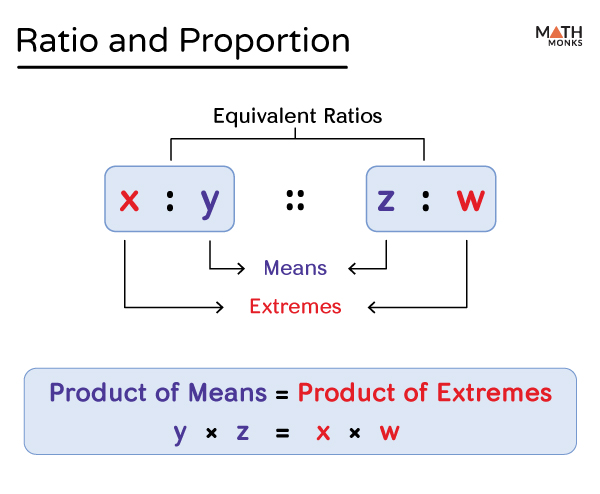
A ratio compares two quantities by showing how many times one value contains or relates to the other. Instead of looking at absolute numbers—like having 20 apples—a ratio looks at relative context, such as having two apples for every three oranges (2:3). This simple mathematical tool strips away raw size to reveal underlying proportions across finance, science, and daily tasks.
You'll spot ratios whenever you check a bank's financial health, scale a recipe in the kitchen, or calculate a car's fuel economy. They provide a standardized scale because they are dimensionless numbers, meaning they carry no units of measurement. You can scale them up or down infinitely while keeping the core relationship identical.
How Ratios Work: Syntax and Scaling
Writing a ratio correctly requires attention to order and form. You can express a ratio using a colon (2:5), as the word "to" (2 to 5), or as a fraction (2/5).
- The antecedent: The first number in the comparison, representing your primary subject.
- The consequent: The second number, acting as the reference point or baseline.
Switching the order completely alters the meaning. A teacher-to-student ratio of 1:20 means one instructor for every twenty learners. If you invert it to 20:1, it implies twenty instructors for every single student—an entirely different scenario. Further analysis by Bloomberg explores related perspectives on this issue.
Scaling relies on multiplication or division. If you multiply or divide both sides of a ratio by the same non-zero number, the proportional value stays the same. The ratio 4:6 is identical to 2:3 or 40:60. Maintaining this consistency prevents errors when you adjust quantities for larger or smaller projects.
Financial Ratios: Measuring Business Health
In finance, raw revenue numbers can deceive investors. A company might bring in billions in sales while spending even more to stay afloat. Analysts use financial ratios to turn raw ledger data into a clear picture of operational efficiency, debt safety, and profitability.
Solvency and Liquidity Metrics
Solvency ratios evaluate whether a company can survive long-term debt obligations by comparing total assets against total liabilities. If a business holds $3 million in assets against $1 million in liabilities, its asset-to-liability ratio stands at 3:1, showing a healthy safety cushion.
Liquidity focuses on short-term survival. The current ratio compares current assets (cash, inventory, accounts receivable) to current liabilities (bills due within a year):
$$\text{Current Ratio} = \frac{\text{Current Assets}}{\text{Current Liabilities}}$$
A ratio above 1.0 means the company owns enough short-term resources to pay off its immediate bills. Falling below 1.0 signals cash flow distress. For official economic standards and reporting guidelines, review the U.S. Securities and Exchange Commission investor education resources.
Profitability Comparisons
Profit margins measure how efficiently sales convert into actual earnings. Gross profit margin compares gross profit to total revenue, showing the direct markup on goods sold. Investors compare these metrics over time or against industry peers using data published by financial institutions like the Federal Reserve to judge market competitiveness.
Scientific and Natural Proportions
Science relies on strict proportional standards to ensure reproducible experiments and stable physical laws.
Chemistry and Solutions
Laboratory technicians rarely guess reagent amounts. Preparing a saline solution requires precise ratios of sodium chloride to distilled water so the liquid matches human body salinity (isotonic). Mixing 0.9 grams of salt per 100 milliliters of water establishes a strict 0.9% weight-to-volume ratio. Missing this mark creates a hypertonic or hypotonic solution that damages biological cells.
Physics and Geometry
Physics formulas build on constant ratios. Speed is the ratio of distance traveled to the time elapsed ($s = d/t$). Newton's second law shows that acceleration is proportional to force when mass remains constant.
Beyond human engineering, natural growth patterns often follow specific mathematical constants. The golden ratio, roughly 1.618, appears in botanical arrangements like seed heads and leaf spirals. Architects and designers study these natural proportions to build visually balanced structures.
Everyday Applications: Cooking, Travel, and Time
You use ratios daily without consciously naming them. Cooking requires strict proportion management. If a bread formula calls for 500 grams of flour and 300 grams of water (a 5:3 ratio), doubling the batch means scaling both ingredients equally to 1000 grams of flour and 600 grams of water. Changing only one ingredient ruins the dough's hydration and texture.
Travel efficiency works the exact same way. Fuel economy measured in miles per gallon (MPG) is a ratio comparing distance traveled to fuel consumed. If your car travels 300 miles on 10 gallons of gas, your efficiency ratio is 30:1.
Time management also depends on proportional logic. If a data entry task takes 15 minutes per 100 records, you can estimate that processing 400 records will require 60 minutes, assuming a steady work pace.
Common Mistakes to Avoid
Even though ratios seem straightforward, a few common errors trip up students and professionals alike:
- Mixing up part-to-part and part-to-whole: In a group of 12 people with 4 adults and 8 children, the adult-to-child ratio is 4:8 (or 1:2). However, the adult-to-total-group ratio is 4:12 (or 1:3). Confusing these two comparisons skews statistical analysis.
- Reversing term order: As noted earlier, 3:4 and 4:3 represent entirely different comparisons. Always label your terms clearly.
- Adding instead of scaling: When scaling mixtures or recipes, beginners sometimes add a fixed number instead of multiplying. Adding 1 cup of water and 1 cup of flour breaks a 2:1 ratio completely.
FAQ
What is the difference between a ratio and a fraction?
A fraction represents a part of a whole, such as 3 slices out of an 8-slice pizza (3/8). A ratio compares two separate quantities or subsets, such as comparing 3 cheese pizzas to 5 pepperoni pizzas (3:5). While you can write a ratio using fraction notation, its underlying meaning compares distinct groups rather than fractional parts of a single item.
How do you simplify a ratio?
Simplify a ratio the same way you reduce a fraction. Find the greatest common divisor for both numbers and divide both sides by that value. For example, simplify 12:18 by dividing both numbers by 6, resulting in 2:3.
Can a ratio have negative numbers?
Standard ratios compare physical counts, dimensions, or financial amounts, which are inherently positive. While negative values can appear in mathematical coordinate systems or net income calculations, a standard ratio relies on positive quantities to define relative size.
Why do financial analysts use ratios instead of raw numbers?
Raw numbers make it impossible to compare a small startup to a multi-national corporation. A company making $10 million in profit might actually be struggling if its revenue is $500 million, while a smaller firm making $1 million on $2 million in revenue is highly efficient. Ratios normalize the data so fair comparisons can happen.


