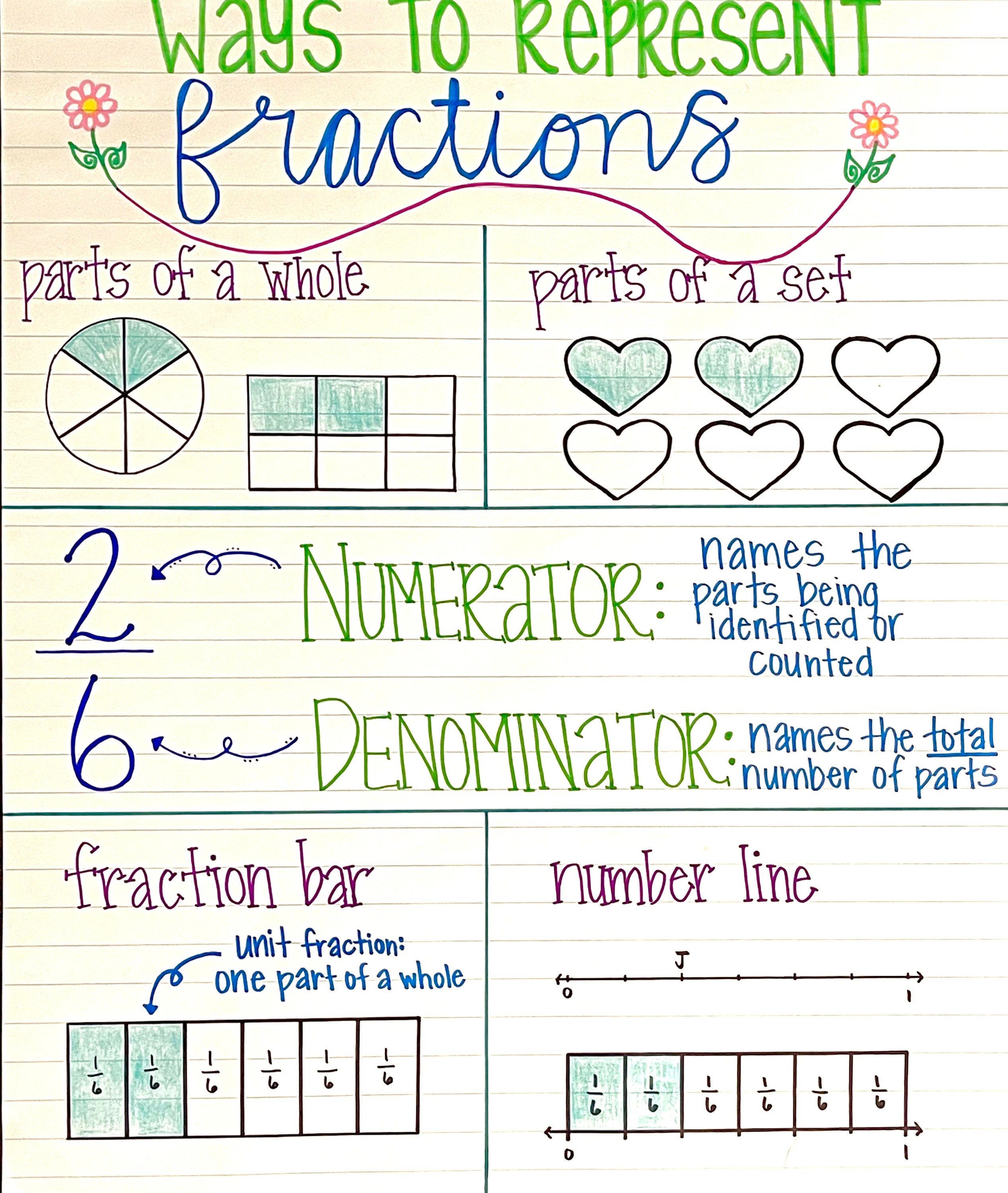
A fraction represents a numerical quantity that isn't a whole integer, expressing a part of a whole or a division of equal segments. It uses a numerator on top to count the pieces you have and a denominator on the bottom to show total equal pieces in that whole.
Fractions show up whenever exact measurements matter. If you bake a cake, divide a land survey, or calculate a sports statistic, whole numbers fall short. Understanding how these values work forms the baseline for algebra, percentages, and everyday ratio comparisons.
The Anatomy of a Fraction
Every standard fraction contains three core components working together:
- Numerator: Positioned above the dividing line, this tells you how many specific parts you're currently referencing.
- Denominator: Positioned below the dividing line, this reveals how many equal parts divide the entire whole.
- Fraction bar: The horizontal or slash line separating the two numbers, acting as a direct symbol for division.
If you take three slices of a pizza cut into eight equal wedges, your fraction is written as 3/8. The denominator ensures everyone knows the whole scale is eight, while the numerator highlights your active share of three.
Types of Fractions You Need to Know
Fractions split into three main categories based on the relationship between the top and bottom numbers:
- Proper fractions: The numerator is smaller than the denominator. The overall value stays less than one (for example, 2/5).
- Improper fractions: The numerator is equal to or larger than the denominator. The value equals or exceeds one (for example, 7/4).
- Mixed numbers: A combination of a whole integer and a proper fraction, like 1 and 3/4, making visual estimation easier in practical settings.
How to Find Equivalent Fractions
Fractions can look completely different while representing the exact same quantity. These are known as equivalent fractions. You generate them by multiplying or dividing both the top and bottom numbers by the exact same non-zero integer.
Take 1/2. If you multiply both numbers by two, you get 2/4. Multiply by three, and you get 3/6. All three expressions occupy the exact same spot on a number line.
To reduce a fraction to its lowest terms, you reverse this process. You divide both the numerator and denominator by their greatest common divisor. Reducing 8/12 involves dividing both parts by four, leaving you with 2/3.
Core Operations With Fractions
Calculating with fractions requires specific rules depending on the operation you're performing.
Addition and Subtraction
You can't add or subtract fractions unless their denominators match. If denominators differ, you must find a common denominator first.
To add 1/4 and 2/4, the denominators already match, so you simply add the numerators: 3/4. If you have 1/2 and 1/3, convert them to sixth terms (3/6 and 2/6) before combining them to get 5/6.
Multiplication and Division
Multiplication doesn't require common denominators. You multiply straight across: top numbers together, bottom numbers together. Multiplying 2/3 by 3/4 gives you 6/12, which simplifies to 1/2.
Division requires a quick flip. You multiply the first fraction by the reciprocal (the flipped version) of the second fraction. To divide 1/2 by 1/4, you multiply 1/2 by 4/1, resulting in 4/2, which simplifies to 2.
Connecting Fractions, Decimals, and Percentages
Fractions share a direct family tie with decimals and percentages. They're just different languages for the exact same part of a whole.
To turn a fraction into a decimal, divide the top number by the bottom number. 1/4 becomes 0.25 because one divided by four equals 0.25. To convert that decimal into a percentage, multiply by 100, landing at 25%.
Mastering this fluidity helps when comparing a 1/3 discount against a 30% markdown during shopping trips. Converting both formats to percentages instantly reveals which deal saves more money. Real-world financial literacy relies on moving smoothly between these formats.
Common Mistakes to Avoid
Math learners frequently stumble over a few predictable traps when working with fractions:
- Adding denominators: Beginners often add both tops and bottoms together (thinking 1/2 plus 1/3 equals 2/5). Remember that denominators only state the size of the pieces; they don't combine that way.
- Forgetting to simplify: Leaving an answer as 10/15 instead of reducing it to 2/3 is technically correct in value but misses standard formatting rules.
- Inverting the wrong fraction: During division, people sometimes flip the first fraction instead of the second one. Always invert the divisor—the number you're dividing by.
Frequently Asked Questions
What is the easiest way to find a common denominator?
List the multiples of each denominator until you find the smallest number they both share. For denominators like 4 and 6, multiples of 4 are 4, 8, 12, while multiples of 6 are 6, 12. Twelve is your least common multiple.
Can a fraction have a negative value?
Yes. If either the numerator or the denominator is negative, the entire fraction is negative. If both are negative, they cancel each other out, making the fraction positive.
How do I convert a mixed number into an improper fraction?
Multiply the whole number by the denominator, then add the numerator. Place that total over the original denominator. For 2 and 1/3, multiply 2 by 3 to get 6, add 1 to get 7, and write the final result as 7/3.
Why can't a fraction have zero as a denominator?
Division by zero is undefined in mathematics. Because a fraction represents division, putting zero on the bottom asks how many parts make up a whole that doesn't exist, which breaks mathematical logic.


