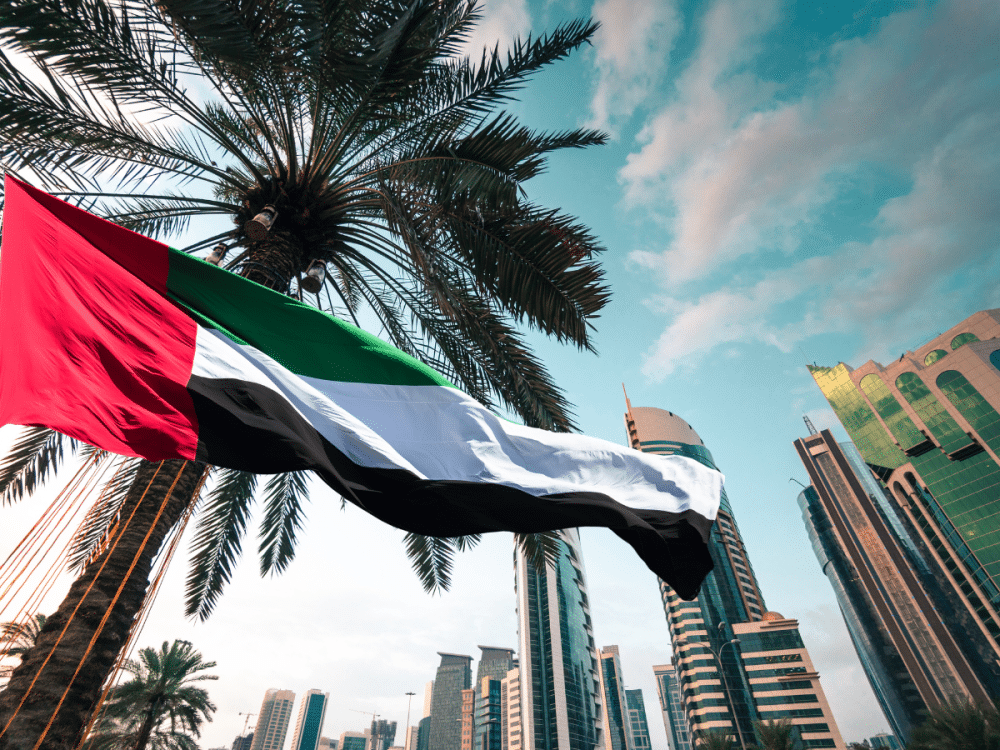
The abbreviation UAE stands for the United Arab Emirates, a sovereign federal state located at the southeastern end of the Arabian Peninsula. Far from being just a random collection of letters, each word in the name maps directly to the political structure, cultural heritage, and geographical makeup of the federation.
Breaking Down the Acronym
To understand what the name represents, you have to look at the three individual components that make up the title.
- United: This reflects the political federation formed by independent territories that chose to merge their sovereignty under a single federal government.
- Arab: This highlights the geographic, linguistic, and cultural heritage of the population, rooted in the Arab world and the Arabic language.
- Emirates: This designates the plural form of emirate, which is a territory ruled by an emir (a prince or commander).
Instead of a single centralized monarchy or republic, the nation operates as a union of seven distinct monarchies.
The Seven Territories That Make Up the Federation
The country isn't a monolith; it's composed of seven unique emirates, each retaining individual local governance, legal traditions, and distinct economic profiles.
- Abu Dhabi: The largest emirate by land area and the federal capital. It holds the vast majority of the nation's oil reserves and political administration.
- Dubai: The most populous emirate and a global commercial, trade, and tourism powerhouse.
- Sharjah: Known as the cultural capital of the federation, placing heavy emphasis on museums, heritage, and education.
- Ajman: The smallest emirate geographically, situated along the Persian Gulf coast with a rapidly developing urban core.
- Umm Al Quwain: A quieter, more traditional coastal emirate with strong ties to fishing and dhow-building heritage.
- Ras Al Khaimah: Positioned in the northernmost part of the country, known for its mountainous terrain, agriculture, and industrial manufacturing.
- Fujairah: The only emirate located entirely along the eastern coast facing the Gulf of Oman, functioning as a major bunkering and shipping hub.
According to the UAE Government Portal, these seven territories agreed to pool their resources, defense, and foreign policy while preserving their local leadership structures.
How the Federation Was Formed
Before 1971, the territories were known as the Trucial States, a group of sheikhdoms bound by treaties with the British Empire dating back to the 19th century. When Britain announced its military withdrawal from the region in 1968, local leaders faced a critical turning point.
Founding fathers, notably Sheikh Zayed bin Sultan Al Nahyan of Abu Dhabi and Sheikh Rashid bin Saeed Al Maktoum of Dubai, spearheaded negotiations to unify the separate sheikhdoms into a single powerful entity. On December 2, 1971, six of the emirates officially declared independence and established the federation. Ras Al Khaimah joined the union shortly after in February 1972, completing the seven-member state we recognize today.
Political Structure and Governance
The federal framework balances central authority with local autonomy. The Federal Supreme Council, which consists of the rulers of all seven emirates, acts as the highest executive and legislative body. They elect the president and the prime minister from among themselves.
While the federal government handles national defense, foreign affairs, currency, and telecommunications, individual emirates retain control over their own police forces, local municipalities, and natural resources like oil and land allocation. You can review detailed legal frameworks and institutional guidelines directly through the UAE Ministry of Justice.
Frequently Asked Questions
Is the UAE a democracy or a monarchy?
It is a federal absolute monarchy composed of hereditary rulers in each emirate, governed at the federal level by the Supreme Council of Rulers. There are no popular national elections for the presidency, though citizens vote for members of the Federal National Council (an advisory body).
Why isn't Bahrain or Qatar part of the UAE?
During initial negotiations in the late 1960s, Bahrain and Qatar participated in talks to form a broader nine-member federation. However, disagreements over boundary definitions, defense strategies, and terms of sovereignty led both states to declare separate, independent independence in 1971.
What is the official language and currency?
Modern Standard Arabic is the official language, though English is widely used in business, commerce, and daily life. The official currency is the UAE Dirham (AED), which has been pegged to the US Dollar since 1997.
How do citizens of the UAE differ from expatriates?
Emirati citizens make up a minority of the total population inside the country, enjoying comprehensive state welfare, education, and healthcare benefits. The majority of the population consists of expatriate workers from South Asia, Europe, Arab nations, and other global regions.



