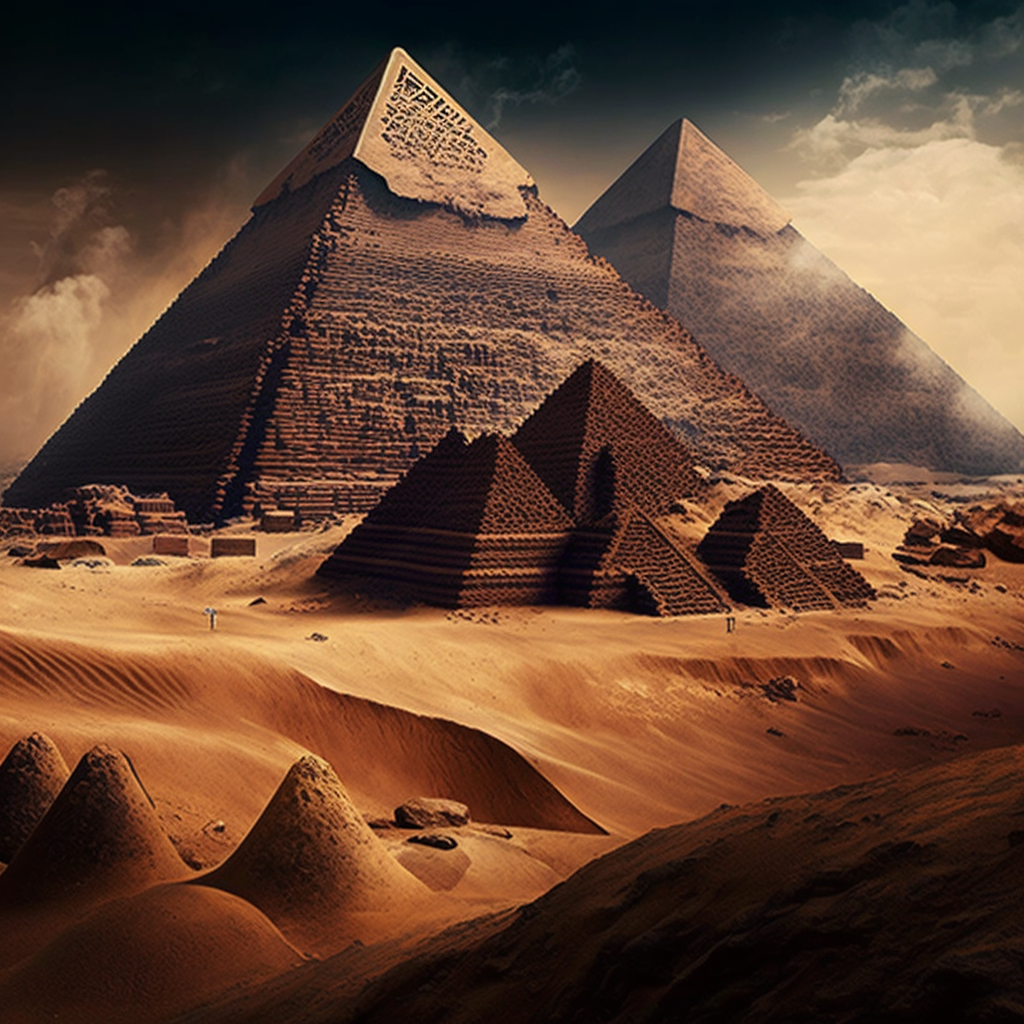
When you picture the ancient Egyptian pyramids, you likely picture massive, sun-bleached blocks of stone rising sharply out of the desert sand. You're mostly right, but the physical reality of these ancient wonders is far more varied than a single pile of rocks. What are pyramids made of? They aren't just solid stone mountains; they are carefully engineered structures built using local limestone, fine exterior casing stones, dense interior granite, and basic mortar.
Workers didn't just stumble onto a quarry and start stacking. They sourced different materials for different jobs, balancing structural weight, transport logistics, and raw availability. Understanding how these massive monuments were put together reveals the precise logistical scale of ancient engineering.
The Core Material: Local Limestone
The vast bulk of a pyramid's weight comes from local limestone. For the Great Pyramid of Giza, builders didn't haul every single stone from miles away. They sourced the primary core blocks right from the Giza Plateau itself, often from quarries located just a few hundred yards from the construction sites.
This local stone is full of nummulites, small fossilized disk-shaped shells, which gives it a slightly textured, rough appearance. It wasn't smooth or pretty, but it didn't need to be. It formed the heavy interior mass that gave the monument its stability.
- Workers cut blocks weighing an average of 2.5 tons using copper chisels and wooden wedges.
- These blocks were dragged or rolled short distances from the quarry pits directly to the base of the rising structure.
- The irregular shapes of the core blocks were packed tightly with mortar and smaller rubble to keep things level.
The Exterior Casing: Fine Tura Limestone
If you could time-travel back four thousand years, the pyramids wouldn't look yellow or brown. They'd blind you in the midday sun. The outer layers were wrapped in a completely different grade of stone—fine white limestone quarried across the Nile at Tura.
Unlike the rough core blocks, Tura limestone was dense, fine-grained, and capable of being chiseled to a razor-sharp edge and a flat surface. Masons trimmed these blocks to exact angles so they fit together without gaps. Once laid, workers polished the exterior surface until it shone like polished marble.
Most of these casing stones are gone now. Earthquakes, centuries of weathering, and later looters who stripped the stone for medieval Cairo buildings left the outer shell bare. Only a few casing stones remain intact near the base, or preserved at the very top of Khafre's pyramid.
The Interior Chambers: Aswan Granite
Limestone is strong, but it has limits under massive compressive weight. When builders needed to construct the King's Chamber and the massive relieving chambers directly above it inside the Great Pyramid, they switched materials entirely. They used pink granite.
This granite didn't come from the local plateau. It came from Aswan, located roughly 500 miles south up the Nile River.
- Workers hauled blocks weighing up to 50 tons down the river on massive wooden barges.
- Granite is significantly harder than limestone, requiring specialized pounding stones made of diorite to shape and dress.
- This dense igneous rock provided the structural integrity required to keep millions of tons of limestone from crushing the burial vaults below.
You can read more about ancient trade routes and material sourcing via resources provided by the Metropolitan Museum of Art.
Mortar and Binding Agents
You won't find modern Portland cement in an ancient pyramid, but builders still needed a binding agent to keep the massive stones stable during construction. They used a coarse mortar made from gypsum, sand, crushed limestone, and water.
This mixture acted more like a lubricant and a leveling bed than an industrial adhesive. It allowed workers to slide heavy blocks into place and distribute weight evenly across uneven tiers. As the mixture cured, it locked the stones into a semi-rigid matrix.
Mud Bricks in Smaller and Later Pyramids
Not every pyramid in Egypt was built of solid stone. As the Old Kingdom gave way to later dynasties, pharaohs and local elites sometimes scaled back due to economic shifts or resource scarcity. Many Middle Kingdom pyramids used a core made primarily of mud bricks.
These bricks were made from Nile silt mixed with straw and water, then baked or dried in the hot desert sun. To protect the fragile mud brick core from eroding in the wind and rare rains, builders encased the entire structure in a thick layer of fine limestone. Once the outer limestone casing was stripped away by later generations, the mud brick cores eroded into shapeless, mound-like ruins over the centuries.
Frequently Asked Questions
Did the ancient Egyptians use slave labor to build the pyramids?
Popular culture often portrays enslaved people hoisting every block, but archaeological excavations at the Giza worker village tell a different story. The workforce consisted of paid, organized laborers, artisans, and conscripted citizens who worked in rotating shifts. They ate well, received medical care, and were buried with honor near the pyramids they built.
How were heavy stone blocks transported across long distances?
For materials like Aswan granite or Tura limestone, the Nile River served as the primary highway. Builders loaded blocks onto specialized barges during the annual inundation flood season, when high water levels allowed boats to navigate right up to the edge of the desert plateau.
Are the pyramids solid all the way through?
No. While they appear to be solid mountains of stone, the interior contains a complex network of tunnels, air shafts, descending passages, and subterranean or elevated chambers like the Grand Gallery and King's Chamber.
Why did the smooth outer casing stones disappear?
Earthquakes cracked many of the outer stones loose over millennia. More significantly, later rulers and builders systematically quarried the pyramids for ready-made building blocks to construct mosques, walls, and palaces in nearby Cairo.



