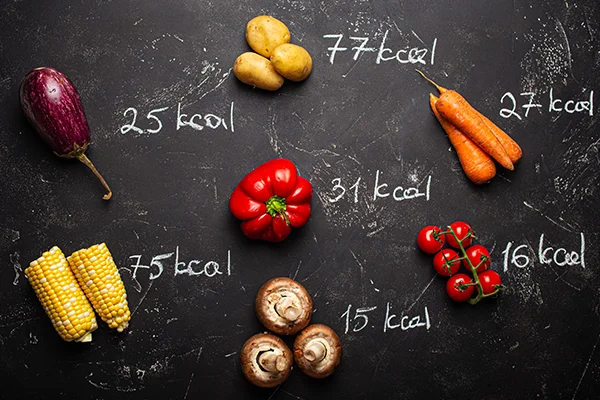
When you glance at a nutrition label, you're looking at a measurement of energy that drives every heartbeat, breath, and step you take. Yet, the word kilocalorie (kcals) is often tossed around interchangeably with casual terms, leaving a lot of confusion about what it actually means for your daily plate.
A kcal is simply a unit of thermal energy. More specifically, it's the amount of energy required to raise the temperature of one kilogram of water by one degree Celsius under standard atmospheric pressure. When applied to nutrition, it measures the potential chemical energy stored within the molecular bonds of your food that your cells can break down and convert into biological work.
Understanding how these units function goes far beyond simple weight tracking. It requires looking at how your body processes fuel, why identical numbers on two food packages don't yield identical biological outcomes, and how to use this metric practically without falling into restrictive traps.
Kcals Versus Calories: Unpacking the Terminology
To understand what you're eating, you first have to clear up a common naming convention. In physics and chemistry, a small calorie (cal) is the energy needed to heat one gram of water by one degree Celsius.
In nutrition science and food labeling, what we call a "Calorie" with a capital C is actually a kilocalorie—equal to one thousand small calories.
- Scientific Calorie (cal): Measures heat for one gram of water.
- Nutritional Calorie (kcal / Cal): Measures heat for one kilogram of water, used for food energy.
Food manufacturers adopted the term kilocalorie to keep numbers manageable. If food labels used small calories, an ordinary 2,000-day would list 2,000,000 calories, which is unwieldy. When you see 250 calories on a cereal box, you're looking at 250 kilocalories.
How Your Body Destills Energy from Macronutrients
Not all components of your food provide the same amount of energy. The body extracts kilocalories through the metabolic breakdown of three primary macronutrients, alongside one non-nutrient substance:
- Carbohydrates: Yield roughly 4 kcals per gram, serving as the body's preferred and most readily accessible source of quick energy.
- Proteins: Also yield roughly 4 kcals per gram, though their primary role involves tissue repair, immune function, and enzyme creation rather than primary fuel storage.
- Fats: Deliver roughly 9 kcals per gram, making them the most concentrated form of stored energy in the human diet.
- Alcohol: Provides about 7 kcals per gram, packed with energy but devoid of essential nutrients.
Because fats pack more than double the energy density of carbs or proteins, small portions of high-fat foods contribute significantly more to your daily energy intake. According to the USDA FoodData Central, understanding these baseline energy densities helps explain why portion control matters immensely when consuming energy-dense fats.
The Three Pillars of Daily Energy Expenditure
Consuming kcals is only one side of the equation. Your total daily energy expenditure relies on three distinct physiological mechanisms that determine how those energy units are spent.
1. Basal Metabolic Rate (BMR)
Your BMR accounts for 60 to 75 percent of the energy you burn every single day. It represents the baseline cost of keeping you alive while completely at rest. It powers your liver, kidneys, brain, heart, and cellular maintenance.
2. Thermic Effect of Food (TEF)
Digesting, absorbing, and processing what you eat requires energy. This is known as the thermic effect of food, consuming roughly 10 percent of your total daily intake. Interestingly, protein has a much higher thermic effect than fats or carbohydrates—meaning your body burns more energy processing a chicken breast than a piece of white toast.
3. Activity Energy Expenditure
This category splits into structured exercise, like running or swimming, and non-exercise activity thermogenesis (NEAT). NEAT includes all the spontaneous movements you make throughout the day—fidgeting, walking to your car, standing at a desk, or cleaning your kitchen. For many people, NEAT varies wildly and dictates a massive chunk of daily energy balance.
The Quality Trap: Why 100 Kcals Aren't Always Equal
A common misconception suggests that energy balance is the only thing that matters, implying that 100 kcals of soda behaves identically in the body to 100 kcals of almonds. Biologically speaking, that assumption falls apart quickly.
While the thermal energy value is identical in a laboratory calorimeter, the human body is a complex biological organism, not a simple furnace. Fiber content, micronutrient profiles, and processing levels alter how your body handles food.
Whole foods require more digestive effort, provide sustained satiety hormones like peptide YY and GLP-1, and support a healthy gut microbiome. Ultra-processed foods, by contrast, are often stripped of fiber and water, leading to rapid digestion, blood sugar spikes, and weak satiety cues that make overconsumption effortless. The Harvard T.H. Chan School of Public Health emphasizes that focusing strictly on numbers while ignoring food quality often undermines long-term metabolic health.
Common Misconceptions About Energy Balance
Diet culture has popularized several myths about how food energy works in the human body. Clearing these up prevents frustration and helps build a sustainable approach to eating.
- The starvation mode myth: While severe, prolonged energy restriction can cause metabolic slowdown through adaptive thermogenesis, your body doesn't magically stop burning energy or turn water into fat out of nowhere. The laws of thermodynamics still govern human tissue creation.
- Clean eating bypasses math: Some believe that eating exclusively "clean" foods makes energy surplus impossible. While whole foods are much harder to overeat, consuming an excess of nutrient-dense foods like avocados, nuts, or olive oil will still result in a positive energy balance over time.
- Spot reduction of fat: Doing hundreds of crunches will strengthen your abdominal muscles, but it won't selectively burn the kcals stored in your belly fat. Energy is mobilized systemically from fat stores across the entire body based on genetics and hormones.
Practical Steps for Reading Labels and Managing Energy
Navigating nutrition labels effectively lets you make informed choices without obsessing over every single bite.
- Check serving sizes first: Manufacturers often list nutritional information for a fraction of the package. If a bag of chips contains three servings, you have to multiply the listed kcals by three to know your actual intake.
- Prioritize fiber and protein: Foods containing adequate protein and dietary fiber slow down gastric emptying, keeping hunger cues stable and making it easier to naturally balance your intake.
- Use tracking as an educational tool: If you choose to log your food, view it as a temporary way to build portion awareness rather than a permanent lifestyle prison.
Ultimately, kilocalories are neutral metrics. They aren't moral badges of honor or failure; they are simply a quantifiable measure of the fuel your body uses to thrive.
Frequently Asked Questions
Do nutrition labels always display accurate kcals?
No, food labels can legally have a margin of error of up to 20 percent under current regulatory guidelines. Furthermore, the human gut doesn't extract 100 percent of the potential energy from every food source equally; raw vegetables, for example, require more energy to digest than heavily processed items.
Why do different people need vastly different daily kcals?
Your daily energy requirement depends on your age, biological sex, height, muscle mass, and daily activity levels. Two people of the same weight can have entirely different metabolic rates if one has significantly more lean muscle mass than the other.
Can you build muscle while consuming fewer kcals?
Yes, individuals who are new to resistance training or carry higher body fat percentages can build muscle while in a slight energy deficit—a process often called body recomposition. The body utilizes stored fat reserves to fuel the energy-intensive process of muscle synthesis.
Does drinking cold water burn extra kcals?
Technically yes, because your body expends a small amount of thermal energy to warm the water up to core body temperature. However, the number of kcals burned is negligible—only about 8 calories per liter—making it an ineffective strategy for weight management.


