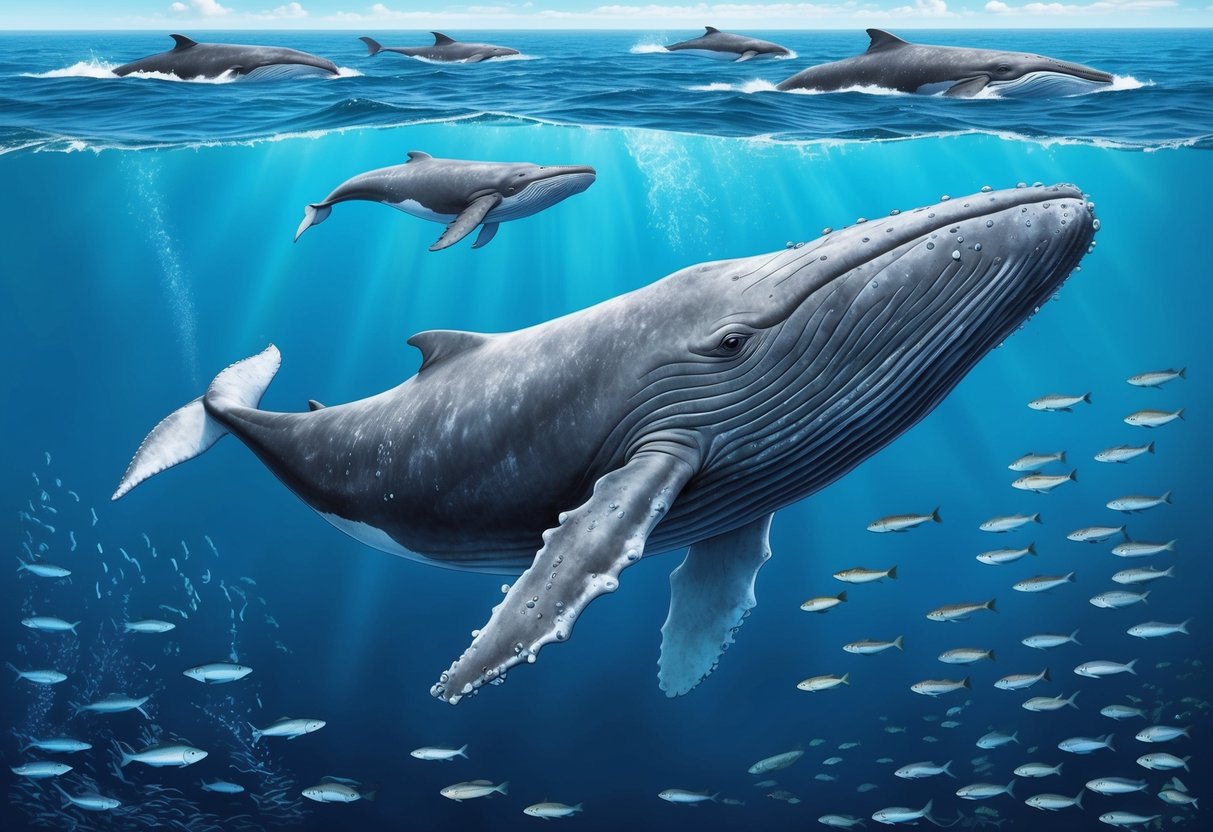
When historical culinary traditions and legal frameworks classify whales alongside fish, it sparks a persistent debate that bridges biology and gastronomy. Despite sharing an aquatic habitat, whales and fish occupy entirely different branches of the vertebrate tree. Understanding this distinction clarifies why calling a whale a fish makes sense on a dinner plate yet collapses under scientific scrutiny.
The confusion between cetaceans and finfish stems from convergent evolution and ancient dietary classifications rather than shared ancestry. While commercial harvesting and historical food laws grouped marine mammals with fish for religious fasting and trade regulations, modern biological science separates warm-blooded mammals from cold-blooded gill-breathing vertebrates. Examining this divide reveals how human cuisine and evolutionary history intersect in the ocean.
The Biological Divide: Mammals Versus Fish
The fundamental difference between whales and fish begins with their physiological classification. Whales are marine mammals belonging to the order Cetacea, descending from terrestrial four-legged mammals that ventured back into the water roughly fifty million years ago. Fish span multiple distinct classes, including ray-finned fish and cartilaginous species like sharks and rays, which have remained strictly aquatic for hundreds of millions of years.
Key physiological traits separating whales from fish include: To understand the complete picture, we recommend the excellent article by The New York Times.
- Endothermy: Whales maintain a constant internal body temperature, whereas most fish are ectothermic and rely on ambient water temperature.
- Respiration: Whales possess lungs and must surface regularly to breathe air, while fish extract dissolved oxygen from water using gills.
- Reproduction: Whales give birth to live young and nurse them with rich milk, whereas most fish broadcast spawn eggs and sperm externally.
- Skeletal Structure: Whale flippers contain modified mammalian forelimbs complete with distinct digit bones, entirely unlike the fin rays found in fish.
These anatomical divergences mean that a whale's internal machinery operates much closer to a land mammal than to any tuna or salmon swimming beside it.
Convergent Evolution and Hydrodynamic Design
The illusion that whales are fish is driven by convergent evolution. When unrelated organisms adapt to the same environmental pressures, they often develop similar physical forms. Because water is dense and viscous, both whales and fish evolved streamlined torpedo bodies, dorsal stabilizers, and powerful tails for efficient propulsion.
These shared traits include:
- Fusiform body shapes that minimize hydrodynamic drag.
- Modified limbs and flukes optimized for steering and thrust.
- Thick layers of adipose tissue or blubber for thermal insulation.
Yet the internal mechanics of these adaptations differ completely. A fish uses a vertical tail fin moving side-to-side driven by segmented muscle blocks, while a whale uses a horizontal tail fluke powered by an up-and-down mammalian spine movement inherited from running ancestors.
Historical and Culinary Classification
Long before modern taxonomy, human societies grouped marine creatures by habitat and dietary utility rather than genetics. In medieval Europe, religious edicts permitted the consumption of aquatic animals during fasting periods when land meat was forbidden. Whales, beavers, and puffins were frequently classified as fish under these ecclesiastical rules because they lived in or around water.
This historical grouping bled into commercial fishing and global trade. Early whaling fleets operated under regulatory frameworks similar to fisheries, and whale meat was salted, packed, and sold in markets alongside cod and herring. In certain culinary traditions, particularly in coastal communities across the North Atlantic and East Asia, whale muscle tissue was prized for its high protein and iron content, reinforcing its perception as a unique form of seafood.
Modern Conservation and Ecological Realities
Treating whales as fish carries profound implications for marine conservation. Because cetaceans are long-lived, slow-reproducing mammals with complex social structures, they face entirely different population pressures than high-fecundity fish stocks. Overfishing a school of mackerel allows for rapid population recovery, whereas depleting a pod of long-finned pilot whales or sperm whales can permanently disrupt social lineages and coastal ecosystems.
International frameworks like the International Whaling Commission govern cetaceans separately from commercial fisheries. Recognizing whales as intelligent, sentient mammals rather than aquatic commodities has shifted global policy toward protection and research rather than extraction.
Frequently Asked Questions
Why were whales historically classified as fish in legal and religious texts?
Early legal and religious systems categorized animals by their habitat rather than internal anatomy. Because whales lived entirely in the sea and were caught in coastal waters, they were grouped with fish for dietary laws and taxation purposes.
Do whales taste like fish?
Whale meat does not taste like typical finfish. Because whales are warm-blooded mammals with high myoglobin levels in their muscles, the meat is dark, rich, and iron-dense, bearing a closer resemblance to game meat like venison or beef than to salmon or cod.
How do whale respiratory systems differ from fish gills?
Whales possess lungs and a conscious breathing mechanism, requiring them to break the surface through a blowhole to inhale oxygen. Fish extract oxygen directly from water molecules passing across delicate gill filaments, making them incapable of breathing atmospheric air.
Can whales breathe underwater while sleeping?
Whales cannot breathe underwater. To survive while resting, they exhibit unihemispheric slow-wave sleep, keeping half their brain awake to surface for air periodically, or they rest motionless near the surface for short intervals.



