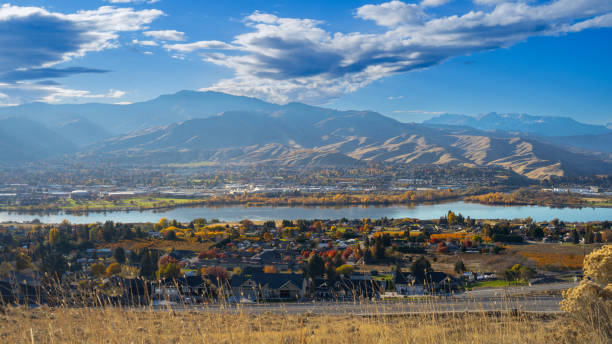
When summer arrives in North-Central Washington, the skies above Wenatchee often shift from bright blue to a thick, hazy gray. Known widely as the Apple Capital of the World, the city sits snugly in a deep river valley surrounded by majestic mountains. While this geography creates an ideal climate for orchards, it also traps wildfire smoke during dry months, triggering recurring public health concerns.
Wildfire smoke events transform clean air into a pressing crisis for residents. Fine particulate matter fills the air, forcing communities to adapt quickly to hazardous conditions. Understanding why this happens and how to stay safe requires looking closely at local geography, seasonal weather patterns, and proven protection strategies.
Geography and the Valley Trap
Wenatchee sits at the confluence of the Columbia and Wenatchee rivers. This low-elevation basin is enclosed by steep slopes and ridges of the Cascade foothills. While visually stunning, this bowl-shaped topography acts as a natural trap for air pollution.
During typical weather patterns, warm air sits above cooler valley air, creating an atmospheric lid known as a temperature inversion. When regional wildfires ignite across the Cascades or Okanogan highlands, smoke drifts into the valleys and gets trapped beneath these inversions. Light winds and dry summer conditions prevent the particulate matter from dispersing quickly, allowing unhealthy air to linger for days or even weeks.
Understanding Fine Particulate Matter
The primary culprit behind poor air quality in Wenatchee is PM2.5, which refers to atmospheric particulate matter with a diameter of less than 2.5 micrometers. To put that in perspective, these particles are roughly thirty times smaller than the width of a human hair.
Because they are microscopic, PM2.5 particles bypass the body's natural defense mechanisms in the nose and upper airways. When inhaled, they penetrate deep into the lungs and can cross into the bloodstream. This exposure triggers systemic inflammation and poses serious risks for individuals with underlying health conditions.
Vulnerable Populations in the Community
While heavy smoke affects everyone, certain groups face disproportionate risks during pollution spikes:
- Children and Teenagers: Younger lungs are still developing, and children breathe faster pound-for-pound than adults, taking in more pollutants.
- Older Adults: Seniors face higher rates of pre-existing cardiovascular and respiratory illnesses.
- Outdoor Workers: Agricultural workers, construction crews, and landscapers often have no choice but to labor outdoors during smoky conditions.
- Individuals with Chronic Illnesses: People managing asthma, chronic obstructive pulmonary disease (COPD), or heart disease experience symptom flare-ups even at moderate pollution levels.
Actionable Steps for Indoor Clean Air
When the Air Quality Index (AQI) climbs into unhealthy ranges, staying indoors is only half the battle. Homes can easily leak outdoor smoke if proper precautions aren't taken.
- Seal Your Living Space: Keep doors and windows tightly shut. Check weatherstripping around exterior doors to stop drafts where smoke enters.
- Upgrade HVAC Filtration: Replace standard furnace filters with high-efficiency particulate air (HEPA) filters or filters rated MERV 13 or higher. Run your system fan continuously to circulate and clean indoor air.
- Build a DIY Air Purifier: If commercial air purifiers are unavailable, tape a MERV 13 filter to the back of a standard box fan. This affordable setup effectively scrubs fine particles from a single room.
- Avoid Indoor Pollutants: Do not light candles, use gas stoves without exhaust hoods, or vacuum during smoke events, as these activities kick up additional indoor particulate matter.
For real-time tracking of local conditions, residents rely on monitoring networks managed by the Washington Department of Ecology and the EPA AirNow platform.
Common Mistakes During Smoke Events
Many people inadvertently worsen their exposure during clean air crises because of common misconceptions.
- Relying on Cloth Masks: Standard cloth face coverings or surgical masks do nothing to block microscopic PM2.5 particles. Only properly fitted N95 or P100 respirators provide reliable filtration.
- Exercising Indoors Without Air Filtration: Working out inside a stuffy room with poor ventilation causes you to breathe harder and inhale more suspended particles. Keep physical exertion low unless windows are sealed and air purifiers are running.
- Ignoring Shifting Winds: Conditions can change rapidly depending on fire behavior and wind direction. Checking local forecasts daily helps you plan errands for windows when air quality temporarily improves.
Frequently Asked Questions
What AQI level is considered dangerous for outdoor activities?
An AQI reading above 100 is unhealthy for sensitive groups, while readings over 150 are considered unhealthy for the general public. When values exceed 200, outdoor physical activity should be avoided entirely by everyone.
Do house plants help clean wildfire smoke from indoor air?
While plants contribute to general indoor wellness, they do not filter out fine particulate matter fast enough to protect your lungs during a heavy smoke event. Mechanical air filtration is required.
Why does smoke smell worse at night in Wenatchee?
As temperatures drop in the evening, the air cools and settles near the valley floor. This surface inversion traps smoke closer to the ground, often making evening and early morning hours the smokiest parts of the day.
Can air conditioning pull smoke into my house?
Standard window air conditioners draw outside air inside, bringing smoke with them unless they feature a specialized recirculating setting or an attached filter. Central air systems with clean HEPA filters are much safer to run.



