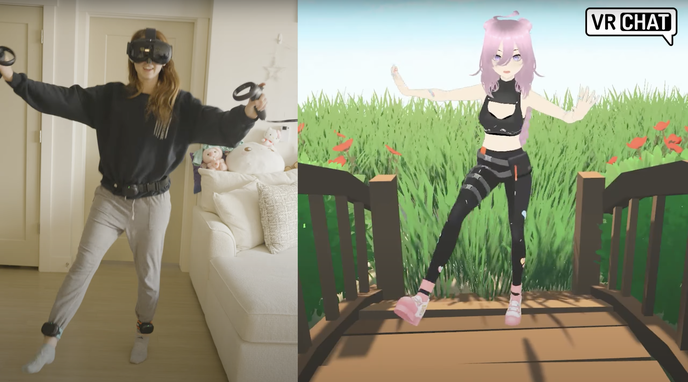
Streaming VRChat requires precise control over your virtual camera angles, frame rates, and OBS sources to capture immersive virtual worlds without stutter. Unlike standard desktop gaming where your monitor output goes straight to your broadcast software, virtual reality streaming involves rendering a virtual desktop camera or using specialized plugins to capture your avatar's perspective cleanly. If your setup is misconfigured, viewers will experience jarring camera shake, low framerates, or missing audio feeds.
To achieve a professional broadcast, you must configure OBS Studio to capture your virtual camera input correctly while balancing your PC's encoding hardware. Let's dive right into setting up your workspace, configuring internal VRChat camera features, and establishing clean OBS capture pipelines.
Understanding VRChat Camera Sources in OBS
Before touching any encoder settings, you need to understand how video gets from the virtual world into your broadcast software. VRChat features built-in hand cameras, desktop camera windows, and plugin-based Spout or Virtual Cam solutions.
Desktop Capture vs. Virtual Cam Plugins
Capturing your entire desktop or game window is easy, but it introduces UI elements, chat overlays, and Windows taskbars into your stream. Instead, experienced streamers rely on dedicated virtual camera feeds or window capture filters.
- Window Capture: Isolates the VRChat game window without capturing your secondary monitors or background desktop clutter.
- Spout2 / Syphon: A GPU-accelerated texture-sharing plugin that feeds video directly from VRChat into OBS with zero quality loss and negligible CPU overhead.
- Virtual Webcam: Converts an in-game camera feed into a standard webcam source recognized by OBS.
Configure your capture source by opening OBS Studio and adding a new source. If you're using Windows, Window Capture with the Windows 10/11 capture method yields high performance without extra third-party software.
Step-by-Step OBS Camera and Video Settings
Your stream's visual clarity depends heavily on your base canvas resolution and output scaling. VRChat is notoriously demanding on both CPU and GPU resources because it renders unique avatar models, dynamic lighting, and complex user-generated worlds simultaneously.
Configuring Canvas and Output Resolutions
Most platforms like Twitch and YouTube handle 1080p60 smoothly. Setting up your base resolution incorrectly will cause fuzzy scaling or heavy frame drops.
- Open OBS settings and navigate to the Video tab.
- Set Base (Canvas) Resolution to match your monitor, typically 1920x1080.
- Set Output (Scaled) Resolution to 1920x1080 for a crisp 1080p stream, or downscale to 1280x720 if your internet upload speed or hardware struggles.
- Set Downscale Filter to Lanczos for the sharpest scaling quality.
- Set Common FPS Values to 60 to ensure smooth motion tracking of fast-moving avatars.
Encoder Settings and Bitrate Allocation
VRChat environments feature high-motion particle effects, flashing lights, and complex shaders that break down easily under low bitrates.
- Encoder: Select Hardware (NVENC) if you use an NVIDIA GPU, or AMD HW H.264 for Radeon cards. This offloads encoding from your processor.
- Rate Control: Choose CBR (Constant Bitrate) for stable streaming.
- Bitrate: Set your bitrate between 6,000 Kbps and 8,000 Kbps for a 1080p60 stream on Twitch, or up to 9,000+ Kbps if streaming to YouTube.
- Preset: Use P5: Slow (Good Quality) or P6 on NVIDIA cards to maximize visual fidelity without overloading your encoder chip.
Optimizing In-Game Camera Rigging
Capturing clean footage means positioning your virtual camera effectively. Relying solely on your first-person headset view makes viewers dizzy due to head movements.
Using Third-Person Camera Modifiers
World cameras and handheld props allow you to frame your avatar properly. Look for worlds equipped with streaming camera utilities or use customizable avatar attachments that include built-in camera constraints.
- Stabilization: Enable camera smoothing or stabilization scripts if available on your avatar or world prop to eliminate micro-jitters caused by natural hand tremors in VR.
- FOV Adjustments: Keep your field of view between 60 and 80 degrees for standard cinematic shots. Extremely wide FOVs distort your avatar's proportions near the edges of the frame.
- Green Screen Integration: If you want to overlay your third-person avatar onto custom background art or game elements, use VRChat's chroma key shaders or world mirrors configured for blue/green screen capture.
Common Mistakes to Avoid
Even seasoned content creators make configuration errors that degrade stream quality. Watch out for these pitfalls:
- Leaving VRChat Uncapped: Running VRChat with an unlimited framerate starves OBS of GPU resources. Lock your in-game framerate using the NVIDIA Control Panel or game settings to match your stream target (e.g., 60 or 90 FPS).
- Neglecting Audio Sync: Virtual reality setups often experience audio drift between microphone inputs and game world audio. Always use the OBS advanced audio properties to add a small delay if your voice and mouth movements fall out of sync.
- Overloading Scene Sources: Running too many browser sources, animated alerts, and heavy webcam filters inside OBS alongside VRChat causes encoder overload warnings. Keep your scene collection streamlined.
Frequently Asked Questions
Why is my VRChat stream lagging even though my PC is high-end?
VRChat relies heavily on single-core CPU performance and VRAM. If your graphics card runs out of VRAM due to high-poly avatar models in crowded lobbies, OBS drops frames. Lower your avatar particle limits and hide poorly optimized avatars using safety settings.
Should I use Game Capture or Window Capture for VRChat?
Window Capture is generally preferred for VRChat streaming because it prevents sudden black screens when toggling SteamVR menus, desktop overlays, or popup windows.
How do I stop my stream from looking pixelated during high-movement scenes?
Pixelation happens when fast movement exceeds your allocated bitrate. Increase your bitrate to the platform maximum (e.g., 8,000 Kbps on Twitch or higher on YouTube) and switch your encoder preset to a slower, higher-quality profile.
Can I stream VRChat without a VR headset in desktop mode?
Yes. VRChat supports a fully functional desktop mode. You can use standard keyboard and mouse controls to maneuver your avatar while utilizing the exact same OBS camera and window capture techniques outlined above.



