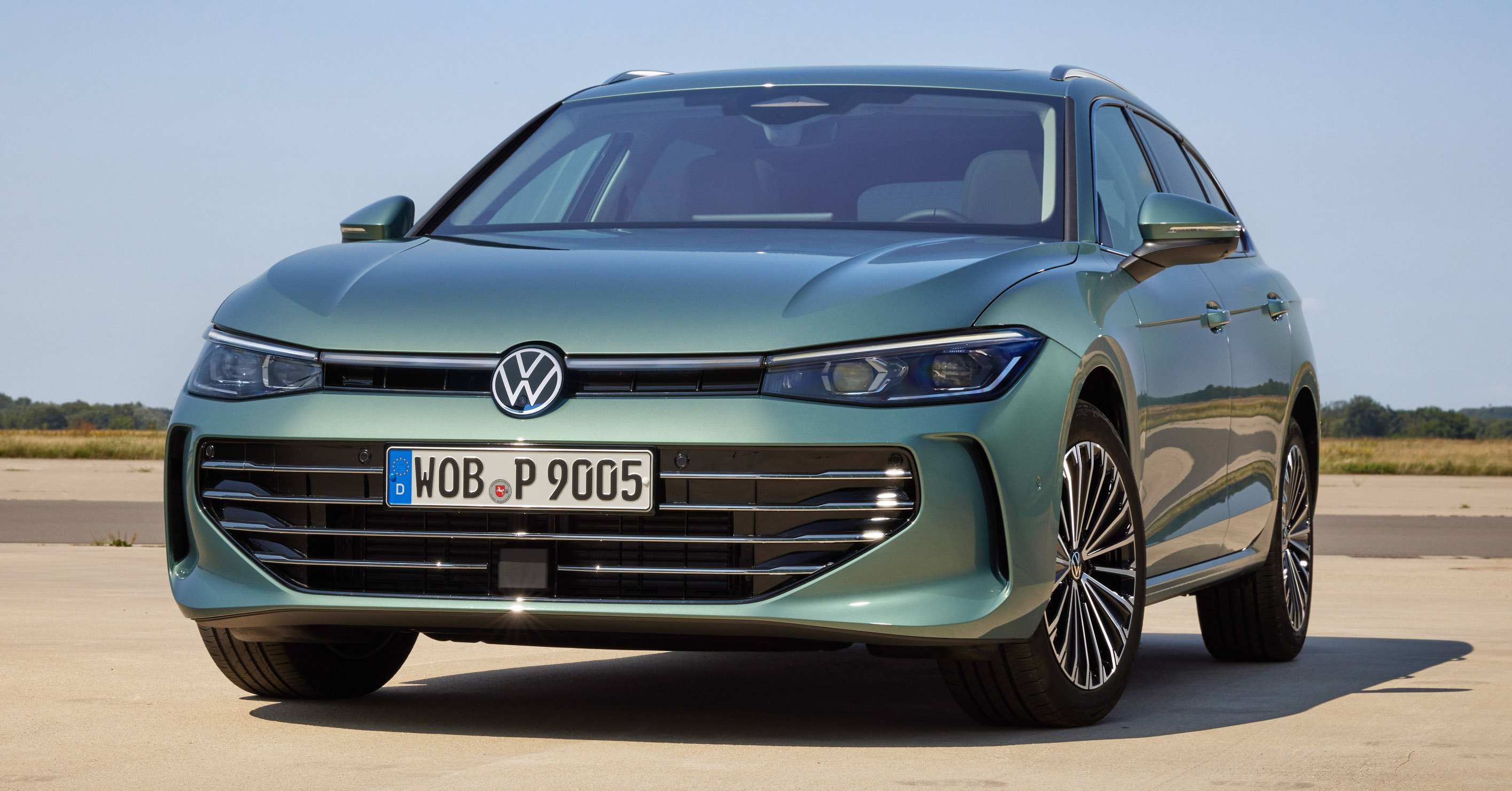
The Volkswagen Passat W8 stands as one of the most eccentric experiments in modern automotive history. Built between 2001 and 2005, this compact executive car crammed a custom 4.0-litre eight-cylinder engine into an engine bay designed for inline-four and V6 powerplants. It didn't make rational financial sense then, and it demands patience now, yet its engineering DNA directly links to hypercars like the Bugatti Veyron. If you're looking at buying or collecting one of these misunderstood Q-ships, you need to understand what makes them tick, where they break, and why enthusiasts still chase them.
Underneath its understated sheet metal, the Passat W8 delivered 275 horsepower and 273 lb-ft of torque, sending power through Volkswagen's 4Motion all-wheel-drive system. Volkswagen offered it in both sedan and estate (wagon) body styles, paired with either a 5-speed Tiptronic automatic or a rare 6-speed manual transmission. It wasn't built to dominate race tracks; rather, it was a showcase of corporate ambition during Ferdinand Piëch's legendary tenure as head of the Volkswagen Group.
The Engineering Behind the W8 Layout
To understand why the Passat W8 exists, you have to look at engine packaging. Volkswagen wanted an eight-cylinder engine that could fit into standard engine bays without requiring a stretched wheelbase. Instead of a traditional long V8 block, engineers welded two narrow-angle VR4 cylinders together at a 75-degree angle around a single crankshaft.
This configuration created a square, compact footprint roughly the size of a conventional V6. However, cramming this complex block into the B5.5 Passat platform left virtually zero wiggle room in the engine bay. Routine maintenance that normally takes minutes on a standard Passat often requires specialized service positions or engine removal on the W8.
Driving Dynamics and Real-World Performance
Out on the open road, the Passat W8 behaves like a true sleeper. It hits 60 mph from a standstill in roughly 6.5 seconds, pulling with a flat, relentless wave of torque from 2,000 up to 5,000 rpm. The 4Motion all-wheel-drive system provides surefooted traction in bad weather, making it a comfortable long-distance cruiser.
The exhaust note sets it apart from ordinary family haulers. It emits a deep, guttural hum that doesn't sound like a standard American V8 or a high-revving Japanese V6. Paired with the rare 6-speed manual transmission, it offers an engaging mechanical connection, though the vast majority sold featured the automatic Tiptronic setup. Fuel economy, as you might expect from a heavy, AWD luxury cruiser with eight cylinders, hovers around 20 to 28 mpg on the highway—and significantly worse in heavy city driving.
Common Mechanical Issues and Failure Points
Owning a Passat W8 requires deep pockets and mechanical vigilance. Because parts sharing with standard Passats is limited, maintenance bills can escalate quickly.
- Camshaft Adjusters: The factory cam adjusters and tensioners are notorious failure points. Internal oil screens clog easily, starving the adjusters of lubrication and triggering timing rattles and check engine lights.
- Torque Converter Failure: Automatic models frequently experience torque converter wear, resulting in slipping gears, transmission overheating, and expensive rebuild bills.
- Coolant and Heater Core Blockages: Mixing incompatible coolant types creates a chemical reaction that forms thick sludge, completely blocking the heater core and requiring a tedious flush or replacement.
- Accessory and Electrical Gremlins: Aging wiring harnesses can suffer from water intrusion due to clogged cowl drains, frying comfort control modules located beneath the carpets.
Buying Guide: What to Look For Today
If you're hunting for a Passat W8 on the used market, patience is your best asset. Never buy a cheap, neglected example assuming you can fix it cheaply.
- Verify the Service History: Look for thick binders of receipts detailing regular oil changes and cooling system maintenance. A gap in history is a major red flag.
- Listen to a Cold Start: Start the car cold and listen intently for any chain rattle or valve train noise. If the timing gear rattles upon startup, walk away.
- Test Every Electronic Component: Check the climate control, power seats, windows, and sun visors. Interior plastics degrade with age, and replacing specialized cabin trim parts can cost hundreds of dollars.
- Inspect the Floorboards: Check the front and rear passenger footwells for dampness, which indicates clogged sunroof or battery tray drains.
For more historical context on Volkswagen's engineering milestones during this era, you can read background details on Volkswagen corporate history.
Frequently Asked Questions
How many Volkswagen Passat W8 models were built?
Production numbers are low compared to standard Passats, with only a few thousand units distributed globally across its four-year production run, making manual sedan and wagon variants particularly hard to find.
Is the Passat W8 engine related to the Bugatti Veyron?
Yes. The W8 layout served as a proving ground for Volkswagen's W-engine architecture. Engineers scaled this concept up to create the W16 engine used in the Bugatti Veyron and Chiron.
Can you use standard Passat parts on a W8?
While suspension components, brakes, and body panels overlap with high-trim standard Passats, almost everything attached directly to the engine, transmission, and specific exhaust routing is unique to the W8.
What is the best year to buy?
Later production models (2003–2005) benefited from minor rolling updates and resolved some early electronic glitches, though finding a well-maintained example matters far more than the specific model year.



