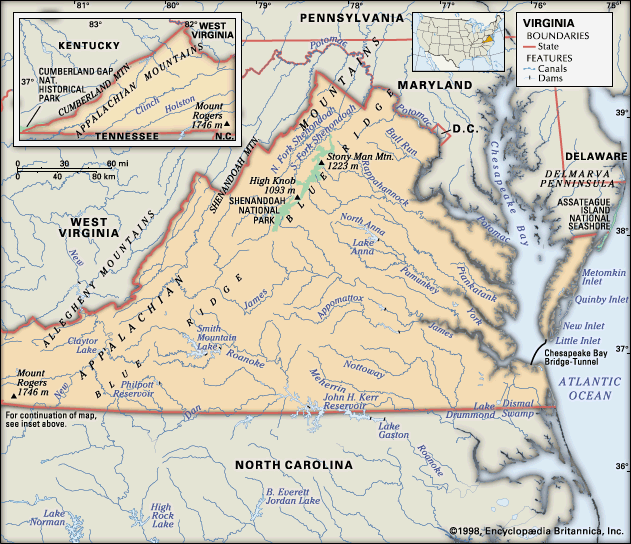
Virginia operates on the Eastern Time Zone, aligning its clocks with major financial and political hubs along the U.S. East Coast. Depending on the time of year, the Commonwealth observes either Eastern Standard Time (EST) at UTC-5 or Eastern Daylight Time (EDT) at UTC-4.
Knowing how time functions across the state involves more than just checking a watch. Seasonal transitions, geographic anomalies near federal borders, and historical shifts all shape how Virginia keeps track of hours and minutes.
Current Time Structure and Daylight Saving Rules
The Commonwealth observes Daylight Saving Time (DST), matching the federal standard set by the Energy Policy Act of 2005.
- Spring Forward: Clocks move ahead one hour on the second Sunday in March at 2:00 AM local time, shifting Virginia from EST to EDT (UTC-4).
- Fall Back: Clocks move backward one hour on the first Sunday in November at 2:00 AM local time, returning the state to EST (UTC-5).
These adjustments ensure longer daylight hours during the summer months and align commercial schedules with neighboring states from Florida up to Maine. Official timekeeping for the region is monitored via the National Institute of Standards and Technology, which synchronizes atomic clocks to keep schedules precise.
Geographic Uniformity Across the Commonwealth
Unlike larger states like Texas or Florida, which span multiple time zones, all of Virginia sits entirely within the Eastern Time Zone. From the coastal shores of Virginia Beach to the far-western mountain tip in Lee County, residents and businesses operate on the exact same hour.
This uniformity simplifies scheduling for logistics, state government operations, and transportation networks like the Virginia Department of Transportation. Commuters crossing state lines into eastern Tennessee or Kentucky, however, must account for the shift into the Central Time Zone.
Historical Evolution of Virginia Clocks
Standardized time zones did not always exist. Throughout the 19th century, Virginia towns relied on local solar time, meaning Richmond and Norfolk kept slightly different times based on their specific longitude.
Railroad expansion forced a change. On November 18, 1883, American railroads adopted standard regional time zones to prevent scheduling collisions and train wrecks. Congress later formalized these practices through the Standard Time Act of 1918, placing Virginia officially inside the Eastern zone.
Decades later, the Uniform Time Act of 1966 established a standardized nationwide system for Daylight Saving Time, though individual states retained the right to opt out. Virginia chose to participate fully, maintaining seasonal shifts for nearly six decades.
Common Misconceptions About Eastern Time
Travelers and remote workers often run into scheduling errors when dealing with East Coast schedules.
- Assuming DST is permanent: Virginia does not stay on Eastern Daylight Time year-round. Proposals to abolish biannual time changes surface frequently in state legislatures, but any permanent shift requires federal authorization.
- Confusing local solar noon: Because Virginia spans a wide longitudinal arc from its western ridges to the Atlantic coast, solar noon (when the sun is highest in the sky) occurs a few minutes later in Bristol than it does in Norfolk. Official legal time, however, remains uniform.
- Forgetting neighboring boundaries: Southwest Virginia borders Tennessee and Kentucky, regions split between Eastern and Central time. Local businesses near these borders frequently deal with cross-jurisdictional scheduling confusion.
Frequently Asked Questions
Does all of Virginia observe Daylight Saving Time?
Yes. Every county, city, and town in Virginia follows the federal schedule for shifting clocks forward in March and backward in November.
What is the time difference between Virginia and California?
Virginia is 3 hours ahead of California. When it is noon in Richmond, it is 9:00 AM in Los Angeles. This gap remains constant whether both regions are on standard time or daylight saving time.
How do time changes affect state transport and flights?
Major transportation hubs, including Dulles International Airport and Richmond International Airport, adjust their master logs automatically when DST begins and ends. Travelers should verify flight itineraries during the weekend of the time change to avoid missed connections.
Who regulates official time in the United States?
The U.S. Department of Transportation oversees official time zones and the observance of Daylight Saving Time, while atomic clocks maintained by government agencies track the exact duration of a second.



