Virginia's economic landscape has transformed dramatically over the past decade. Once viewed primarily as a satellite economy tied directly to federal government spending in Washington, D.C., the Commonwealth has engineered a wide-ranging commercial and cultural comeback. Today, the state drives national technological infrastructure, anchors critical advanced manufacturing hubs, and attracts population growth through a deliberate strategy of site readiness, educational alignment, and diversified regional development.
This evolution isn't a byproduct of luck. It's the result of coordinated investments in fiber optics, energy capacity, and technical talent pipelines that span far beyond Northern Virginia's borders. Understanding how the Old Dominion achieved this turnaround requires looking past state slogans to examine the mechanics of its infrastructure, workforce programs, and regional industry clusters.
The Digital Infrastructure Engine
The most visible catalyst behind Virginia's economic momentum is its dominance in digital infrastructure. Northern Virginia's "Data Center Alley" handles a massive share of global internet traffic, but viewing this phenomenon solely through a localized lens misses the broader statewide impact.
Data center expansion has generated multi-billion-dollar ripples across the state economy. According to reports from the Northern Virginia Technology Council (NVTC), the sector accounts for billions in economic output and substantial state tax revenues, funding local public services and educational improvements without placing undue strain on residential infrastructure.
* Key Drivers of Virginia's Digital Edge:
  - Fiber Connectivity: Decades of dense fiber optic deployment make low-latency operations standard.
  - Power Readiness: Coordinated utility planning ensures reliable energy capacity for high-density computing.
  - Geographic Expansion: Development is spreading southward along the I-95 corridor to Central Virginia and Caroline County.
This infrastructure provides a bedrock for artificial intelligence, cloud computing, and enterprise software firms looking for predictable operating environments. By turning raw land into shovel-ready tech campuses backed by robust power purchase agreements, the state removes friction for enterprise capital deployment.
Diversifying Beyond the Federal Footprint
For generations, federal defense contracts and agency headquarters dictated Virginia's economic cycles. Budget shutdowns or federal sequestration sent immediate shockwaves through local housing markets and retail spending. The modern economic strategy centers on diversification.
State economic development organizations have aggressively courted private sector industries, specifically targeting biotechnology, semiconductor manufacturing, and advanced logistics. The Alliance for Building Better Medicine serves as a prime example, securing major funding to anchor pharmaceutical and medical supply manufacturing domestically. This reduces reliance on overseas supply chains and establishes high-wage technical roles outside the traditional defense corridor.
Regional clusters play a vital role in this diversification:
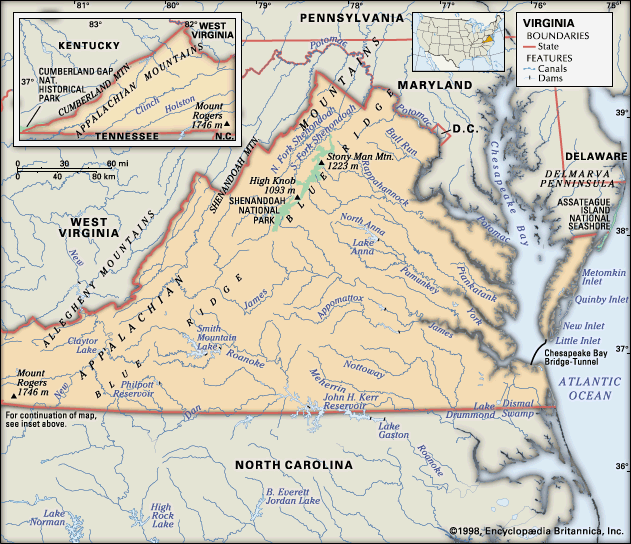
- The Shenandoah Valley: Focuses on specialized food manufacturing, applied biomanufacturing research, and advanced machinery.
- Hampton Roads: Leverages maritime logistics, clean energy transition projects, and aerospace engineering.
- Southwest Virginia: Transitions former industrial and extraction economies into precision manufacturing and outdoor recreation tourism hubs.
Cultivating a Modern Workforce Pipeline
Infrastructure alone doesn't sustain a regional comeback; talent availability seals the deal. Virginia realized early that economic recruitment requires a synchronized educational pipeline.
Through targeted state investments, the Commonwealth expanded technical training programs across its community college system and four-year universities. Programs specifically tailored to cloud computing, mechatronics, and cybersecurity now feed directly into local hiring pipelines.
Major initiatives like Virginia Economic Development Partnership programs coordinate closely with employers to design curricula that match real-world operational needs. Instead of waiting for graduates to acquire specialized skills on the job, regional institutions certify students in high-demand technical competencies before they enter the workforce. This cuts onboarding times for incoming corporations and ensures local residents capture high-paying career tracks.
Cultural Shifts and Population Influx
Economic mobility has fundamentally reshaped Virginia's cultural fabric. As secondary markets like Richmond, Roanoke, and Charlottesville develop robust culinary scenes, arts districts, and independent economies, they attract remote workers and urban migrants seeking alternatives to high-cost coastal mega-regions.
This influx brings shifting demographics. Younger professionals and remote workers prioritize housing affordability, outdoor recreation access, and community connectivity. Cities across the Commonwealth have responded by revitalizing historic downtown districts, investing in multi-use green spaces, and encouraging micro-brewery and small-business ecosystems that anchor neighborhood culture.
* Common Missteps in Assessing Regional Growth:
  - Assuming growth is isolated to Washington, D.C. suburbs.
  - Overlooking the massive economic multipliers of construction and utility scaling.
  - Treating workforce development as a static educational expense rather than an ongoing industrial partnership.
Frequently Asked Questions
What industries are driving Virginia's current economic growth?
Growth is anchored by cloud and AI infrastructure, advanced manufacturing, biotechnology, and aerospace, alongside a strong baseline of federal technology contracting.
How has Northern Virginia's tech boom affected the rest of the state?
While Northern Virginia remains the largest density market, tax revenues and supply chain demands benefit the entire Commonwealth. Furthermore, tech infrastructure and industrial parks are actively expanding into Central Virginia, Hampton Roads, and the Shenandoah Valley.
What makes Virginia an attractive location for data centers and tech companies?
The state combines established fiber optic density, reliable utility coordination, predictable zoning frameworks, and a steady stream of engineering graduates from institutions like Virginia Tech.
How is the state addressing technical workforce shortages?
Virginia has invested heavily in public higher education pipelines, partnering community colleges with corporate employers to offer specialized certifications in cloud computing, cybersecurity, and advanced manufacturing mechanics.



