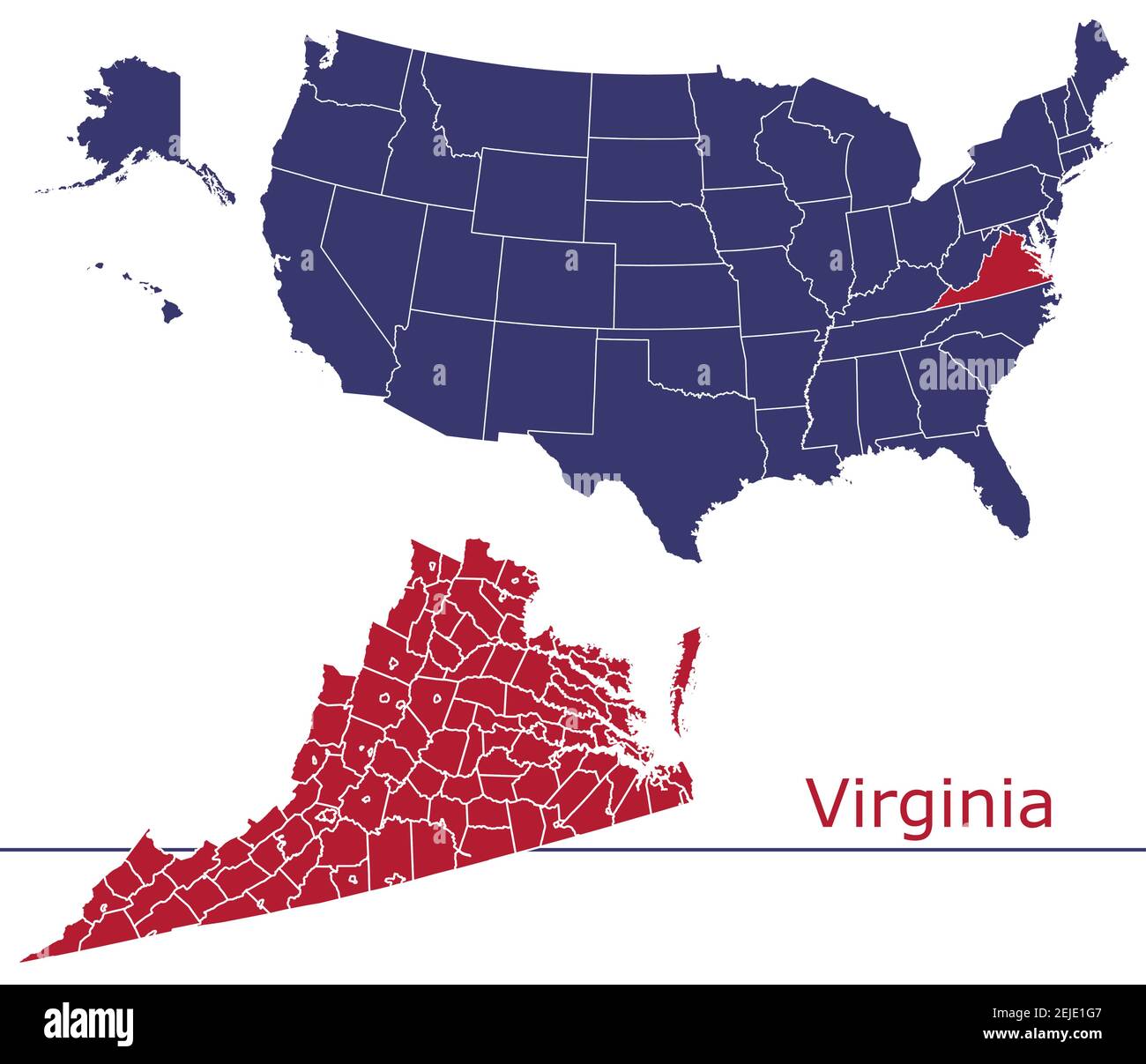
Virginia operates as a quiet powerhouse behind American commerce, national defense, and digital infrastructure. While visitors remember the Commonwealth for Jamestown and Monticello, its modern identity centers on massive data corridors, global shipping lanes, and a high-tech workforce that anchors the mid-Atlantic.
Understanding Virginia requires looking past historical tourism to examine how a unique public-private economic ecosystem functions. From the federal contracting hubs of Northern Virginia to the deep-water terminals of Hampton Roads, the Old Dominion drives key sectors of the national economy.
The Economic Engine of Northern Virginia
Northern Virginia (NoVA) generates a massive share of the state's gross domestic product, driven by its proximity to Washington, D.C. This region operates differently from traditional manufacturing or agricultural centers. It relies on a high-density cluster of defense contractors, intelligence agencies, and software enterprises.
The Data Center Alley Phenomenon
Loudoun County, often called "Data Center Alley," handles a staggering portion of global internet traffic.
- Over seventy percent of the world's internet traffic routes through servers stationed in Ashburn, Virginia.
- Cheap, reliable power, robust fiber optic infrastructure, and favorable tax incentives attracted major cloud providers like Amazon Web Services, Microsoft, and Google.
- This digital hub creates thousands of specialized jobs in network engineering, cybersecurity, and facilities management.
Federal Contracting and Defense
The defense and aerospace sectors provide a stable economic floor that shields the region from broader market downturns. Major employers like Northrop Grumman, General Dynamics, and thousands of specialized defense tech firms maintain headquarters or large offices near the Pentagon and intelligence agency hubs. This creates an environment where private innovation constantly intersects with public sector needs.
Hampton Roads and Maritime Trade
While Northern Virginia dominates technology, the Hampton Roads region anchors the state's maritime and heavy industrial economy. This coastal area features one of the most advanced port networks in the Western Hemisphere.
The Port of Virginia
The Port of Virginia handles millions of twenty-foot equivalent units (TEUs) annually. Key advantages include:
- Deep-water shipping channels dredged to 55 feet, allowing ultra-large container vessels to dock without tidal restrictions.
- On-dock rail access connecting the terminals directly to midwestern and inland markets via Class I railroads like Norfolk Southern and CSX.
- High automation levels at terminals like Virginia International Gateway, which speeds up turnaround times for cargo trucks and freight carriers.
Shipbuilding and Defense
Hampton Roads also hosts massive naval installations, including Naval Station Norfolk, the world's largest naval base. Newport News Shipbuilding, a division of Huntington Ingalls Industries, stands as the sole designer and builder of nuclear-powered aircraft carriers for the United States Navy. This creates a specialized manufacturing ecosystem with thousands of skilled tradespeople, marine engineers, and metal fabricators.
Agriculture and Agribusiness Diversity
Away from the urban and coastal corridors, Virginia's interior maintains a robust agricultural footprint. Agribusiness ranks as one of the state's top private industries, contributing billions of dollars annually.
- Poultry and Livestock: The Shenandoah Valley serves as a primary center for poultry and egg production, supplying major grocery chains across the East Coast.
- Viticulture: Virginia ranks among the top states for wine production, boasting hundreds of wineries producing award-winning Viognier and Cabernet Franc.
- Timber and Forestry: Wood products and paper manufacturing support rural economies throughout the Piedmont and Southern regions.
Higher Education and Workforce Development
Economic growth relies heavily on a steady pipeline of skilled talent. Virginia supports this through a network of premier public research universities and technical colleges.
- Flagship Institutions: The University of Virginia and Virginia Tech produce thousands of graduates annually in engineering, computer science, business, and agriculture.
- Community College Alignment: The Virginia Community College System works directly with local employers to design certificate programs that match immediate hiring needs in advanced manufacturing and IT.
Frequently Asked Questions
What industries drive Virginia's economy today?
Virginia's economy relies on professional and technical services, federal defense contracting, technology infrastructure (such as cloud computing and data centers), maritime shipping, and agriculture.
Why are so many data centers located in Northern Virginia?
Early investments in fiber optic networks, proximity to the federal government, reliable power grids, and pro-business local tax structures transformed Loudoun County into the global capital for data processing.
How does the Port of Virginia impact the U.S. supply chain?
As a major deep-water East Coast hub with direct rail connections, the port relieves congestion from other eastern ports and moves goods rapidly into the U.S. interior.
Is Virginia still dependent on agriculture?
While technology and government contracting lead the GDP, agribusiness and forestry remain vital, multi-billion-dollar industries that sustain rural communities across the Shenandoah Valley and Southern regions.