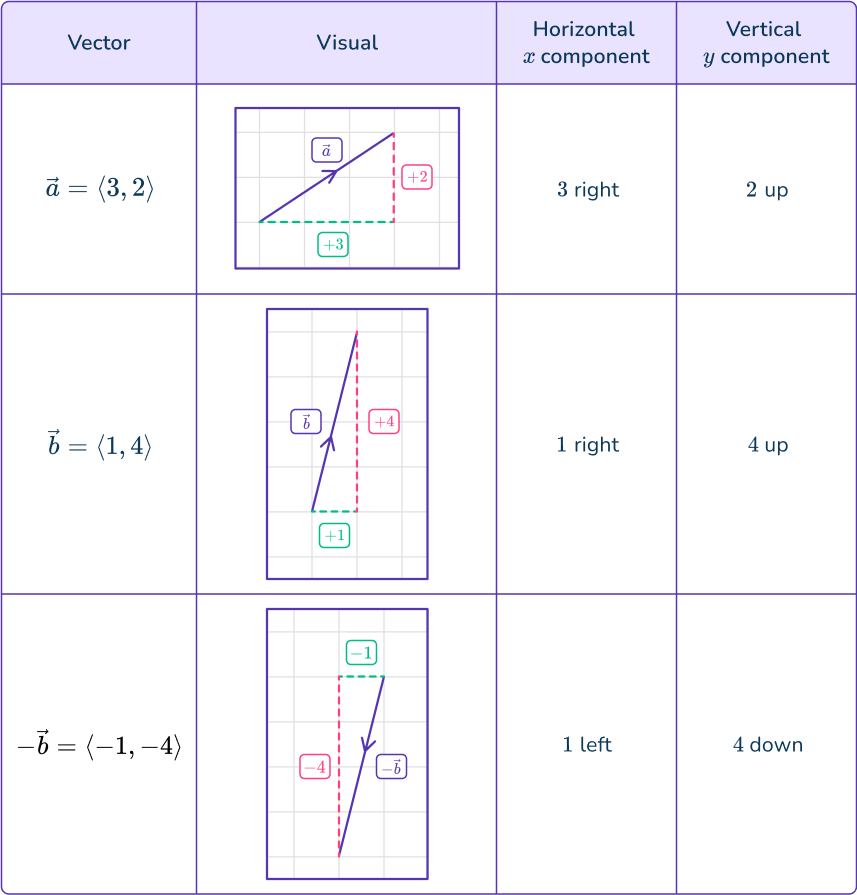
Vectors define directional quantities that possess both magnitude and direction, serving as the hidden mathematical framework behind everything from physics simulations to artificial intelligence. While scalars only describe how much—such as mass, temperature, or speed—vectors answer both how much and which way, making them indispensable for tracking movement, forces, and spatial relationships.
In modern systems, vectors allow computers and engineers to translate physical phenomena and abstract data into numerical coordinates. Understanding how vector math functions across engineering, computer graphics, and machine learning reveals why these directional quantities power contemporary technological infrastructure.
Core Anatomy and Operations of Vectors
A vector is represented mathematically as a directed line segment or an ordered tuple of numbers. In a two-dimensional Cartesian plane, a vector $v = (3, 4)$ indicates a displacement of 3 units along the x-axis and 4 units along the y-axis.
The magnitude, or length, of this vector is calculated using the Pythagorean theorem:
$$|v| = \sqrt{3^2 + 4^2} = 5$$
Direction is determined by the angle the vector makes with a reference axis. Performing operations on these quantities requires specific rules:
- Vector Addition: Combined using the head-to-tail method, where the tail of the second vector connects to the head of the first to produce a resultant vector.
- Scalar Multiplication: Scaling a vector changes its magnitude without altering its line of action, unless multiplied by a negative number, which reverses its direction.
- Dot Product: Multiplies two vectors to yield a single scalar value, useful for finding the angle between them or determining how much one vector extends in the direction of another.
- Cross Product: Operates on two three-dimensional vectors to produce a third vector orthogonal to both, essential for calculating torque and surface normals.
Vectors in Physics and Mechanical Engineering
Isaac Newton's laws of motion are fundamentally expressed through vector equations. Force, acceleration, momentum, and velocity are all vector quantities. When an engineer designs a suspension bridge or calculates the trajectory of a spacecraft, they break complex physical loads down into their directional components.
For instance, structural loads acting diagonally on a roof truss are decomposed into horizontal and vertical vectors. This decomposition allows engineers to size support beams precisely to counteract shear and compressive stress.
In aerospace applications, navigation systems compute real-time vector sums of thrust, gravity, and aerodynamic drag. According to NASA's Glenn Research Center, orbital mechanics rely entirely on continuous vector calculus to ensure spacecraft maintain stable trajectories without drifting off course.
Transforming Computer Graphics and Game Engines
Every visual element rendered on a digital screen relies on vector math. Computer graphics pipelines use matrices to transform vectors, enabling rotation, scaling, and translation of 3D models in virtual environments.
When a 3D character moves across a screen, the game engine calculates position vectors for every vertex of the character's polygon mesh. Lighting calculations use normal vectors—perpendicular lines pointing outward from a surface—to determine how light bounces off objects, creating realistic shadows and reflections. Without rapid vector operations processed by modern GPUs, real-time interactive rendering would be impossible.
Vector Embeddings in Machine Learning
In modern data science and artificial intelligence, the term "vector" extends beyond physical movement into abstract data representation. Machine learning models transform text, images, and audio into high-dimensional numerical arrays known as embeddings.
For example, natural language processing models convert words into dense vectors where semantic relationships correspond to spatial proximity. Words with similar meanings, such as "engineer" and "developer," occupy nearby coordinates in an abstract vector space. Algorithms can then perform arithmetic on these concepts—such as subtracting the vector for "man" from "king" and adding "woman"—to yield results close to "queen."
Vector databases power modern semantic search engines and recommendation systems by computing cosine similarity between query vectors and stored document vectors, retrieving relevant information based on meaning rather than exact keyword matches.
Common Mistakes in Vector Calculations
Working with vectors introduces specific mathematical pitfalls that can invalidate engineering simulations or software algorithms:
- Confusing Dot and Cross Products: Applying a dot product when a perpendicular direction is needed, or expecting a vector output from a dot product.
- Failing to Normalize: Using vectors of varying lengths in calculations where only direction matters, which skews directional weighting in graphics and machine learning models.
- Ignoring Coordinate Systems: Combining vectors defined in different reference frames—such as local object space versus global world space—without applying the proper transformation matrix first.
Frequently Asked Questions
What is the difference between a scalar and a vector?
A scalar is a quantity defined purely by magnitude, such as temperature or mass. A vector requires both magnitude and direction, such as velocity or force.
Why are vectors important in machine learning?
Machine learning algorithms cannot process raw text or images directly. Converting data into numerical vectors allows models to compute mathematical relationships and identify patterns across high-dimensional spaces.
How do game engines use vectors?
Game engines use vectors to track object positions, calculate movement physics, determine camera angles, and compute lighting interactions against surface normals.
Can vectors have more than three dimensions?
Yes. While physical space is limited to three dimensions, mathematical and computational vectors can possess hundreds or thousands of dimensions, particularly in data science and neural network architectures.


