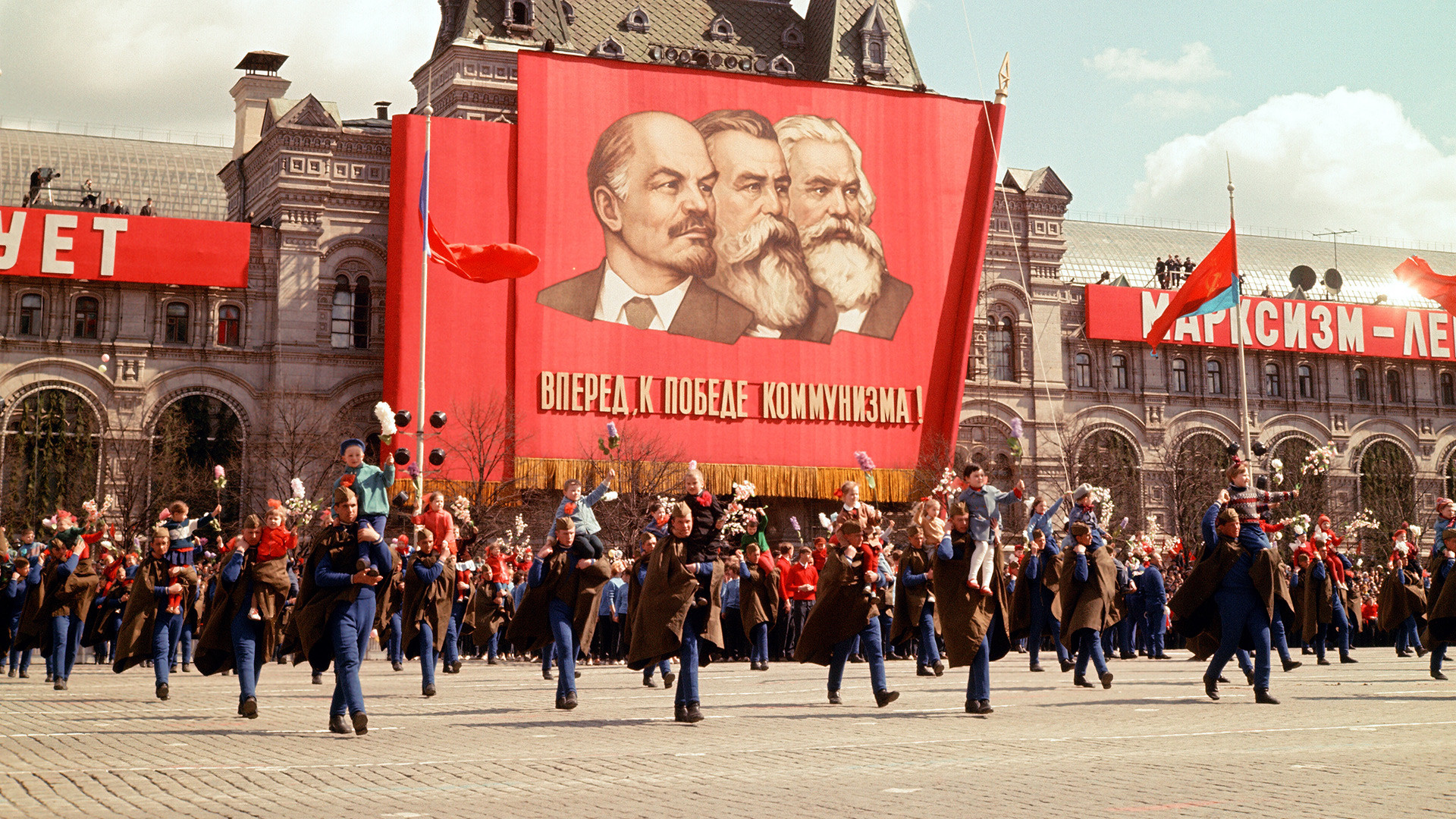
The USSR full form stands for the Union of Soviet Socialist Republics, a massive transcontinental state that spanned Eurasia from 1922 until its dissolution in 1991. Often referred to simply as the Soviet Union or Soyuz Sovetskikh Sotsialisticheskikh Respublik in Russian, it emerged from the ashes of the Russian Empire following the Russian Revolution and the tumultuous civil war that shattered the tsarist autocracy. At its height, this federal union encompassed fifteen constituent republics, stretching from the Baltic and Black Seas to the Pacific Ocean, and functioned as one of the two dominant global superpowers during the twentieth century alongside the United States.
Understanding the Soviet Union requires looking far past the acronym. It demands an examination of how a largely agrarian society transformed into an industrial and nuclear titan, how centralized command economics functioned on a continental scale, and why the whole structure collapsed under the weight of structural stagnation and political reform. This examination breaks down the historical arc, governing anatomy, economic mechanics, and lasting global legacy of the twentieth century's most ambitious socialist experiment.
Foundations and the Birth of a Superpower
The institutional roots of the Soviet state trace back to December 1922, when the Russian Soviet Federative Socialist Republic united with the Ukrainian, Belarusian, and Transcaucasian Soviet republics. Vladimir Lenin and the Bolshevik leadership engineered this federation as a practical solution to govern disparate ethnic territories while maintaining strict ideological control through the Communist Party. Following Lenin's death and a brutal power struggle, Joseph Stalin seized absolute control, steering the country down a path of forced industrialization and violent agricultural collectivization.
This era of state-directed transformation changed the global balance of power. Through successive five-year plans, the state poured capital and human labor into heavy industry, steel production, and electrical grids. While human costs were staggering—marked by millions of deaths during famines and political purges—the industrial base proved resilient enough to absorb the Nazi invasion during World War II. The Red Army bore the heaviest burden of defeating European fascism, culminating in the capture of Berlin in 1945 and establishing the USSR as a military colossus.
The Anatomy of the Soviet State
The governing machinery of the Soviet Union rested on a complex fusion of state administration and party dominance. While the constitution outlined a traditional parliamentary structure featuring a supreme legislature known as the Supreme Soviet, actual policy was formulated within the Politburo of the Communist Party of the Soviet Union. Power flowed downward from Moscow through a rigid hierarchy of regional committees, local soviets, and workplace party cells.
Key structural pillars sustained this vast administrative apparatus:
- The Command Economy: Prices, production targets, and resource distribution were fixed by state planners in Moscow through bodies like Gosplan, eliminating market forces and private enterprise.
- The Securocratic State: Internal security organizations, evolving from the Cheka into the KGB, maintained strict surveillance, censored public discourse, and suppressed political dissent across all republics.
- Federalist Facade: While the union granted nominal autonomy and cultural recognition to non-Russian nationalities, real power remained concentrated in Moscow under tight Russification pressures.
- Ideological Hegemony: State-controlled education, media, and youth organizations propagated Marxist-Leninist doctrine from early childhood through adulthood.
Cold War Dominance and Global Reach
Following 1945, the geopolitical landscape entered the Cold War, a decades-long ideological and military standoff between the Soviet bloc and Western capitalist democracies led by the United States. The USSR consolidated its sphere of influence across Eastern Europe through the Warsaw Pact and the Council for Mutual Economic Assistance, creating a buffer zone of satellite states. The nuclear arms race accelerated after the Soviet Union successfully tested its first atomic bomb in 1949, setting off a dangerous balance of terror based on mutually assured destruction.
Scientific achievements punctuated this period of global competition. In 1957, the launch of Sputnik shocked the West and inaugurated the space age. Four years later, Yuri Gagarin became the first human in space aboard Vostok 1. Yet, despite these technological triumphs, the civilian economy struggled to provide consumer goods, leading to chronic shortages, long queues for basic items, and a widening technological gap with Western market economies.
Reform, Collapse, and the 1991 Dissolution
By the early 1980s, the Soviet system was groaning under gerontocratic leadership, plummeting oil revenues, and astronomical military spending driven by the war in Afghanistan and competition with the United States. When Mikhail Gorbachev assumed power in 1985, he introduced sweeping reforms intended to revitalize the socialist system rather than destroy it.
Two signature policies defined his tenure:
- Glasnost (Openness): Permitted unprecedented freedom of speech, press freedom, and public critique of government policies, which instead of strengthening the system exposed systemic failures and historical atrocities.
- Perestroika (Restructuring): Attempted to decentralize economic decision-making and introduce modest market incentives, which produced economic chaos, inflation, and severe shortages of food and fuel.
As central authority weakened, suppressed ethnic nationalisms erupted across the republics. The Baltic states declared independence, followed by Ukraine, Belarus, and others. A failed hardline coup in August 1991 accelerated the disintegration. On December 25, 1991, the red hammer-and-sickle flag was lowered from the Kremlin for the final time, and the Soviet Union formally ceased to exist, splintering into fifteen independent nation-states.
Frequently Asked Questions
What does USSR stand for?
The acronym USSR stands for the Union of Soviet Socialist Republics. In Russian, it was known as Soyuz Sovetskikh Sotsialisticheskikh Respublik (CCCP).
How many republics made up the Soviet Union?
At the time of its dissolution in 1991, the Soviet Union consisted of fifteen constituent republics, including Russia, Ukraine, Belarus, Kazakhstan, and eleven other nations in Eastern Europe, Central Asia, and the Caucasus.
When was the Soviet Union formed and dissolved?
The Soviet Union was officially established on December 30, 1922, and was officially dissolved on December 26, 1991, following the signing of the Alma-Ata Protocol.
Why did the Soviet Union collapse?
The collapse resulted from a combination of chronic economic stagnation, the failure of Gorbachev's economic and political reforms, military overextension in Afghanistan, plummeting global oil prices, and the resurgence of nationalism across the constituent republics.
Who was the last leader of the USSR?
Mikhail Gorbachev served as the final General Secretary of the Communist Party and the only President of the Soviet Union from 1985 until its dissolution in 1991.



