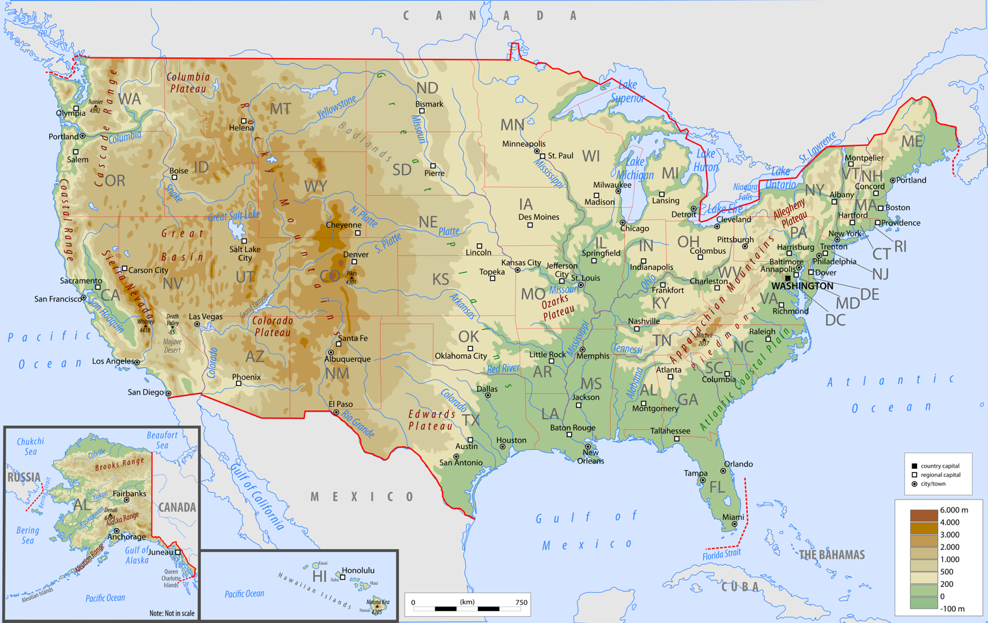
When you need the us state short for delaware, you use the two-letter code DE. This abbreviation appears everywhere today. You'll spot it on mailing envelopes, driver's licenses, tax forms, and shipping labels. But how did this concise code come to be, and why does it matter so much in modern logistics?
The short form DE traces back to mid-century postal reforms designed to handle massive volumes of mail. Before the 1960s, mail sorting relied on traditional abbreviations like Del. or longhand state names. As mail volume exploded, the United States Post Office Department needed a standardized system to fit addresses into rigid computer punch cards and sorting machine constraints.
The Origins of Two-Letter State Codes
The modern two-letter system didn't happen overnight. In July 1963, the Post Office Department introduced the five-digit ZIP code to speed up delivery. However, early sorting machinery and addressing equipment imposed strict character limits. Most postal machines could only read 23 characters per line for the city, state, and ZIP code combined.
Traditional abbreviations like Colorado (Colo.) or Delaware (Del.) took up too many spaces. The agency realized it needed a uniform length for every state and territory. Officials established a strict two-letter rule. This constraint forced a complete overhaul of how Americans write geographic identifiers.
For single-word states like Delaware, assigning the code was straightforward. Postal planners took the first and last letters of the name, resulting in DE. Other states followed similar logic, though overlapping names required creative adjustments to avoid confusion. For instance, Denver or other regions couldn't share prefixes, so planners mapped out distinct pairs for every single jurisdiction.
Traditional vs. Postal Abbreviations
Before the ZIP code era, various style guides used different abbreviations. Academic institutions, newspapers, and the Government Publishing Office each had their own preferred shortcuts.
Traditional abbreviations typically used the first three or four letters followed by a period. Delaware was commonly written as "Del." with a period at the end. Other examples included "Pa." for Pennsylvania and "Mass." for Massachusetts.
Postal codes eliminated punctuation entirely. The two-letter format without periods saved valuable electronic storage space on early mainframe computers. You can review the official standards through the USPS Postal Explorer guidelines. Dropping the period also reduced scanning errors on automated optical character recognition equipment.
How DE Functions in Logistics and Data
Today, the code DE does much more than route paper mail. It acts as a primary data key in databases, e-commerce platforms, and tax compliance software.
When you order an item online, the checkout form requires a state field. Software validates your input against standard geographic tables. If you type lowercase letters or accidental spaces, validation scripts instantly clean the data into uppercase DE. This standardization prevents duplicate customer profiles and shipping errors.
Government agencies rely on these codes for statistical tracking. The Bureau of Labor Statistics pairs postal codes with Federal Information Processing Standards codes to organize economic datasets. Delaware's numeric FIPS code is 10, while its postal counterpart remains DE.
Common Mistakes with State Abbreviations
People often confuse state codes or format them incorrectly in professional documents. Avoiding these errors keeps your writing sharp and prevents data entry failures.
- Using periods in postal codes: Never write D.E. or DE. The official standard requires plain capital letters.
- Confusing Delaware with other D states: Double-check whether you mean DE for Delaware, DC for the District of Columbia, or other similar initials.
- Relying on old traditional forms: Avoid mixing legacy abbreviations like Del. into modern digital databases or mailing address blocks.
- Forgetting capitalization: Lowercase input can trigger validation errors in automated shipping portals. Always output state codes in uppercase.
Frequently Asked Questions
Why does Delaware use DE instead of DL?
Postal planners originally assigned codes based on the first and last letters of single-word state names, or first letters for multi-word states. Since D and E formed the clearest initial and final consonant-vowel pairing for Delaware, DE became the permanent standard.
What is the difference between Del. and DE?
Del. is the traditional abbreviation used historically in journalism and general writing, complete with a period. DE is the official two-letter postal code established by the United States Postal Service in 1963 for automated sorting and digital databases.
Does DE stand for anything besides Delaware?
In international contexts, DE is the ISO country code for Germany (Deutschland). Within the United States postal and data systems, however, it exclusively designates Delaware. Context always clarifies which entity the code represents.
Can lowercase letters be used for state codes?
Most modern web forms automatically convert lowercase inputs to uppercase. However, strict database architectures and programming functions may reject lowercase entries like de, causing form submission failures or shipping delays.



