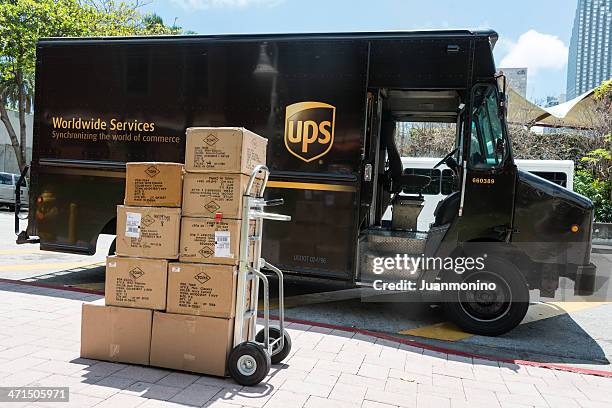
United Parcel Service trades around $109 per share, hovering near the middle of its 52-week range as investors weigh operational cost reductions against shifting delivery volumes. Tracking the daily valuation requires looking past raw ticker movements to evaluate underlying fundamentals, including recent quarterly earnings beats, dividend yields, and long-term network efficiency initiatives.
Market participants tracking market momentum need clear insight into how restructuring programs affect the bottom line. This breakdown examines current share performance, recent financial catalysts, and the core metrics driving investor sentiment.
Understanding Current Market Valuation
Share prices shift constantly during trading hours on the New York Stock Exchange under the ticker symbol UPS. The valuation reflects a market capitalization of roughly $93 billion, carrying a price-to-earnings ratio near 20.
Fluctuations depend heavily on daily delivery volume reports, broader supply chain trends, and macroeconomic indicators like fuel costs and consumer spending. Looking at the broader annual window, shares have traded between a 52-week low of roughly $90.84 and a high of $122.41. Short-term traders focus on intraday volume and moving averages, while long-term investors weigh cash flow stability against industry competition. To read more about the context here, NerdWallet offers an in-depth summary.
Recent Earnings and Financial Performance
In its third-quarter financial report released on October 27, 2026, United Parcel Service posted earnings per share of $1.69, edging past analyst consensus expectations of $1.63. Revenue results came in line with expectations as management continued executing strategic efficiency transformations.
The company's operational strategy centers heavily on automation and network optimization. Management has focused on rationalizing network capacity and adjusting contracts to protect operating margins, particularly as volume from major enterprise partners evolves. Total projected revenue for the fiscal year sits near $92.6 billion, with operating profit targets reflecting ongoing cost discipline.
Key Financial Metrics to Watch
- Price-to-Earnings Ratio: Hovering around 20, indicating how much investors are willing to pay for each dollar of earnings.
- Dividend Yield: Historically a cornerstone for income-focused portfolios, supported by consistent quarterly cash distributions managed through the official UPS Investor Relations portal.
- Operating Margin: The primary indicator of whether cost-cutting measures and automation efforts are successfully expanding profitability.
Dividend History and Shareholder Returns
Income investors frequently monitor cash distributions when evaluating entry points. United Parcel Service has maintained a steady history of returning capital to shareholders through regular quarterly dividends. For instance, payouts have historically tracked around $1.64 per share quarterly, supported by steady free cash flow generation.
When evaluating dividend safety, look at the payout ratio relative to free cash flow rather than net income alone. Capital expenditures for fleet electrification, sorting facility automation, and network updates directly influence how much cash remains available for dividend growth or share buybacks.
Factors Influencing Future Price Movement
Several macro and operational variables dictate where equity values head next:
- Labor Relations and Costs: Wage structures and contract compliance negotiated with unions dictate a massive portion of operating expenses. Managing labor overhead without sacrificing service quality remains a balancing act.
- E-Commerce Volume Trends: Consumer retail habits and B2B shipping demand directly drive daily package volume across ground and air networks.
- Alternative Delivery Competition: Intense rivalry from dedicated logistics arms of major retailers alters market share dynamics and pricing power.
Frequently Asked Questions
What is the primary ticker symbol for United Parcel Service?
The company trades on the New York Stock Exchange under the ticker symbol UPS.
How often does the company pay dividends?
Distributions are typically evaluated and declared on a quarterly basis by the board of directors, subject to financial performance and cash flow availability.
Where can official financial filings be found?
Investors can access verified SEC filings, 10-Q reports, and annual 10-K documents directly through the U.S. Securities and Exchange Commission database.
What drove the most recent quarterly earnings surprise?
Recent earnings beats were primarily driven by rigorous cost control, network consolidation, and efficiency gains from automated sorting facilities rather than raw volume expansion.



