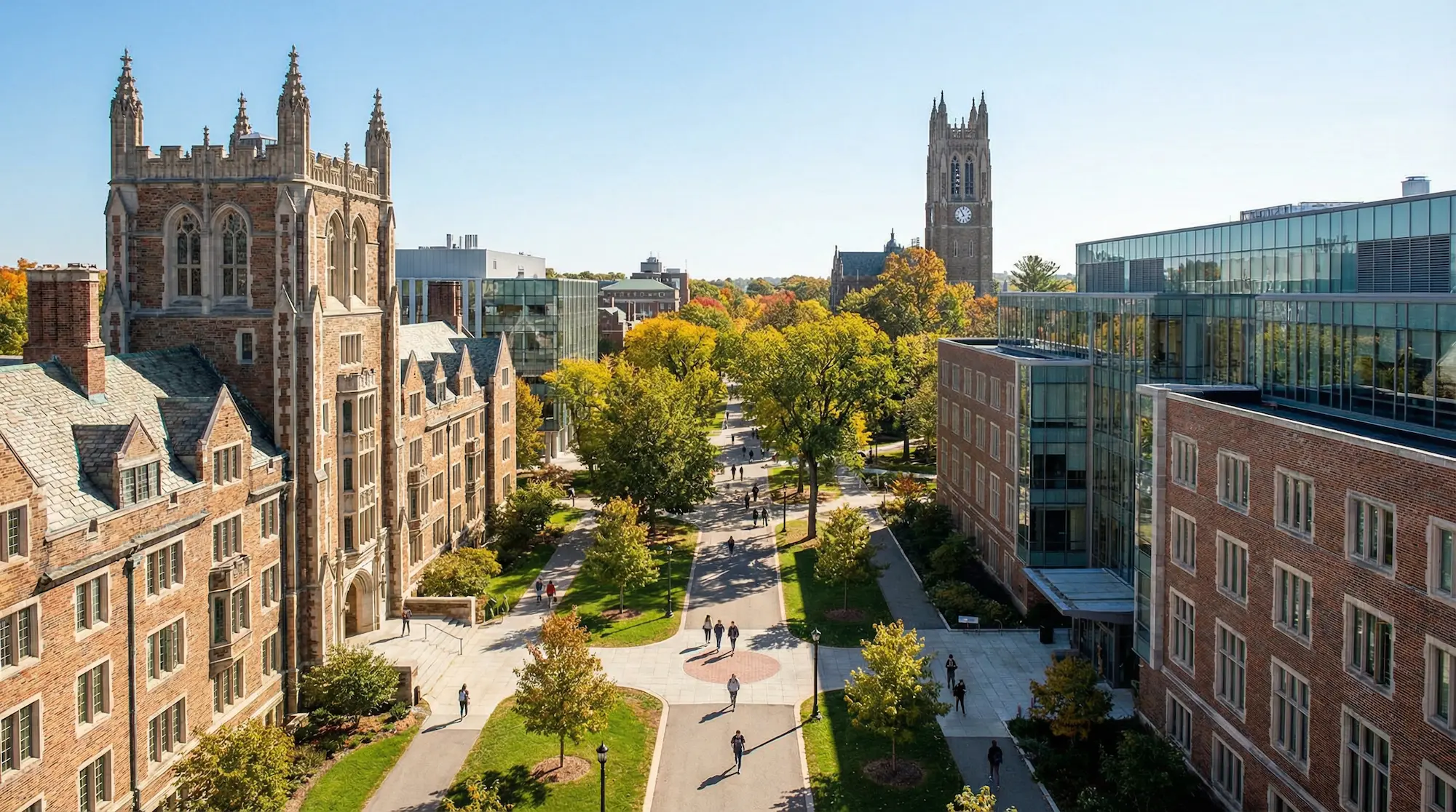
The University of Michigan operates as a central driver of scientific and technological progress in the American Midwest. With annual research expenditures exceeding $2 billion, the institution ranks as a top public university nationally for research spending. Located in Ann Arbor, the university combines massive scale with interdisciplinary collaboration, turning academic theories into practical applications across healthcare, engineering, and sustainable energy.
Understanding how this research engine functions requires looking past generic rankings and examining concrete investments, cross-college laboratories, and regional economic impact.
The Scale of Research Expenditures and Infrastructure
Financial investment dictates the scope of modern academic discovery. The university allocates billions annually to support laboratories, clinical trials, and field research across multiple campuses and specialized facilities.
Rather than isolating academic departments, the institution builds cross-disciplinary structures where engineers, medical doctors, and social scientists work in shared spaces. This layout accelerates project timelines, moving concepts from early-stage prototyping to real-world testing.
- Biomedical Research: Michigan Medicine manages thousands of active clinical trials, bridging laboratory findings with direct patient care in areas like oncology, neurology, and immunology.
- Engineering and Robotics: Facilities like the Ford Motor Company Robotics Building bring roboticists, computer scientists, and corporate partners under one roof to build autonomous systems and advanced hardware.
- Energy Systems: Faculty members investigate next-generation battery chemistry, solar capture methods, and grid efficiency to address long-term sustainability demands.
For more details on institutional spending and funding allocation, you can review reports from the National Science Foundation.
Translating Lab Discoveries Into Regional Economic Impact
Academic innovation doesn't stay confined to campus lecture halls. The university acts as an economic anchor for Washtenaw County and the broader Midwest, spinning off startup companies and licensing intellectual property to industry leaders.
Venture accelerators and tech transfer offices help researchers file patents and secure early-stage capital. This pipeline transforms theoretical proofs into commercial products, creating specialized jobs in fields like software development, medical devices, and advanced manufacturing.
- Tech Transfer Metrics: Dozens of startup ventures launch from university research annually, drawing venture capital to the region.
- Corporate Partnerships: Long-standing agreements with automotive, tech, and pharmaceutical firms anchor private sector R&D facilities close to Ann Arbor.
To explore broader regional economic data and state development initiatives, visit the Michigan Economic Development Corporation.
Interdisciplinary Academic Culture and Student Involvement
Research prowess directly feeds the student experience. Undergraduate and graduate students participate in hands-on laboratories early in their academic careers, working alongside tenured faculty rather than just reading textbooks.
Programs across data science, global health, and public policy require students to synthesize methodologies from diverse academic fields. This model prepares graduates to solve complex, multifaceted problems in professional environments.
- Undergraduate Research Opportunities Program (UROP): Connects first- and second-year students directly with faculty-led research projects across every discipline.
- Makerspaces and Incubators: Provide physical tools, prototyping equipment, and mentorship for student-led commercial and social ventures.
For official updates on academic programs and campus initiatives, consult the University of Michigan.
Frequently Asked Questions
How much does the University of Michigan spend on research annually?
Research expenditures exceed $2 billion per year, making it a leading public university recipient of federal, state, and private research funding in the United States.
What are the primary focus areas for scientific discovery at the university?
Major focus areas include biomedical research and clinical trials, robotics, artificial intelligence, renewable energy solutions, and public policy.
How does campus research impact local communities?
Through clinical health services, technological spinoff companies, regional manufacturing partnerships, and public service programs, the university generates employment and drives local economic growth.
Can undergraduate students participate in research projects?
Yes. Programs like UROP allow undergraduates to earn credit and gain hands-on laboratory experience alongside leading faculty members.



