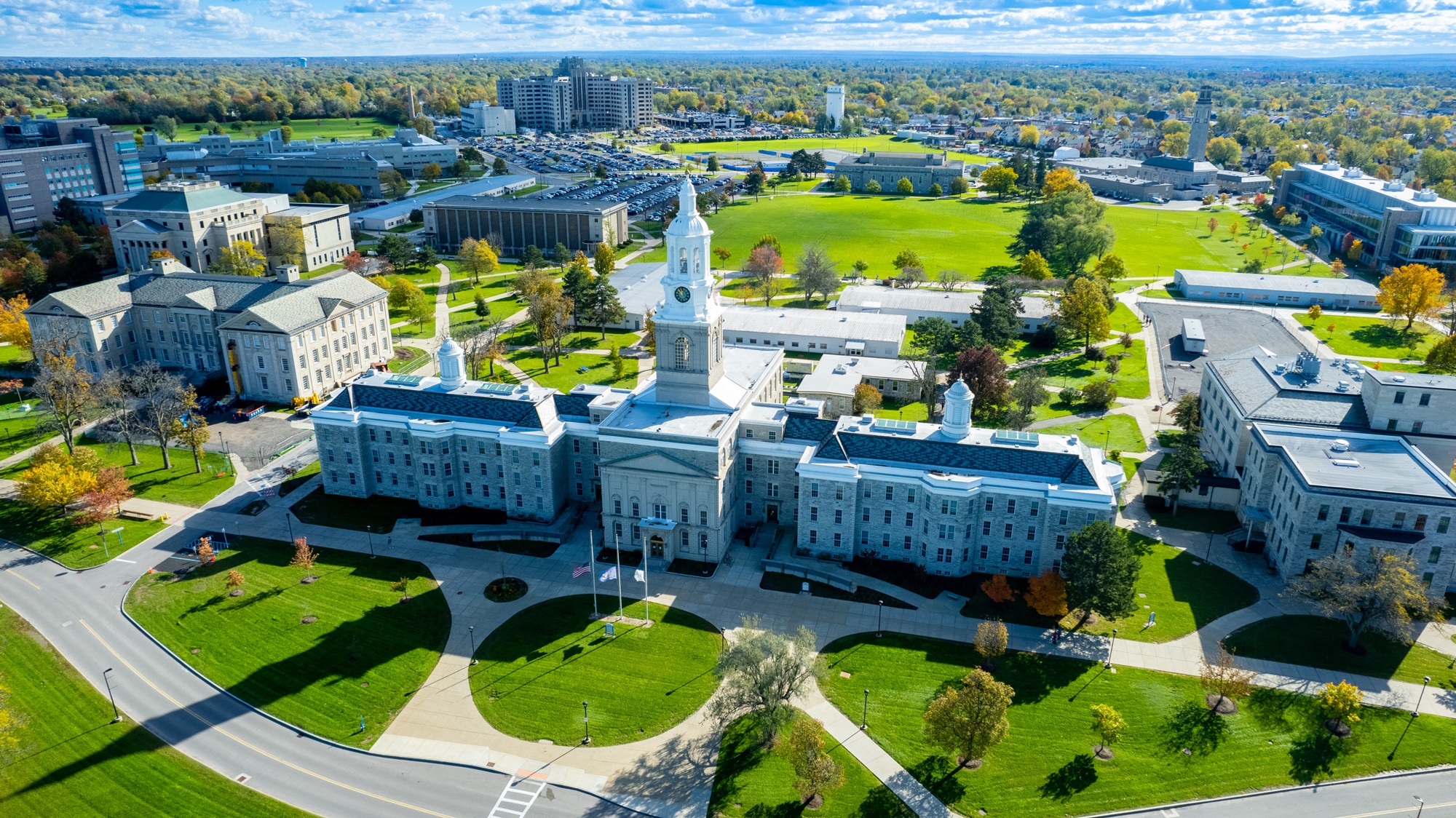
Education and innovation in the Hawkeye State center heavily on the University of Iowa, a public research institution located in Iowa City. Founded in February 1847, just 59 days after Iowa became a state, the university has long functioned as a cornerstone of academic achievement and institutional progress in the Midwest. It didn't take long for the campus to break new ground; it was the first public university in the United States to open as coeducational, and it officially admitted men and women on an equal basis from day one.
Today, that early commitment to inclusion translates into a sprawling academic and research enterprise. The institution drives economic growth, medical breakthroughs, and cultural output across multiple disciplines. If you want to understand how a mid-sized public university shapes regional and global landscapes through rigorous inquiry, look closely at its structural foundations, health sciences, and creative programs.
Academic Structure and Foundational Strengths
The University of Iowa operates through eleven distinct colleges, offering over 200 areas of study. These include the College of Liberal Arts and Sciences, the Carver College of Medicine, the Tippie College of Business, and the College of Engineering. Each division contributes to a broad portfolio of degrees, ranging from undergraduate majors to advanced professional doctorates.
Interdisciplinary collaboration defines much of the academic model here. Professors and students frequently cross departmental lines to tackle complex problems. For instance, the university was among the first in the nation to accept and foster interdisciplinary graduate work, breaking down traditional silos between humanities, social sciences, and technical fields. To read more about the context of this, Associated Press provides an in-depth breakdown.
Students benefit from a research-intensive environment where undergraduates participate directly in faculty-led projects. Programs like the Iowa Center for Research by Undergraduates connect learners with grants and hands-on investigation early in their academic careers. This philosophy ensures that classrooms do not operate in a vacuum, tying theoretical concepts directly to active application.
Healthcare and Medical Innovation
You can't discuss the institution's impact without examining University of Iowa Health Care, which serves as a massive engine for medical discovery and patient treatment. The academic medical center includes Carver College of Medicine, University of Iowa Hospitals and Clinics, and various specialized health science colleges.
Researchers here frequently push boundaries in fields like otolaryngology, ophthalmology, and gene therapy. The University of Iowa Research Foundation manages a steady stream of intellectual property, securing patents for medical devices, diagnostic tools, and novel therapeutics.
Key Medical Research Focus Areas
- Otolaryngology: The department has historically led advancements in hearing loss research, cochlear implant technology, and genetic screenings for pediatric auditory conditions.
- Gene Therapies: Laboratories across the medical campus investigate targeted vector deliveries to treat hereditary and degenerative diseases.
- Pharmacology: Teams develop non-opioid strategies for pain management and substance use disorder recovery, addressing critical public health crises.
These efforts translate directly into clinical practice. Patients travel from across the country to access specialized care that simply isn't available at community hospitals. The feedback loop between bedside treatment and laboratory bench research accelerates practical medical progress.
The Arts, Writing, and Cultural Legacy
While science and medicine drive substantial patent activity, the university holds an equally formidable reputation for creative writing and the arts. It launched the renowned Iowa Writers' Workshop in 1936, establishing the first creative writing degree program of its kind in the nation.
Writers trained or teaching on campus have collected numerous Pulitzer Prizes, National Book Awards, and other prestigious literary honors. This legacy expanded with the International Writing Program, which brings established authors from dozens of countries to Iowa City every year for cultural exchange and collaboration.
The arts extend beyond literature. The university houses the Stanley Museum of Art, featuring a world-class collection spanning African art, European modernism, and contemporary works. This cultural infrastructure enriches both the student body and the broader regional community, proving that technical innovation and artistic expression can thrive under the same institutional roof.
Economic Impact and Technology Transfer
Beyond academics and culture, the university serves as a primary economic driver for the state of Iowa. Through technology transfer initiatives, campus discoveries turn into commercial ventures, regional startups, and high-paying jobs.
The Iowa Research Park and various incubator programs help faculty and student entrepreneurs navigate patent applications, prototype development, and venture capital funding. This ecosystem keeps intellectual capital anchored within the state rather than leaking entirely to coastal tech hubs.
Common Misconceptions About University Research Hubs
- Myth: Research universities only focus on graduate students.
- Reality: Undergraduates make up a vital portion of laboratory assistants, field researchers, and creators at institutions like Iowa, receiving direct mentorship.
- Myth: Public universities operate in isolation from private industry.
- Reality: Active partnerships with corporate entities ensure that discoveries transition smoothly from theoretical models to market-ready applications.
Frequently Asked Questions
When was the University of Iowa founded?
The institution was established on February 25, 1847, shortly after Iowa achieved statehood.
What is the Iowa Writers' Workshop?
It is a famous graduate-level creative writing program founded in 1936 that offers a Master of Fine Arts degree in English and has produced numerous acclaimed authors.
How does the university contribute to healthcare?
It operates an extensive academic medical center that combines clinical education, patient care, and biomedical research, yielding dozens of new medical patents and therapies annually.
Is the University of Iowa a public or private school?
It is a public, state-supported research university located in Iowa City, serving tens of thousands of undergraduate and graduate students.



