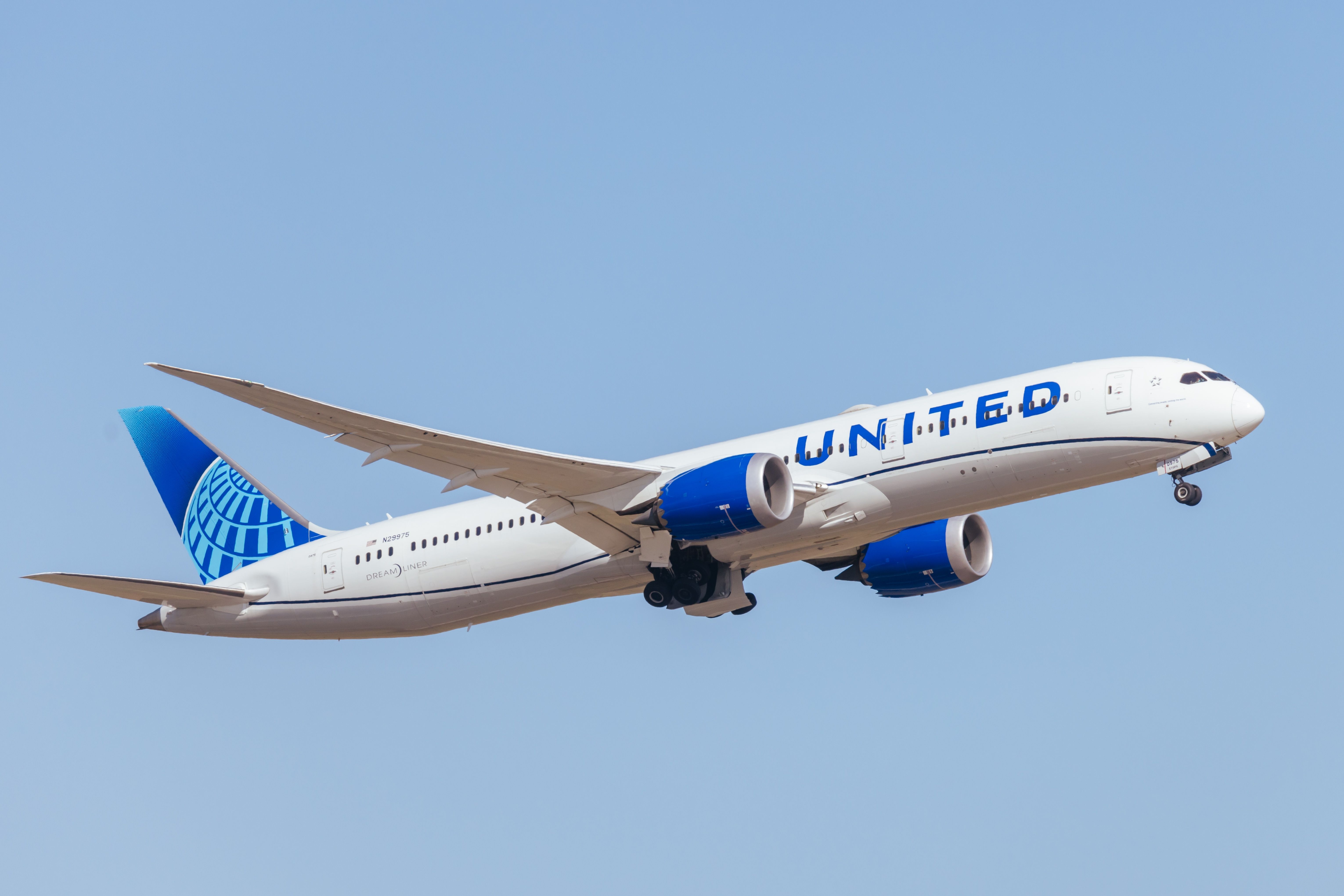
United Airlines traces its roots back to 1926 with the founding of Varney Air Lines, evolving through early corporate consolidation by aviation pioneer William Boeing into one of the most influential commercial carriers in aviation history. Operating an extensive domestic and international network, the airline bridges continents while maintaining a massive fleet of modern narrow-body and wide-body aircraft. Understanding its path requires looking at how early airmail routes shaped modern passenger flight, how massive mergers formed today's route map, and how key operational hubs keep global traffic moving.
The Roots of United: From Airmail to Passenger Service
Commercial flight in the United States didn't start with passengers; it started with the mailbag. In the mid-1920s, aviation entrepreneurs secured lucrative federal airmail contracts that laid the financial groundwork for scheduled flight networks.
The Predecessor Companies
The structural foundation of United came together when aviation pioneer William Boeing, alongside associates, formed the United Aircraft and Transport Corporation (UATC). This holding entity absorbed four foundational mail and transport carriers:
- National Air Transport (NAT): Formed in 1925, handling crucial midwestern and eastern mail routes.
- Pacific Air Transport (PAT): Established in 1926, flying the vital West Coast corridor.
- Varney Air Lines: Founded in 1926, operating early northern mail runs.
- Boeing Air Transport (BAT): Created in 1927, manufacturing and flying early mail planes.
By 1931, corporate restructuring forced by government antitrust regulations separated aircraft manufacturing from airline operations, formally establishing United Air Lines as an independent operating entity.
Innovation in the Cabin
United wasn't just a pioneer in corporate structure; it shaped the passenger experience itself. In 1930, the airline introduced the world's first flight stewardesses, led by registered nurse Ellen Church. Church convinced airline executives that having nurses on board would calm nervous flyers and handle in-flight medical needs. This innovation transformed commercial air travel from a noisy, utilitarian cargo experience into an accessible service industry.
Post-War Expansion and the Jet Age
Following the Second World War, pent-up consumer demand and technological leaps propelled United into a period of rapid national expansion.
The Capital Airlines Merger
In 1961, United merged with Capital Airlines, a major regional carrier operating a dense network across the American Midwest and East Coast. This transaction made United the largest commercial airline in the Western world. It integrated a diverse fleet—including unique turboprops like the Vickers Viscount—into a unified trunk-line operation.
Entering the Jet Era
United embraced high-speed jet propulsion to shrink travel times across its transcontinental map.
- 1959: Introduced the Douglas DC-8 to jet routes.
- 1960s: Adopted the Boeing 727 and Boeing 737 to handle high-frequency domestic corridors.
- 1970: Welcomed the iconic Boeing 747, bringing wide-body luxury and massive passenger capacity to long-haul transpacific routes.
During this era, the carrier launched its famous "Friendly Skies" marketing campaign, cementing its brand identity in popular culture for decades.
Structural Evolution and the Continental Merger
The late 20th century brought deregulation, financial restructuring, and corporate diversification. During the 1970s and 1980s, the parent company briefly branched into hotels and car rentals under the short-lived Allegis brand before refocusing entirely on aviation.
In 1994, facing severe financial pressure, employees executed a historic buyout, acquiring a 55% stake in exchange for wage and work-rule concessions. This made it the largest employee-owned company in the United States for nearly a decade, though subsequent economic downturns eventually forced a return to traditional corporate equity structures.
The most transformative modern milestone occurred in 2010 through a multi-billion-dollar merger with Continental Airlines. While United was the surviving corporate name, the merged entity adopted Continental's globe logo, painting scheme, and operational systems. This union solidified its status as a massive global carrier with deep transatlantic and Latin American reach. Today, corporate operations are managed through United Airlines Holdings, headquartered in Chicago, Illinois. You can read official corporate updates directly on the United Airlines About Page.
Global Destinations and Core Hub System
United operates a complex hub-and-spoke system designed to funnel domestic passengers into high-capacity international corridors. It serves hundreds of destinations across six continents.
Primary Domestic and International Hubs
The airline's primary operational centers manage thousands of daily departures:
- Chicago O'Hare International Airport (ORD): The historic heart of the network, connecting midwestern traffic to global routes.
- Denver International Airport (DEN): A vital western anchor connecting Rocky Mountain traffic.
- George Bush Intercontinental Airport (IAH): The primary southern gateway for flights into Latin America and Mexico.
- Los Angeles International Airport (LAX): A key transpacific launch point for Asian and Australian destinations.
- Newark Liberty International Airport (EWR): The premier eastern seaboard hub for transatlantic business travel.
- San Francisco International Airport (SFO): The dominant West Coast gateway specializing in tech-corridor flights to Asia.
- Washington Dulles International Airport (IAD): An east coast hub managing government travel and transatlantic connections.
- Guam A.B. Won Pat International Airport (GUM): A strategic western Pacific hub serving regional island routes.
Alliance Partnerships
Beyond its wholly operated routes, United co-founded Star Alliance in 1997 alongside Lufthansa, Air Canada, Scandinavian Airlines, and Thai Airways. This global network allows MileagePlus frequent flyers to earn and redeem miles across dozens of partner airlines worldwide, providing seamless access to over 1,000 global destinations.
Fleet Strategy and Modern Operations
Maintaining a massive route map requires a diverse fleet of aircraft optimized for everything from 45-minute regional hops to 15-hour transoceanic flights.
Narrow-Body Workhorses
For domestic and short-haul international legs (such as flights to Canada, Central America, and the Caribbean), United relies on high-efficiency single-aisle aircraft:
- Boeing 737 Family: Including the 737 Next Generation and fuel-efficient 737 MAX variants.
- Airbus A320 Family: Including modern A321neo and long-range A321XLR models designed for premium transcontinental service.
Wide-Body Long-Haul Fleet
Intercontinental routes across the Atlantic, Pacific, and Indian Oceans utilize high-capacity twin-engine wide-bodies:
- Boeing 777: The backbone of long-haul operations, spanning both 200ER and high-capacity 300ER variants.
- Boeing 787 Dreamliner: Operating in -8, -9, and -10 configurations, prized for fuel efficiency and enhanced passenger cabin pressure.
- Boeing 767: Utilized primarily on high-density transatlantic business routes featuring premium Polaris business-class cabins.
Regional connectivity is handled through the United Express network, partnering with regional carriers operating Embraer ERJ-175 and Bombardier CRJ-550 aircraft to feed smaller municipal airports into major hubs.
Frequently Asked Questions
When was United Airlines officially founded?
United traces its corporate genesis to the formation of Boeing Air Transport and associated mail carriers in the late 1920s, culminating in the establishment of United Air Lines as a consolidated operating entity on March 28, 1931.
Which airline did United merge with in 2010?
United completed a massive merger with Continental Airlines in October 2010. While United remained the surviving brand name, the combined airline adopted Continental's iconic globe logo and operational infrastructure.
What are United's primary international hubs?
The airline manages its global network primarily through major hubs at Chicago O'Hare, Newark Liberty, San Francisco, Houston Intercontinental, Denver, Los Angeles, Washington Dulles, and Guam.
What frequent-flyer program does United use?
United's loyalty program is called MileagePlus, which allows members to earn miles, tier status, and upgrade certificates applicable across both United flights and Star Alliance partner airlines.


