All living things on Earth share a common foundation, yet they organize themselves in drastically different ways. At the microscopic level, life splits into two primary structural strategies: unicellular organisms that accomplish every vital task inside a single cell, and multicellular organisms that divide labor across millions, billions, or trillions of specialized cells. Understanding how these two forms of life function reveals the evolutionary leaps that shaped everything from bacteria in the soil to blue whales and human beings.
Defining Unicellular and Multicellular Life
The fundamental divide between these two forms of life comes down to architectural complexity and labor distribution.
Unicellular life consists of independent living entities made of just one cell. That single microscopic unit handles metabolism, waste excretion, nutrient intake, and reproduction entirely on its own. Because they don't have tissues or organs, their survival relies on direct interactions with their immediate environment.
Multicellular life, by contrast, requires cooperation. These organisms are built from multiple cells that have undergone specialization—a process where different cells develop unique structures and functions. Instead of every cell performing every task, groups of cells form tissues, organs, and organ systems that work together to keep the whole organism alive. For broader information on this topic, detailed coverage can also be found at The New York Times.
Structural and Functional Contrasts
- Scale and Visibility: Most unicellular organisms are microscopic, typically ranging from 0.001 millimeters to 1 millimeter in size. Multicellular organisms span a vast spectrum, from microscopic multi-celled fungi and algae up to giant sequoias and blue whales.
- Metabolic Independence: A single-celled organism is entirely autonomous. If it fails to secure nutrients, it perishes alone. In a multicellular organism, individual cells often depend on other systems (like circulatory or respiratory networks) to survive, creating a web of biological interdependence.
- Cell Division and Repair: When a unicellular organism divides, it reproduces, creating a brand new independent organism through binary fission or budding. When a multicellular organism divides its cells, it does so to grow, repair damaged tissue, or replace dead cells.
Exploring the Unicellular World
Single-celled organisms represent the oldest, most abundant, and most ecologically vital forms of life on Earth. They occupy two major domains: Bacteria and Archaea (which are prokaryotes lacking a true nucleus), as well as many Protists and certain fungi like yeast (which are eukaryotes with a distinct nucleus).
Everyday Examples of Single-Celled Life
- Bacteria: Found in virtually every habitat on Earth, from deep-sea hydrothermal vents to the human gut. Escherichia coli (E. coli) is a classic example of a single-celled bacterium that manages nutrient processing and rapid asexual reproduction.
- Yeast: Unlike most fungi, baker's yeast (Saccharomyces cerevisiae) is unicellular. It ferments sugars into alcohol and carbon dioxide, a process vital in baking and brewing.
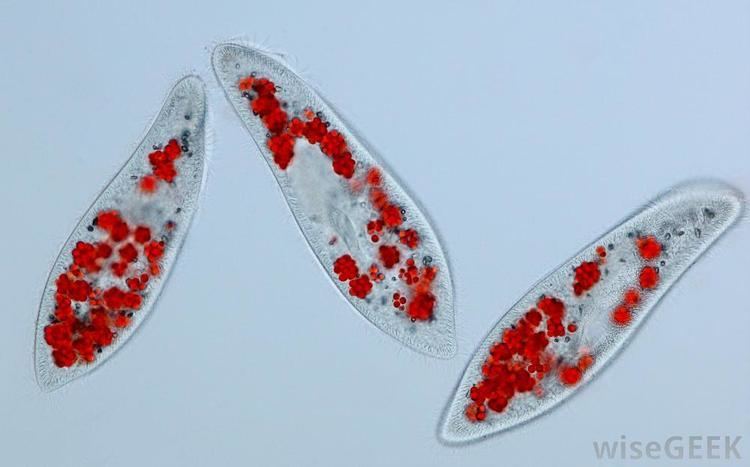
- Amoebas and Paramecia: These single-celled protists live in freshwater environments. An amoeba moves and feeds by extending temporary projections of its cytoplasm called pseudopodia, while a paramecium uses hair-like structures called cilia to sweep food into its oral groove.
Despite their simplicity, unicellular organisms display astonishing metabolic diversity. Some produce oxygen through photosynthesis (like cyanobacteria), while others survive in extreme environments without oxygen, relying on chemical energy derived from sulfur or iron.
The Evolutionary Shift to Multicellularity
Transitioning from a solitary single-celled existence to a coordinated multi-celled organism was one of the most critical turning points in evolutionary history. Scientists believe multicellularity evolved independently dozens of times across different lineages, including plants, animals, fungi, and various algae.
The primary driver behind this shift was efficiency through specialization.
Advantages of Being Multicellular
- Division of Labor: In a multicellular body, cells don't need to be jacks-of-all-trades. Muscle cells specialize in contraction, nerve cells specialize in transmitting electrical signals, and red blood cells specialize in carrying oxygen. This specialization allows the organism to operate with far greater efficiency than any single cell could manage alone.
- Larger Size and Predatory Advantage: Being bigger opens up ecological niches that microscopic organisms can never reach. Large size allows organisms to hunt larger prey, escape predators more effectively, and withstand environmental fluctuations that would instantly kill a fragile single cell.
- Lifespan and Homeostasis: Unicellular organisms are vulnerable to immediate environmental shifts. Multicellular organisms maintain an internal stable environment (homeostasis) through feedback loops, and the loss of individual cells doesn't threaten the survival of the entire organism.
According to research from the National Institutes of Health, multicellularity also enabled complex developmental programs, allowing organisms to coordinate gene expression across different tissues during embryonic growth.
Key Differences at a Glance
Comparing these two biological strategies highlights how different solutions can achieve evolutionary success:
- Complexity: Unicellular life features simple internal structures with organelles performing basic tasks. Multicellular life features tiered organization: cells form tissues, tissues form organs, and organs form systems.
- Reproduction: Unicellular reproduction is typically fast and asexual (binary fission, budding, or multiple fission). Multicellular reproduction often involves complex sexual or asexual cycles requiring specialized germ cells (sperm and egg).
- Vulnerability to Damage: Damage to a unicellular organism is usually fatal. Conversely, multicellular organisms possess robust tissue repair mechanisms, allowing them to heal from wounds, shed dead skin, and replace internal cells daily.
- Lifespan: Individual unicellular organisms have very short lifespans measured in hours or days before dividing or dying. Multicellular organisms can live for decades, centuries, or even millennia (as seen in long-lived trees and certain marine sponges).
Frequently Asked Questions
Can unicellular organisms form colonies, and does that make them multicellular?
Some unicellular organisms, such as colonial green algae (Volvox), live in groups where individual cells stick together. However, they are still classified as colonial rather than truly multicellular because most cells in the colony can survive independently if separated, and they lack true cellular differentiation into distinct tissue types.
Are all single-celled organisms microscopic?
The vast majority are microscopic, but notable exceptions exist. For instance, certain single-celled xenophyophores (giant deep-sea protists) can grow up to 20 centimeters in diameter, and some specialized algae form large, single-celled structures containing multiple nuclei.
Why didn't all single-celled organisms evolve into multicellular life?
Unicellularity remains one of the most successful evolutionary strategies on the planet. Bacteria and archaea reproduce rapidly, adapt to environmental changes through fast mutation rates, and occupy niches that require high mobility and small size. Evolution doesn't have a single direction toward complexity; it favors whatever strategy successfully passes genes to the next generation.
How do unicellular organisms get nutrients without a digestive system?
Without a mouth or digestive tract, unicellular organisms absorb nutrients directly across their cell membrane through processes like diffusion, active transport, or endocytosis (engulfing food particles directly into the cell, as seen in amoebas).



