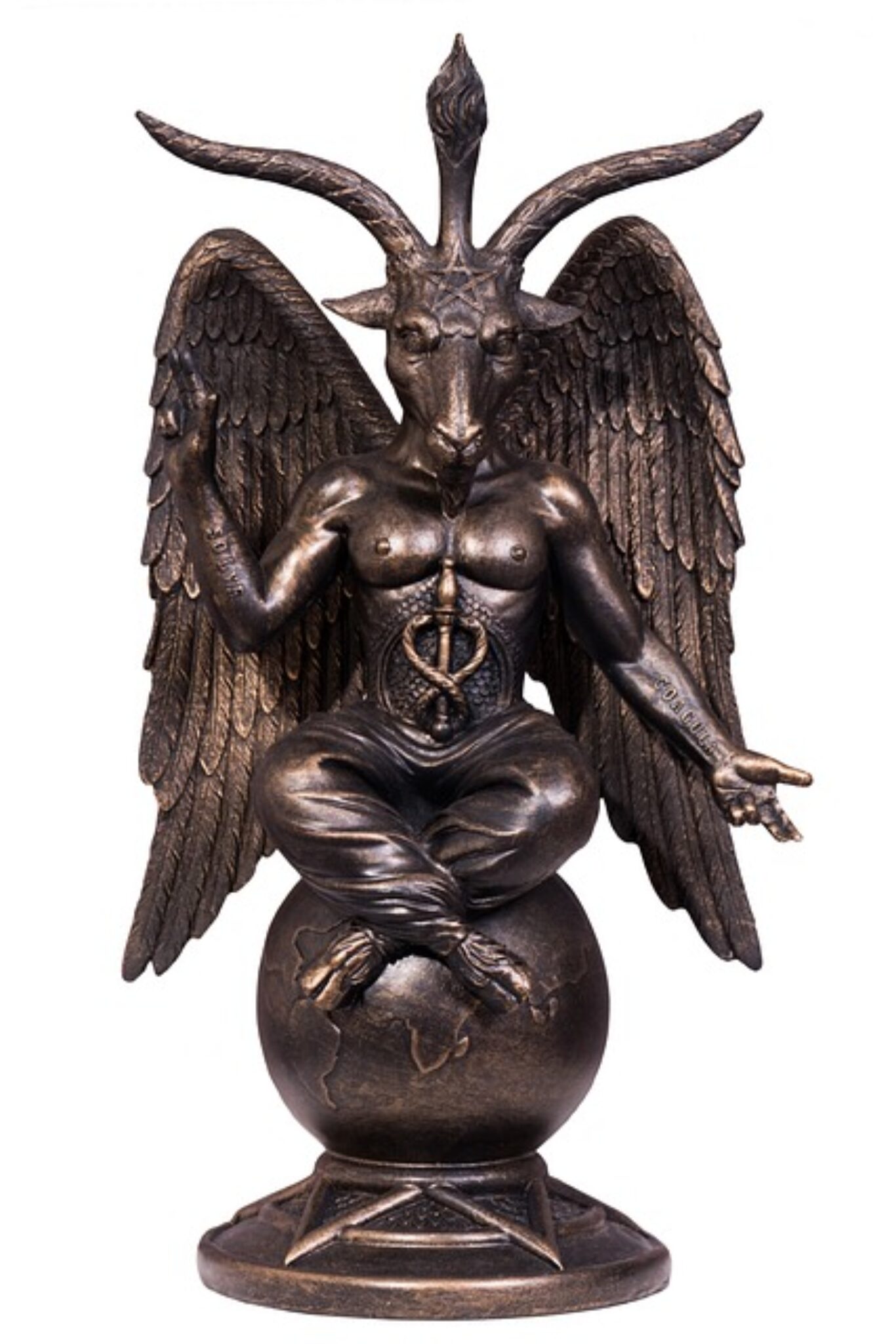
Baphomet is one of the most widely misunderstood symbols in modern culture. Popular media often casts the winged, goat-headed figure as a direct mascot for literal evil, but its true origins stem from medieval political corruption, nineteenth-century esoteric philosophy, and complex alchemical principles. Far from a simple Christian devil, Baphomet was originally constructed as a complex visual diagram representing the balance of opposing forces in the universe.
Unpacking what the symbol actually stands for requires separating medieval propaganda from Victorian illustration. The name first appeared in the late eleventh century, evolved through the brutal suppression of the Knights Templar, and was finally immortalized by French occultist Éliphas Lévi.
The Medieval Origin: Crusades and the Knights Templar
The word Baphomet entered the historical record in 1098 through a letter written by a French crusader during the First Crusade. Crusaders used the term "Baphometh" to describe what they mistakenly assumed was Islamic idol worship. Most historians agree the word was simply a corruption of "Muhammad" filtered through Old French dialects.
The name gained notoriety in 1307 when King Philip IV of France targeted the Knights Templar. The Templars were a wealthy, powerful military-religious order that accumulated vast influence across Europe. Because King Philip owed crushing debts to the order, he orchestrated mass arrests, charging the knights with blasphemy, depravity, and the worship of an idol named Baphomet.
Under severe torture, prisoners confessed to whatever authorities wanted to hear. Descriptions of the idol varied wildly, ranging from a cat to a multi-headed skull. Pope Clement V eventually dissolved the order under royal pressure, and leaders were executed. No physical Baphomet artifact or idol was ever recovered from any Templar site, confirming the confession accounts were fabricated under duress.
Éliphas Lévi and the Creation of the Modern Icon
The image people recognize today did not exist during the Middle Ages. In 1854, French occultist and former seminary student Éliphas Lévi published Dogme et Rituel de la Haute Magie, introducing an illustration titled the "Sabbatic Goat".
Lévi did not design the figure as a deity to be worshipped. Instead, he built a philosophical diagram meant to synthesize science, magic, and religion. He drew inspiration from the Greek god Pan, alchemical texts, and ancient artistic motifs. Every anatomical feature and accessory in Lévi's drawing was assigned a specific esoteric value.
Decoding the Symbols
The visual elements of Lévi's figure carry precise meanings rooted in hermetic philosophy:
- The Goat Head: Representing the animal nature and instinctual drives of humanity, the goat head connects to earth energy rather than malice. It suggests that physical desires are natural aspects of existence that require conscious stewardship rather than suppression.
- Androgynous Anatomy: Featuring female breasts and a male caduceus staff where genitalia would typically be, the body represents the ultimate union of masculine and feminine polarities.
- As Above, So Below: One arm points upward and the other points downward, echoing the foundational Hermetic maxim. This gesture illustrates the correspondence between the macrocosm (the universe) and the microcosm (the human soul).
- The Torch of Intelligence: Positioned between the horns, the flaming torch symbolizes the light of reason, intellectual illumination, and spiritual awareness rising above base instinct.
- The Words Solve and Coagula: Inscribed on the arms, these Latin alchemical terms mean "to separate" and "to bring together". They describe the cyclical process of breaking down old patterns and rebuilding refined structures.
Separation From Satanism
Mainstream culture frequently conflates Baphomet with the Christian concept of Satan, but esoteric philosophy draws a sharp line between them. Lévi viewed the figure as a personification of the astral light and natural equilibrium, not an adversarial entity of absolute evil.
In contemporary times, organizations like The Satanic Temple have utilized statues and imagery of Baphomet in public displays to advocate for religious pluralism and the separation of church and state. Within these secular contexts, the figure functions as a literary symbol of rebellion against dogma, free inquiry, and bodily autonomy, rather than a theological object of worship.
Common Misconceptions
Misunderstandings about the symbol usually stem from surface-level interpretations.
- Myth: Baphomet was created by ancient devil worshippers.
- Reality: The name originated as a linguistic corruption of Muhammad by crusaders, and the visual icon was invented by a 19th-century French philosopher.
- Myth: The pentagram on the forehead is inherently satanic.
- Reality: Lévi explicitly categorized an upright pentagram as a symbol of divine spirit over matter. The association of an inverted pentagram with darker themes developed much later in American pop culture history.
- Myth: The Knights Templar practiced secret rituals involving the idol.
- Reality: Confessions regarding the idol were extracted under systematic torture by a monarch seeking to erase his financial debts.
Frequently Asked Questions
Is Baphomet mentioned in the Bible?
No. The name Baphomet does not appear anywhere in biblical texts. It is a medieval European invention that emerged centuries after the completion of the canonical scriptures.
Why does Baphomet have both male and female features?
The dual anatomy represents the alchemical and hermetic principle of balancing opposites. It illustrates that completeness requires integrating masculine and feminine traits, or spirit and matter, into a single harmonious state.
Did Éliphas Lévi invent the name Baphomet?
No. Lévi borrowed the name from historical records surrounding the trial of the Knights Templar and adapted it to label his synthesized drawing of occult principles.
How do modern groups use the symbol today?
Occultists view it as a diagram for inner spiritual balance and shadow work, while secular groups use it as a political statement promoting personal liberty, free speech, and institutional secularism.



