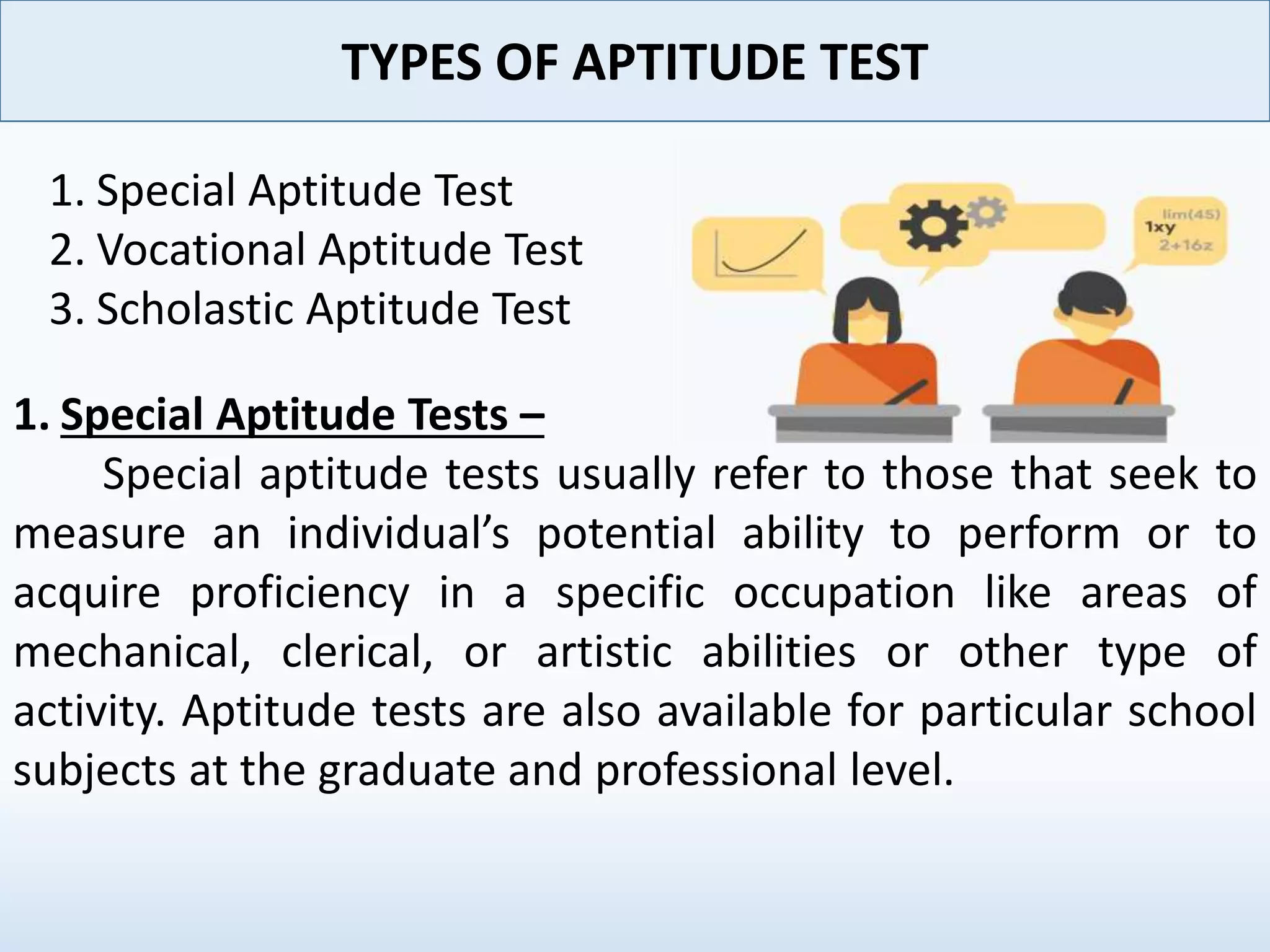
Understanding Human Aptitude
Aptitude is your natural capacity to learn or acquire proficiency in a specific domain. Unlike learned knowledge or acquired skills, aptitude points to your baseline cognitive and physical potential before formal training takes place. Recognizing your core strengths helps you direct your energy toward paths where you'll naturally excel. You can think of it as your cognitive headroom, representing how quickly and deeply you can grasp complex ideas within fields like logic, language, or spatial design.
Many people confuse aptitude with innate destiny. Having a high numerical aptitude doesn't mean you'll instantly master advanced calculus without studying, just as a low initial score doesn't bar you from learning a new language. Instead, aptitude measures the friction you'll encounter while learning. Low friction means rapid progress; high friction means you'll need deliberate practice and repetition to bridge the gap.
Core Categories of Aptitude
Psychologists and career researchers typically break human aptitude down into distinct cognitive pillars. Each pillar governs a different style of problem-solving and information processing. You rarely possess an identical level of ability across all domains; most people exhibit distinct spikes and valleys.
- Verbal reasoning: Your speed and accuracy in processing written material, analyzing logical arguments, and drawing inferences from complex text.
- Numerical and quantitative facility: Your ability to manipulate numbers, recognize numerical patterns, and evaluate statistical data quickly.
- Spatial visualization: Your capacity to mentally rotate objects, visualize three-dimensional structures from two-dimensional blueprints, and navigate physical environments.
- Inductive and deductive logic: Your skill in applying general rules to specific problems or synthesizing disparate observations into a coherent, overarching rule.
- Perceptual speed and accuracy: Your ability to compare visual details, spot anomalies, and process routine information without making careless errors.
How Aptitude Tests Measure Potential
Formal aptitude assessments isolate your raw cognitive processing from your learned background. Standardized evaluations, such as the General Aptitude Test Battery maintained by the U.S. Department of Labor, use timed sections to test specific mental operations. These tests aren't trivia quizzes. They don't care if you know historical dates or chemical formulas. They care about how fast you can identify a missing pattern in a sequence or determine whether two abstract shapes are identical.
When you take a validated assessment, your raw scores are compared against a large normative sample. This comparison yields percentiles rather than simple pass-or-fail grades. Scoring in the 85th percentile for spatial reasoning means you processed spatial problems faster and more accurately than 85 percent of the reference group.
Modern testing has shifted away from purely pencil-and-paper formats. Computerized adaptive testing now adjusts question difficulty in real time based on your previous answers. If you answer a sequence of logic questions correctly, the algorithm serves harder challenges to pinpoint your exact ceiling without wasting time on questions that are too easy.
Practical Applications in Career and Education
Knowing your cognitive profile changes how you approach professional development. Schools and employers use these insights to match individuals with environments that align with their natural wiring. If an engineering firm hires candidates with high spatial and numerical scores, they're reducing onboarding friction because those new hires naturally grasp blueprints and structural loads faster.
You can also use this data for personal course correction. If you've spent years struggling in a career path that requires heavy verbal diplomacy while your strengths lean entirely toward systems logic and quantitative analysis, you're fighting your own cognitive grain. Shifting into a role that leverages your natural strengths often brings an immediate reduction in daily burnout and a sharp rise in output quality.
- Targeted skill acquisition: Focus your learning budget on domains where your baseline aptitude reduces the time required to achieve competence.
- Team balancing: Managers use cognitive diversity to build project teams where different members cover each other's blind spots.
- Transition planning: Career switchers use objective assessments to validate whether a new industry aligns with their underlying problem-solving style.
Common Pitfalls in Aptitude Evaluation
Misusing aptitude data leads to poor hiring decisions and misdirected personal goals. One major mistake is treating test scores as permanent ceilings. Human brains exhibit neuroplasticity, meaning targeted practice can improve your working memory and processing speed over time. A low score on a single afternoon test shouldn't discourage you from pursuing a challenging field if you have genuine passion for it.
Another frequent error is confounding aptitude with emotional intelligence or domain expertise. A brilliant programmer with sky-high numerical aptitude might fail to lead a team effectively if they lack communication skills or empathy. Aptitude measures raw processing capacity, not character, grit, or interpersonal savvy.
Finally, relying entirely on automated screening tools without human context creates blind spots. Algorithms can flag high-scoring candidates, but they can't measure motivation, resilience, or contextual adaptability.
Frequently Asked Questions
Can you improve your aptitude score through practice?
Yes and no. While your baseline cognitive processing speed remains relatively stable, you can significantly improve your test scores by learning test-taking strategies, reducing anxiety, and building familiarity with problem formats. This practice improves your test performance without necessarily rewriting your underlying cognitive architecture.
Is aptitude the same thing as IQ?
Not entirely. Intelligence quotient tests attempt to measure general cognitive ability across a broad spectrum. Aptitude tests are typically more granular, focusing on specific domains like mechanical reasoning, clerical speed, or spatial visualization to predict performance in targeted tasks.
Why do some high-aptitude individuals underperform?
Aptitude provides the raw horsepower, but execution requires fuel. Factors like low motivation, poor emotional regulation, lack of domain knowledge, and burnout will cause someone with exceptional natural potential to produce mediocre results.
How often should adults take aptitude assessments?
Most adults only need to take a comprehensive aptitude battery during major career transitions, such as entering the workforce, switching industries after a layoff, or planning a late-stage pivot. Your core cognitive profile remains stable enough across adulthood that repeating tests every few years yields diminishing returns.



