Navigating the UK time zone requires understanding how seasonal clock shifts interact with standard timekeeping. The United Kingdom operates on Greenwich Mean Time (GMT) during the winter months and shifts to British Summer Time (BST) during the spring and summer. This dual-system design extends evening daylight during warmer months, but it also introduces operational complexities for international travel, logistics, and digital coordination across European borders.
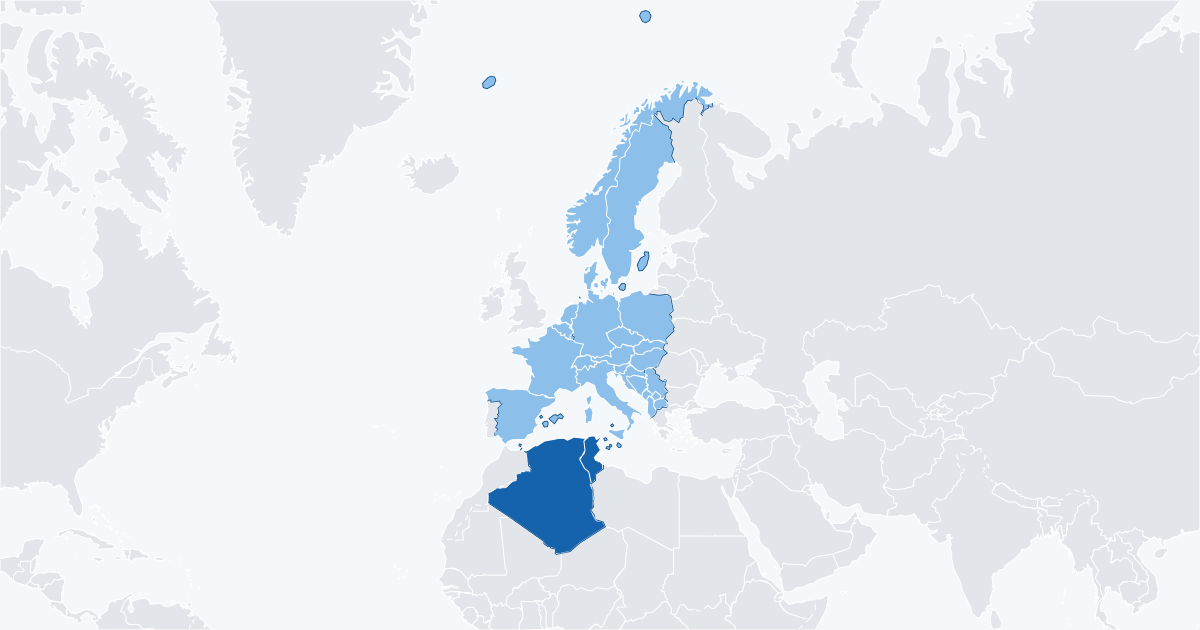
While broader European regulatory frameworks like the Single European Sky aim to harmonize airspace management and operational scheduling, seasonal clock adjustments remain a localized administrative choice across different jurisdictions. Managing these transitions effectively depends on tracking precise transition dates, understanding offset shifts, and preparing infrastructure for biannual time alterations.
How the UK Time Zone Operates Year-Round
The UK relies on two distinct offsets from Coordinated Universal Time (UTC). Recognizing when each offset applies prevents scheduling errors in cross-border communication and financial markets.
- Greenwich Mean Time (UTC+0): Active from late October to late March. This serves as the baseline standard time for England, Scotland, Wales, and Northern Ireland.
- British Summer Time (UTC+1): Active from the final Sunday of March until the final Sunday of October. Clocks move forward by one hour to maximize evening daylight.
The National Physical Laboratory maintains the official time standards for the UK, ensuring that atomic clocks synchronize accurately with international standards. Because the UK changes its clocks on the exact same weekends as the European Union, the one-hour time difference between London and Central European Time (CET) remains constant throughout the year, preserving a predictable offset despite the biannual shifts.
The Intersection of Airspace and Timekeeping
Large-scale aviation initiatives, such as the Single European Sky, rely heavily on synchronized timing data. Air navigation service providers manage millions of flight hours annually, requiring precise coordination across multiple national boundaries.
Even though European institutions have debated ending seasonal clock changes entirely, individual member states have not yet reached a unified consensus on whether to remain on permanent standard time or permanent summer time. Consequently, aviation scheduling systems must dynamically adapt to disparate national legislative timelines.
Flight management computers, automated slot allocation systems, and crew rostering software factor in these regional variances to maintain safety margins. A mismatch in transition enforcement can disrupt flight plans, ground handling schedules, and air traffic flow management across European airspace networks.
Practical Steps for Managing Clock Changes
Handling the biannual time shift smoothly requires proactive preparation in both personal routines and business infrastructure.
- Audit digital systems: Verify that servers, databases, and cron jobs pull time updates automatically via Network Time Protocol (NTP) sources rather than relying on manual offsets.
- Review recurring calendar events: Check automated meetings scheduled across international time zones during the transition weeks in March and October, as some platforms miscalculate the gap before the US and Europe synchronize their respective change dates.
- Update analog timepieces: Adjust mechanical clocks, vehicle dashboards, and standalone appliances manually on the official transition mornings.
- Communicate international deadlines: Notify clients in regions that do not observe daylight saving time—such as parts of Arizona or international partners in Asia—about the shifting operational hours relative to London.
Common Mistakes During Time Transitions
Misunderstanding how time zones shift leads to missed flights, delayed shipments, and scheduling conflicts. Avoiding these frequent errors keeps operations running smoothly.
- Assuming global uniformity: Do not assume every country changes its clocks on the same day. North America, for instance, transitions on different weekends in March and November compared to the UK and Europe.
- Forgetting embedded hardware clocks: Many specialized industrial controllers, security systems, and legacy hardware units do not update automatically. Failing to patch or manually adjust these devices causes logging discrepancies.
- Confusing UTC with local time: Always specify whether a timestamp refers to UTC, GMT, or BST when booking international transport or setting critical server maintenance windows.
To dive deeper into official international timekeeping standards and historical data, consult the International Bureau of Weights and Measures.
Frequently Asked Questions
When do the clocks officially change in the UK?
Clocks move forward by one hour on the last Sunday of March at 01:00 UTC, marking the start of BST. They move back by one hour on the last Sunday of October at 02:00 BST, returning the UK to GMT.
Does the UK always change clocks at the same time as the EU?
Yes. Historically and currently, the UK aligns its transition dates with European Union directives to minimize disruption to cross-border travel, financial trading, and telecommunications.
How does BST affect the time difference with New York?
During the winter, London (GMT) is 5 hours ahead of New York (Eastern Standard Time). Because the UK and the US transition on different dates in March and October, there are brief windows where that gap temporarily narrows to 4 hours or widens to 6 hours.
Will the UK abolish clock changes in the future?
While the European Union explored ending seasonal clock changes, implementation stalled due to a lack of coordinated consensus among member states. The UK government regularly reviews the policy, but no official legislation has been enacted to abolish the biannual shift.



