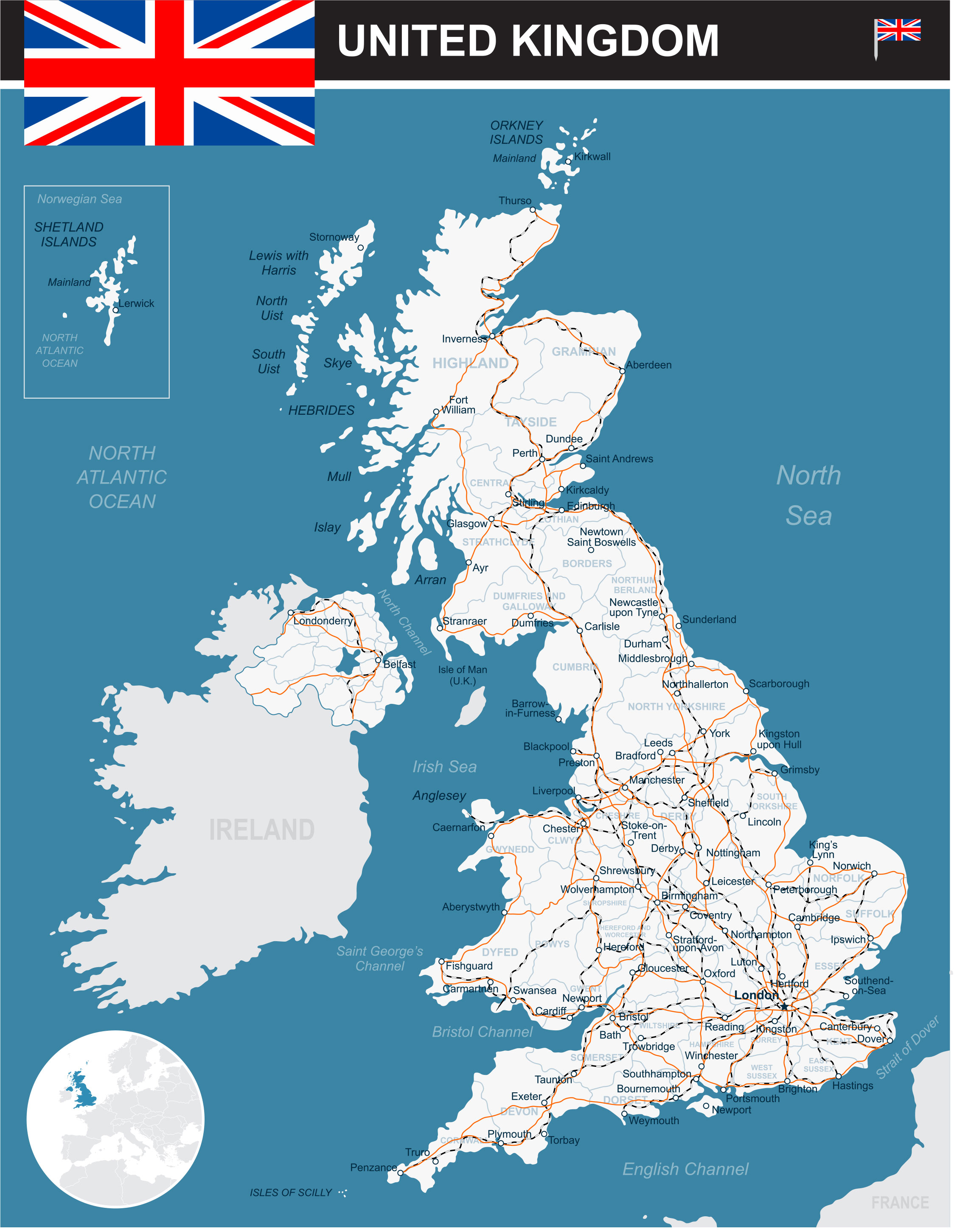
The United Kingdom isn't a single uniform country, but rather a sovereign state made up of four distinct constituent nations: England, Scotland, Wales, and Northern Ireland. Many people confuse the UK with Great Britain or simply call the whole thing "England," which misses the constitutional reality of how the nation functions. If you're trying to understand its geography, political structure, and what sets its parts apart, let's break down how the UK is put together.
At its core, the United Kingdom operates as a constitutional monarchy and parliamentary democracy. While the UK acts as a single sovereign entity on the international stage—managing defense, foreign policy, and overall economic strategy—its four constituent countries hold varying degrees of self-governance over domestic affairs like healthcare and education.
Defining the Terms: UK vs. Great Britain vs. British Isles
Clearing up common geographical confusion helps make sense of British politics and culture. People frequently use terms interchangeably when they refer to entirely different things.
- Great Britain: This is purely a geographical term. It refers to the physical island containing three nations: England, Scotland, and Wales. It does not include Northern Ireland or the Republic of Ireland.
- The United Kingdom: This is a political and sovereign state. Its full legal name is the United Kingdom of Great Britain and Northern Ireland. It includes the island of Great Britain plus Northern Ireland.
- The British Isles: A geographical archipelago that includes the island of Great Britain, the island of Ireland, the Isle of Man, the Channel Islands, and thousands of smaller surrounding islands.
- Crown Dependencies: Places like the Isle of Man and the Bailiwicks of Jersey and Guernsey are self-governing possessions of the British Crown, but they aren't part of the UK and don't belong to the European Union or send MPs to the UK Parliament.
The Four Constituent Countries
Each of the four nations brings its own culture, legal framework, and administrative history to the union.
England
England is the largest and most populous country in the UK, holding about 84% of the total population. London serves as both the English capital and the capital of the entire UK. Because of its population size and economic dominance, English institutions often shape the global perception of British culture, though Scotland, Wales, and Northern Ireland maintain fierce national identities. England doesn't have a devolved parliament; laws for England are made directly by the UK Parliament at Westminster.
Scotland
Occupying the northern third of Great Britain, Scotland retains a distinct legal system, educational structure, and national church (the Church of Scotland). Following a 1997 referendum, the Scottish Parliament was re-established in Edinburgh, giving lawmakers devolved powers over taxation, health, education, justice, and the environment.
Wales
Located to the west of England, Wales was politically integrated with England during the 16th century. Today, it has its own national identity, and the Welsh language holds official status alongside English. The Senedd (Welsh Parliament) in Cardiff holds legislative powers over devolved areas like public transport, agriculture, and local government.
Northern Ireland
Situated across the Irish Sea on the island of Ireland, Northern Ireland has a unique political setup shaped by decades of conflict and the landmark 1998 Good Friday Agreement. This peace accord established a power-sharing government at Stormont designed to ensure cooperation between unionist (largely Protestant) and nationalist (largely Catholic) communities. Under the principle of consent, Northern Ireland's constitutional status remains tied to the democratic choice of its people.
Governance and Devolution
Power in the UK is split between the central government in London and the devolved administrations in Edinburgh, Cardiff, and Belfast.
The UK Parliament handles "reserved matters"—issues that affect the nation as a whole, such as national defense, foreign policy, immigration, and macroeconomic policy. Meanwhile, "devolved matters" are handled locally by regional assemblies. This hybrid system means citizens in Edinburgh or Cardiff experience different local laws and public service frameworks than residents in London or Manchester.
Common mistakes include assuming UK laws apply uniformly across all four countries. For example, Scottish contract law and Scottish property law operate under completely different legal traditions than English law. Recognizing these nuances prevents major errors in legal, business, or political contexts.
Frequently Asked Questions
Is the UK a country or a union of countries?
It's both. The United Kingdom is recognized internationally as a single sovereign state and country. However, internally, it is composed of four distinct countries—England, Scotland, Wales, and Northern Ireland.
Are people from Scotland and Wales considered British?
Yes. Anyone holding British citizenship through birth, descent, naturalization, or registration is British. People from Scotland, Wales, Northern Ireland, and England are all British citizens, though they may identify primarily as Scottish, Welsh, Northern Irish, or English.
Is the Republic of Ireland part of the UK?
No. The Republic of Ireland is a fully independent, sovereign European nation that left the United Kingdom following the Anglo-Irish Treaty of 1921. Northern Ireland remains part of the UK.
Does the UK have a written constitution?
No single codified document serves as the UK constitution. Instead, it relies on an uncodified constitution made up of unwritten conventions, parliamentary statutes, court judgments, and historical treaties.



