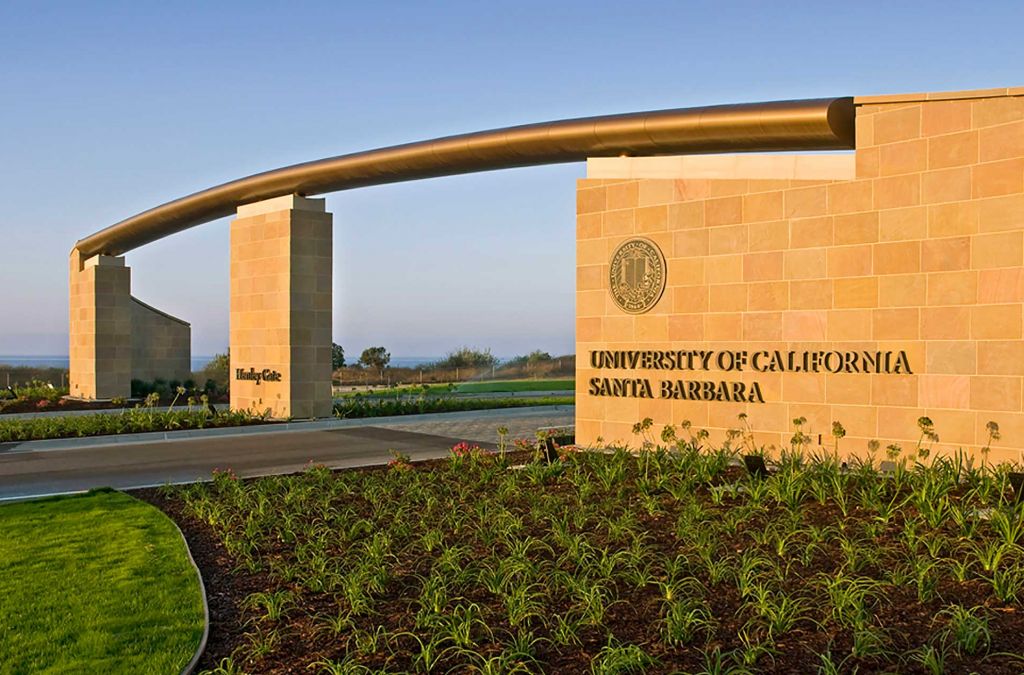
University of California, Santa Barbara (UCSB) sits on a picturesque coastal terrace flanked by the Pacific Ocean and the Santa Ynez Mountains. This unique geography shapes a campus where top-tier marine research meets daily ecological commitment. Far from a standard collegiate setting, UCSB functions as a living laboratory where coastal processes inform academic inquiry and green infrastructure guides physical expansion.
The institution's positioning directly adjacent to the ocean drives its identity. Students and researchers don't have to travel far to study marine ecosystems; the shoreline is an active extension of the classroom. At the same time, the university balances high-level research output with aggressive campus sustainability milestones, making it a prominent case study in modern higher education design.
The Architectural Integration with the Coastline
UCSB's physical layout departs from traditional grid-based or urban university designs. Planners utilized a decentralized campus model that clusters academic quads, residential halls, and dining commons around open green spaces, mesas, and coastal lagoons. This configuration preserves natural drainage paths and maintains sweeping views of the Pacific from nearly every angle.
Buildings utilize materials and structural forms engineered to withstand marine weathering while maximizing natural ventilation. Large window placements capture sea breezes, cutting down on air conditioning loads during warmer months. For instance, structures housing the earth sciences and environmental studies departments incorporate exposed structural elements and orientation studies directly into their daily use. These design choices reduce energy footprints and provide students with tangible examples of climate-responsive architecture.
Green roofs and native landscaping further blur the line between built environments and local habitats. By planting drought-tolerant native flora across administrative and research rooftops, the campus manages stormwater runoff naturally and supports local pollinator populations.
Marine Science and Coastal Research Centers
The proximity to the Santa Barbara Channel anchors UCSB's status as a global leader in marine science. The Marine Science Institute serves as the administrative and intellectual umbrella for hundreds of researchers studying oceanography, marine biology, and coastal dynamics.
Researchers have access to dedicated coastal research facilities and vessels that monitor the California Current Ecosystem. This long-term ecological research program tracks shifts in water temperature, nutrient cycling, and species migration over decades, providing critical data used by policymakers worldwide.
Core Research Pillars
- Ocean Acidification Monitoring: Continuous sensor networks record pH fluctuations in nearshore waters, helping scientists evaluate the stress placed on local kelp forests and shellfish populations.
- Coastal Erosion and Resilience: Faculty collaborate with state agencies to model sea-level rise impacts on sandy beaches and low-lying coastal infrastructure.
- Sustainable Fisheries: Interdisciplinary teams analyze fishing pressures and design marine protected areas that balance ecological recovery with local economic needs.
Operational Sustainability and Carbon Neutrality Goals
Academic research at UCSB doesn't stay confined to journals; it directly influences how the campus operates. The university has pursued ambitious climate action targets, including a long-standing drive toward operational carbon neutrality.
Energy management relies heavily on an on-campus cogeneration plant that captures waste heat to generate steam for campus heating and cooling. This setup operates at significantly higher efficiency rates than conventional grid power imports. Beyond energy generation, resource management touches every corner of daily student life.
Daily Sustainable Practices
- Active Transportation Networks: A dense grid of dedicated bicycle paths crisscrosses the campus. More than half of the student body commutes via bicycle, supported by a campus-run bike shop and extensive parking infrastructure.
- Comprehensive Composting and Recycling: Waste diversion programs across dining halls and residence complexes target strict landfill reduction metrics through multi-stream sorting stations.
- Locally Sourced Dining: Campus dining services partner with regional agricultural producers to source seasonal ingredients, cutting down supply chain transit emissions.
Student Life within a Coastal Ecosystem
Living at UCSB means integrating outdoor recreation and environmental consciousness into everyday routines. Residence halls sit steps away from campus lagoons and surf breaks, fostering an outdoor-centric culture. Student-run organizations actively participate in coastal cleanups, restoration projects on the bluffs, and campus-wide climate advocacy forums.
This culture extends into academic advising and coursework. Environmental literacy isn't restricted to science majors; interdisciplinary general education requirements ensure that students across humanities and engineering engage with climate policy, resource ethics, and sustainability frameworks.
Frequently Asked Questions
Where is the UCSB campus located?
UCSB is located on a coastal promontory in Santa Barbara County, California, adjacent to the unincorporated community of Isla Vista and bordered directly by the Pacific Ocean.
What makes UCSB unique among research universities?
Its direct physical connection to the marine environment allows for real-time field research, paired with an integrated campus-wide focus on renewable energy and waste reduction.
How does the campus handle student transportation?
Bicycling is the primary mode of transit. The campus features specialized bike roundabouts, multi-lane bike paths, and extensive repair stations designed to keep car traffic minimal.
What is the Marine Science Institute?
It is the primary research hub at UCSB that coordinates interdisciplinary studies involving oceanography, marine biology, and coastal conservation projects.



