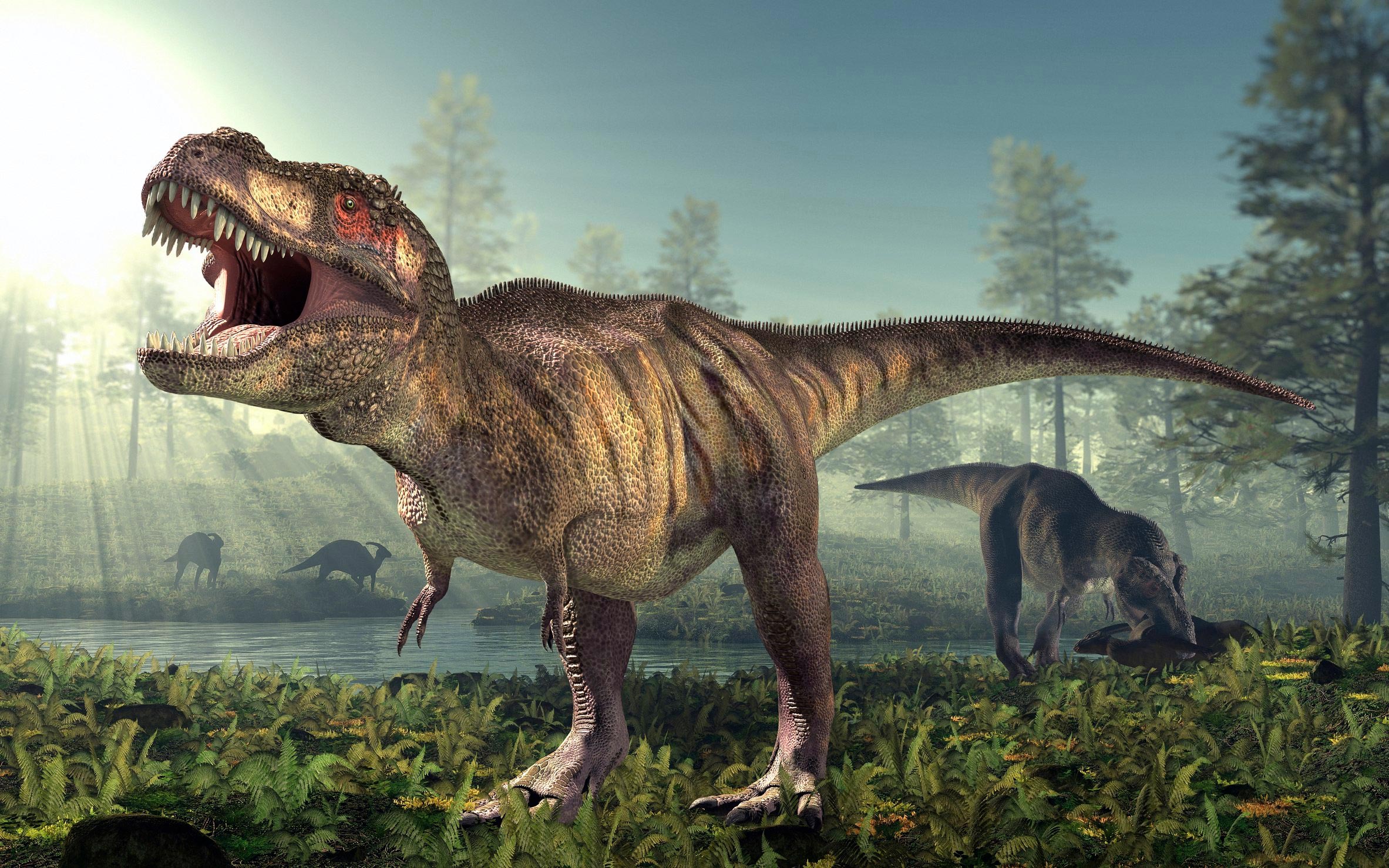
When people picture Tyrannosaurus rex, they usually imagine a towering monster peering over the roofs of two-story houses. Popular culture loves to exaggerate prehistoric life, and few creatures suffered more exaggeration than the undisputed king of the Cretaceous. But if you stand next to a mounted skeleton in a museum, the first impression is often surprise. They weren't as tall as skyscrapers. Instead, they were astonishingly long and heavily built.
Determining how tall a Tyrannosaurus rex stood requires looking past simple height metrics and understanding how these animals carried their massive bodies. Height in a bipedal dinosaur isn't a fixed measurement like a doorframe. It changes entirely depending on posture. Paleontologists rely on remarkably complete fossil specimens like Sue and Scotty to reconstruct these dimensions, revealing an animal built less like a giraffe and more like a massive, predatory bridge.
Defining the King: Understanding T. Rex Dimensions
When discussing the physical scale of a Tyrannosaurus rex, scientists separate the measurements into three distinct categories: overall length, hip height, and maximum upright height. Total length is the most reliable metric. Adult specimens regularly stretched between 12 and 13 meters (about 39 to 43 feet) from the tip of the snout to the end of the tail.
Hip height tells a different story about how the animal moved. At the hips, a fully grown Tyrannosaurus rex stood roughly 3.6 to 4 meters (12 to 13 feet) off the ground. That means a human standing next to a living T. rex would look directly into the creature's pelvic region.
Maximum upright height is where confusion usually starts. Early twentieth-century museum mounts posed Tyrannosaurus rex in an upright, Godzilla-like stance with the tail dragging heavily on the ground. In that incorrect posture, the head could reach nearly 6 meters (20 feet) high. Modern biomechanical studies completely discarded that tail-dragging model. We now know their vertebral columns were held roughly horizontal, balanced by a stiff, counterbalancing tail. In its natural, alert walking posture with the head lowered or held level with the hips, the top of the head sat around 5 to 6 meters high when craning upward, but normal resting head height was closer to 3 to 4 meters.
Posture and Biomechanics: How They Carried Their Weight
To understand Tyrannosaurus rex height, you have to understand posture. For decades, illustrations showed T. rex standing upright like a bipedal lizard. That posture would have dislocated the hips and snapped the tail vertebrae under the immense muscular strain.
By the late twentieth century, paleontologists recognized that non-avian theropods walked with a horizontal backbone. The heavy tail acted as a biological seesaw, counterbalancing the massive skull and torso. This horizontal posture changed our understanding of their reach. Rather than towering down from the clouds like a crane, a hunting Tyrannosaurus rex kept its head relatively level, scanning the floodplain at roughly eye-level with a modern giraffe's shoulders, though much more forward-oriented.
This body plan also meant their center of mass was located right around the hip joint. Every part of the skeleton was engineered to support massive weight without sacrificing forward momentum. They weren't built for Olympic sprinting, but their stride length was enormous. A single step could cover over 4 meters, allowing them to cross ground efficiently despite short legs relative to their total body length.
The Giant Specimens: Sue, Scotty, and the Upper Limits
Not all Tyrannosaurus rex individuals reached the same size. Like humans, they grew at different rates and achieved different maximum dimensions based on health, food availability, and age. Paleontologists track exceptional specimens that push the boundaries of what we know about the species.
Sue, housed at the Field Museum in Chicago, is one of the most complete and largest skeletons ever discovered. Sue measures roughly 12.3 meters long and stands about 4 meters tall at the hip. Another famous giant, nicknamed Scotty and housed in Canada's Royal Saskatchewan Museum, is estimated to be even heavier, tipping the scales at over 8,800 kilograms (nearly 19,400 pounds) while matching similar length and height parameters.
Growing to these sizes required an extraordinary growth spurt. Research published by organizations like the Smithsonian National Museum of Natural History shows that teenage Tyrannosaurus rex underwent a massive adolescent growth phase, gaining upwards of two kilograms per day for several years. During this teenage window, their height and length exploded before plateauing in adulthood.
Comparing T. Rex to Other Giant Dinosaurs
It helps to put Tyrannosaurus rex height into perspective by comparing it with contemporaries and other famous theropods. While T. rex is famous for being the apex predator of the Late Cretaceous, it wasn't actually the tallest or longest carnivorous dinosaur.
- *Spinosaurus: Longer and potentially taller due to its massive neural spine sail, though much lighter and adapted for a semi-aquatic lifestyle.
- *Giganotosaurus: Slightly longer and sometimes rivaling or marginally exceeding T. rex in sheer linear length, though built with a different skull and jaw mechanic.
- *Tyrannosaurus rex: The most massive, robust apex predator by sheer bite force and bone-crushing bodily volume, even if others beat it out in raw height or length.
Long-necked sauropods like Diplodocus and Brachiosaurus completely dwarf Tyrannosaurus rex in height, but those herbivores occupied an entirely different ecological niche. Against meat-eating rivals, T. rex held its own through sheer robust mass rather than slender height.
Common Misconceptions About Dinosaur Scale
Popular media often distorts the reality of prehistoric fauna. Clearing up these myths helps build an accurate mental image of the Cretaceous world.
- The Tail Drag: As mentioned, T. rex did not drag its tail. Doing so would leave distinctive furrow marks in the fossil record, which have never been found. The tail was held rigidly aloft to balance the torso.
- The T-Rex vs. Tree Height: People often assume T. rex could peer over the canopy of Cretaceous forests. In reality, Late Cretaceous environments featured diverse plant life, and many trees exceeded 15 to 30 meters in height. T. rex roamed beneath the canopy, not above it.
- Tiny Arms vs. Body Height: The tiny arms of a Tyrannosaurus rex are a frequent punchline, but they were remarkably muscular. While they couldn't reach past the animal's chest, they were engineered to hold struggling prey close during close-quarters combat.
Frequently Asked Questions
How tall was a baby Tyrannosaurus rex?
Hatchlings were surprisingly small, emerging from eggs roughly the size of a grapefruit. A newly hatched T. rex would stand only about knee-high to a human, looking more like a fluffy, long-tailed bird than a terrifying apex predator.
Could a T. rex look inside a second-story window?
In a modern urban setting, yes. If a fully grown Tyrannosaurus rex stood on a paved street, its head could reach roughly 4 to 5 meters high when holding its head up, easily level with the second floor of a standard building.
Why did T. rex grow so large?
Gigantism in large theropods provided distinct evolutionary advantages. Larger size allowed them to tackle massive herbivorous prey like Triceratops and Edmontosaurus, protected them from smaller competing predators, and improved thermal efficiency through mass homeostasis.
How do scientists calculate the height of extinct dinosaurs?
Paleontologists use comparative anatomy, scaling limb bones—particularly the femur and tibia—against modern animals with known body proportions. By combining bone diameters with muscle attachment scars, computer simulations can accurately reconstruct posture and overall stature.