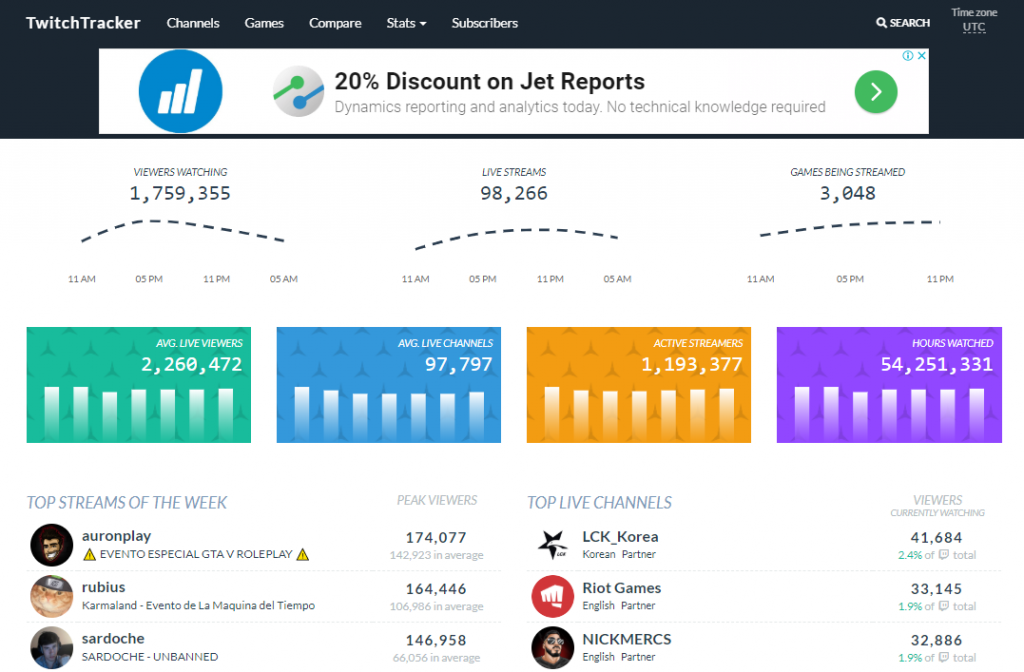
When you look at a live stream's viewer count on Twitch, you're not seeing a simple tally of individuals sitting in front of screens. Platforms like TwitchTracker aggregate massive volumes of telemetry, turning complex interactions into concrete metrics like concurrent viewers, hours watched, and unique monthly broadcasters. Yet, understanding what those numbers actually mean for content creators and marketers requires looking past the surface-level vanity metrics.
Raw viewer counts hide vital behavioral patterns, platform algorithmic quirks, and audience engagement depths. If you're relying solely on peak concurrent viewers to gauge community health or campaign success, you're missing the operational reality of how audiences consume live content. Let's break down the mechanics behind streaming data platforms and what those real viewer numbers reveal about the modern digital landscape.
Deconstructing TwitchTracker Metrics
Analytics platforms aggregate raw data streams provided by application programming interfaces to map out platform-wide trends and individual channel performance. To use these insights effectively, you need to know what terms like concurrent viewership, watch time, and active channels actually represent.
Concurrent viewership measures how many accounts have a stream open at any given second. If a channel displays five thousand concurrent viewers, that's a snapshot, not a cumulative tally. Over the course of a three-hour broadcast, that same channel might cross paths with thirty thousand unique individuals.
Hours watched scales that snapshot by duration. It multiplies average concurrent viewers by the total length of the broadcast. This metric favors long-form creators, showing total audience retention rather than just initial reach. Meanwhile, active channel tracking reveals the massive supply side of the equation. Millions of distinct channels go live every month, creating intense competition for a limited pool of attention.
The Illusion of Concurrent Viewership
It's easy to treat concurrent viewer numbers as absolute proof of popularity or influence. In practice, several structural elements distort what those numbers mean on the ground.
- Background tabs and low engagement: Many users leave streams running in muted background tabs while multitasking, farming drops, or idling in a community they aren't actively watching.
- Embedded streams: External website embeds count toward a channel's viewer tally even if the user isn't interacting with the native chat or community interface.
- Multistreaming and restreams: Creators broadcasting simultaneously to multiple platforms split their attention pools, making single-platform metrics look smaller than their true cross-platform footprint.
Relying on raw concurrency alone leaves you vulnerable to inflated perceptions. A channel with two thousand active, chatting viewers often yields a healthier business model and stronger community resonance than a passive stream pulling five thousand idle viewers.
Engagement Quality vs. Raw Scale
When analyzing streaming data, the ratio between passive watchers and active participants tells the real story. High-performing channels build sticky environments where chat velocity, clip sharing, and subscription retention match or exceed raw viewership graphs.
Look at chat telemetry. A healthy community generates predictable chat lines per minute relative to its viewer count. If a channel boasts ten thousand concurrent viewers but the chat moves at a crawl, you're looking at passive consumption or artificial traffic inflation. Conversely, hyper-engaged communities with modest viewer counts often deliver exceptional conversion rates for sponsorships and merchandise.
Platforms like Twitch lean heavily on discovery directories. When you study category trends on tracking sites, you notice that a small percentage of top directories capture the vast majority of total watch time. Real viewer numbers dictate that breaking out of the bottom of a crowded directory requires external traffic funnels, because internal algorithmic discovery favors channels already holding high concurrent baselines.
Common Analytics Mistakes
Misinterpreting streaming data leads to flawed growth strategies for creators and misallocated budgets for brands. Avoid these common analytical traps.
- Chasing peak metrics over averages: Focusing entirely on your highest-ever concurrent viewer count distorts your baseline expectations. Base your planning on median averages instead.
- Ignoring seasonality: Gaming and streaming metrics fluctuate wildly based on school semesters, major esports tournament schedules, and holiday periods. Don't mistake seasonal dips for failing content strategies.
- Comparing across different genres: Comparing a Just Chatting creator's metrics directly to a niche speedrunner's numbers ignores the fundamental structural differences in how those categories attract and retain audiences.
- Overvaluing follower counts: Total followers accumulate over years of inactive accounts. Active concurrent viewers and unique daily visitors offer a much sharper picture of current relevance.
Frequently Asked Questions
How accurate are third-party tracking sites like TwitchTracker?
Third-party platforms rely on public data APIs provided by Twitch. They capture general trends, concurrent snapshots, and public chat logs with high reliability. However, they cannot track private metrics, subscriber-only data subsets, or exact ad-impression counts that live behind proprietary server walls.
Why do viewer counts fluctuate wildly during a single broadcast?
Viewers frequently migrate between channels based on raid trains, major match moments, or sudden shifts in stream content. External notifications and platform homepage recommendations also trigger rapid waves of incoming and outgoing traffic.
What is a good average viewer count for a growing creator?
Growth depends heavily on the specific game or category directory. In highly saturated directories, crossing a baseline of fifty consistent concurrent viewers puts a channel ahead of the vast majority of active broadcasters who remain stuck in single-digit visibility.
How do brands use streaming data for sponsorships?
Brands look far beyond raw follower counts. They analyze average concurrent viewership, audience demographic overlap, chat sentiment, and clip virality to ensure a creator's community aligns with their specific product offerings.


