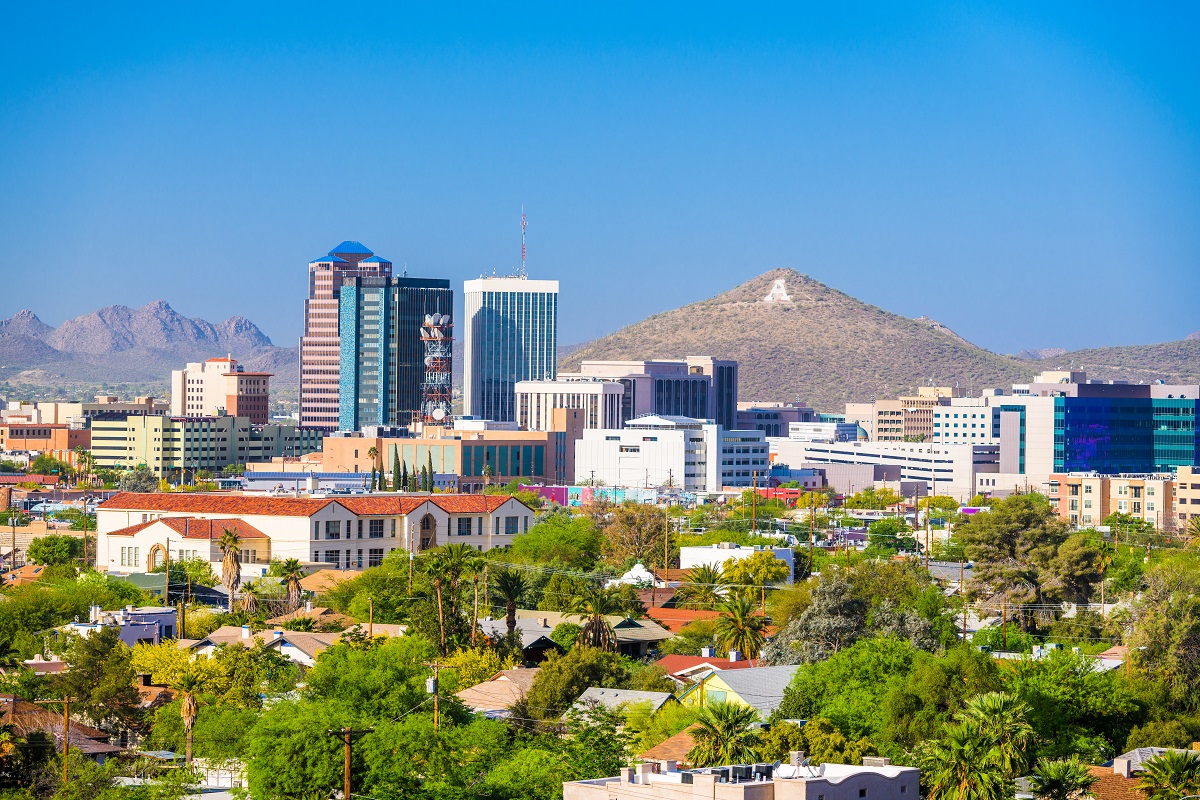
Tucson, Arizona, combines a booming desert economy, deep cultural roots, and a strategic location that positions it as an economic powerhouse in the American Southwest. Often overshadowed by Phoenix, this sun-kissed metro area operates on a distinct set of business advantages, anchored by aerospace manufacturing, optical sciences, and cross-border trade. Understanding what drives Tucson's unique selling proposition reveals why major employers and entrepreneurs increasingly choose Pima County for long-term expansion.
The Economic Core: Aerospace, Defense, and Advanced Tech
Tucson's industrial foundation rests on advanced manufacturing and defense engineering. Major defense contractors, most notably Raytheon, maintain massive operations here, supported by a specialized supply chain of precision engineering firms. Beyond aerospace, Tucson earned the moniker "Optics Valley" due to a dense concentration of optics and photonics companies rooted in research originating from the University of Arizona.
This tech ecosystem thrives because of collaborative pipelines connecting academic research directly to commercial applications. Small engineering startups work alongside established global firms, benefiting from lower commercial real estate costs compared to neighboring California or fast-growing northern metro areas.
Strategic Geography and Cross-Border Trade
Location remains a primary driver of Tucson's economic edge. Situated just 60 miles north of the Mexico border, the city acts as a critical logistics corridor for international commerce.
- Port of Entry Proximity: Direct access to major interstate corridors and rail networks links Sonoran manufacturing hubs directly to United States distribution channels.
- The Sun Corridor: Tucson sits squarely within the Arizona Sun Corridor, an economic mega-region projected to house millions of new residents over the coming decades.
- Binational Logistics: Specialized industrial parks and foreign trade zones streamline customs processing for cross-border manufacturing operations.
Tourism, Culture, and Quality of Life
Economic vitality in Tucson relies heavily on a thriving tourism and hospitality sector that capitalizes on the region's climate and heritage. Millions of visitors travel to southern Arizona annually to explore the Sonoran Desert, Saguaro National Park, and historic cultural landmarks.
Cultural preservation efforts play a vital role in the region's identity. Partnerships with indigenous communities, including the Pascua Yaqui Tribe and the Tohono O'odham Nation, preserve rich traditions while contributing to regional heritage tourism. This cultural depth enhances local quality of life, attracting remote workers and young professionals seeking an active outdoor lifestyle without the extreme congestion of coastal tech hubs.
Workforce Development and Higher Education
A sustainable economy requires a steady influx of skilled labor. The University of Arizona serves as the primary engine for workforce development, producing top-tier graduates in engineering, medicine, and optical sciences.
Local municipal programs complement university output through targeted workforce training initiatives. Partnerships between community colleges and private employers ensure that vocational and technical curricula align with active hiring demands in manufacturing, healthcare, and renewable energy sectors.
Common Pitfalls for Businesses Expanding to Tucson
Companies relocating or expanding operations to Tucson sometimes miscalculate local operational dynamics. Avoid these frequent mistakes:
- Ignoring Summer Climate Realities: Logistics, construction scheduling, and outdoor operations require careful management during extreme desert summer temperatures.
- Overlooking Regional Partnerships: Succeeding in the Tucson market requires active engagement with local economic development agencies rather than relying solely on remote corporate strategies.
- Failing to Leverage Cross-Border Supply Chains: Businesses that ignore trade infrastructure with Mexico miss out on significant cost efficiencies in manufacturing inputs.
Frequently Asked Questions
What are the main industries driving Tucson's economy?
Aerospace, defense, optics and photonics, higher education, healthcare, and binational logistics form the core of Tucson's economic output.
Why is Tucson called Optics Valley?
The region earned this title due to a high concentration of optical science research facilities, telescope manufacturers, and photonics firms anchored by the University of Arizona's College of Optical Sciences.
How does Tucson's proximity to Mexico impact local business?
The location facilitates rapid cross-border manufacturing, supply chain integration, and international trade through nearby ports of entry, making it an ideal hub for binational commerce.
What is the cost of living compared to other Southwest cities?
Tucson generally offers a lower cost of living and more affordable commercial real estate than Phoenix, San Diego, or Austin, while maintaining a robust urban infrastructure.



