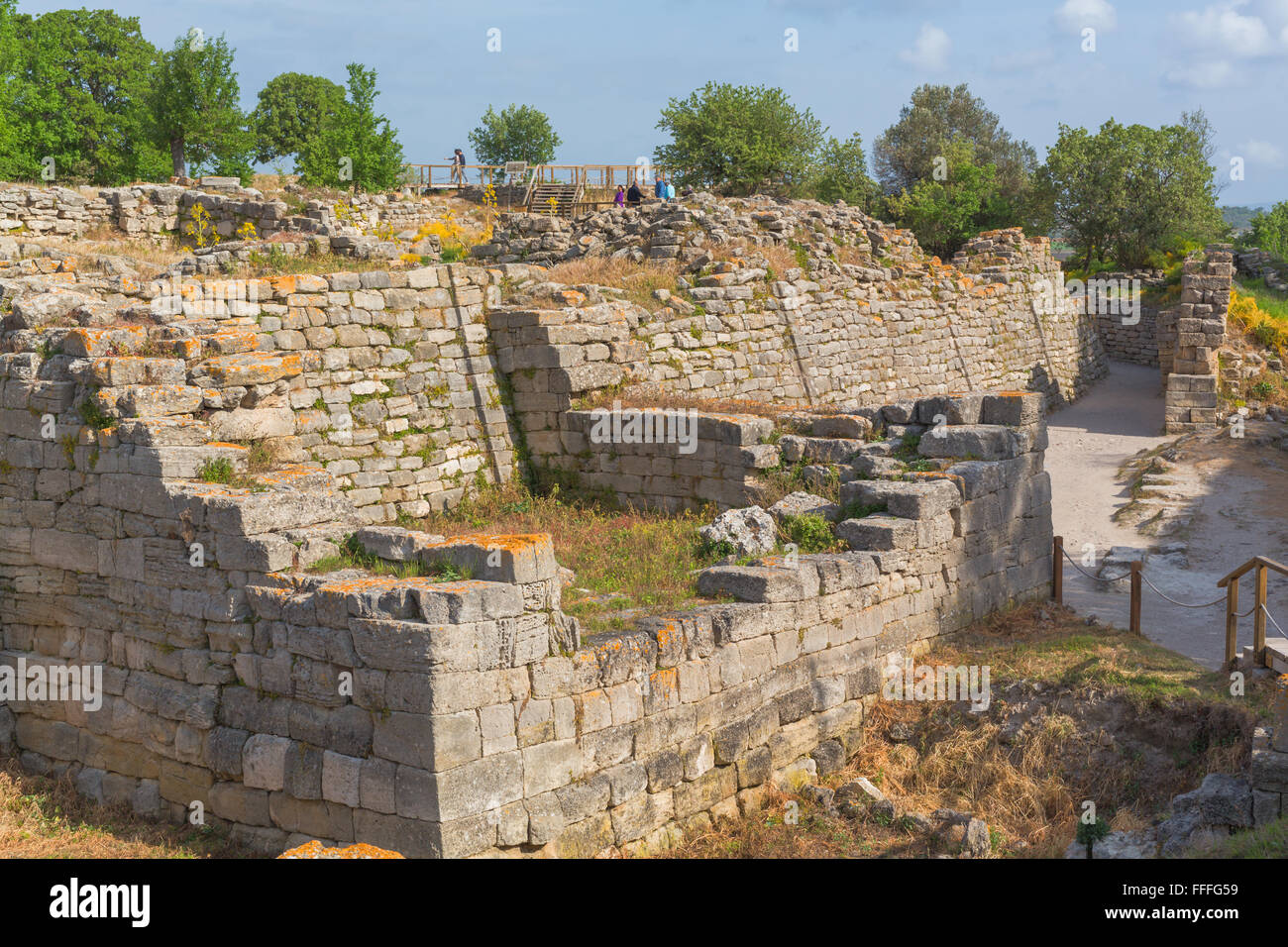
Wolfgang Petersen’s Troy 2004 arrived in theaters during a brief renaissance of big-budget historical epics. Armed with a massive 185 million dollar budget and a star-studded cast led by Brad Pitt, Eric Bana, and Peter O'Toole, the film set out to translate Homer’s ancient text into a digestible summer blockbuster. The central search intent behind revisiting this movie centers on how well a 2,700-year-old oral epic transitions into a modern cinematic format, and where the adaptation succeeds or stumbles when stripped of its divine mythology.
Adapting an ancient text requires massive structural compromises. Homer’s The Iliad relies heavily on divine intervention, where Olympian gods actively manipulate the battlefield, shield favored champions in mist, and argue amongst themselves on Mount Olympus. Petersen and screenwriter David Benioff chose a completely different path. They grounded the narrative in gritty historical realism, completely erasing the gods. This choice transforms the story from a clash of demigods and deities into a geopolitical conflict driven by pride, love, and maritime trade routes.
Stripping the Gods: The Choice for Realism
Removing the supernatural elements changes the core meaning of the original poem. In the source material, Achilles knows his fate because his mother Thetis prophesied it, and Hector fights knowing the gods favor his doom. Without these divine forces, the 2004 film leans entirely on human psychology.
When Achilles refuses to fight, it’s not because Athena pulls his hair and tells him to calm down; it’s because Agamemnon insulted his pride and took Briseis. This grounding makes the characters more accessible to modern audiences who might struggle to connect with mythological interventions. Yet, it also flattens some of the epic grandeur. The stakes feel smaller when reduced to standard medieval-style warfare tactics and political maneuvering.
The film also altered character relationships to fit Hollywood formulas. Most notably, Patroclus is changed from Achilles' older companion and romantic partner into his younger cousin. This shift reflected early 2000s studio hesitance regarding queer representation in tentpole blockbusters. It alters the emotional weight of Patroclus's death, turning it into a narrative device fueled strictly by familial vengeance rather than profound grief and shared legacy.
Character Adaptations: Who Worked and Who Didn't
Translating poetic archetypes into flesh-and-blood actors produced mixed results. Some performances elevate the material far beyond the script's limitations, while others suffer from tonal whodunits.
- Achilles (Brad Pitt): Pitt plays the Greek hero as a bored, lethal mercenary driven by a desire for everlasting memory (kleos). His physical commitment to the role remains undeniable, spending months training with swords to look the part. However, his performance lacks the poetic introspection found on the written page.
- Hector (Eric Bana): Bana anchors the entire film. He plays the Trojan prince not as a cardboard cutout hero, but as a devoted husband, father, and military commander carrying the weight of a doomed city on his shoulders. His duel with Achilles stands as the emotional core of the movie.
- Priam (Peter O'Toole): O'Toole brings unmatched gravity to the screen. The tent scene where Priam begs Achilles for his son’s body is a masterclass in acting. O'Toole elevates a standard Hollywood script into genuine tragedy.
- Agamemnon (Brian Cox): Cox plays the Mycenaean king as a power-hungry warlord rather than a complex Greek monarch. He chews the scenery with gleeful malice, providing a clear villain for the audience to root against.
Production Design and Action Choreography
While the narrative takes liberties, the physical production remains a high-water mark for practical filmmaking before heavy CGI dominance took over. The film utilized massive physical sets in Malta and Mexico, complemented by thousands of extras.
The costume design by Bob Ringwood deserves specific praise. Instead of generic leather skirts, the armor mirrors Bronze Age artifacts discovered by archaeologists, featuring Boar's tusk helmets and authentic greaves. The sword fighting choreography avoids flashy, spin-heavy cinematic flourishes in favor of brutal, heavy strikes that simulate the weight of bronze and iron. Roger Pratt’s cinematography captures the dusty, sun-baked brutality of the Aegean landscape, giving every frame a tangible texture.
Common Mistakes When Analyzing Troy 2004
Viewers often fall into specific traps when evaluating this cinematic adaptation. Recognizing these missteps helps form a balanced critique.
- Judging it as a direct historical documentary: The Trojan War remains a blend of myth and archaeological reality, and the film takes immense dramatic license with timelines and character fates (such as having Paris survive and Helen leave with him).
- Expecting Homeric verse in the dialogue: The script uses functional modern English rather than poetic meter. Criticizing it for lacking hexameter misses the point of a commercial studio adaptation.
- Overlooking the Director's Cut: Warner Bros. released a 2007 Director's Cut that added roughly thirty minutes of footage, expanding character motivations and upping the violence rating. Evaluating only the theatrical cut misses Petersen's intended vision.
To dive deeper into the historical context and production background of major Hollywood epics, you can explore the Mubi Film Database or read professional retrospectives on Frame Rated.
Frequently Asked Questions
Did the 2004 movie Troy follow The Iliad accurately?
No. The film departs significantly from Homer's poem by removing the Olympian gods, altering character relationships like the one between Achilles and Patroclus, and changing the fates of several major characters to provide a neat narrative resolution.
Why were the gods removed from Troy 2004?
Director Wolfgang Petersen and the studio wanted to appeal to a broad contemporary audience who might find divine intervention distracting or difficult to relate to, opting instead for a gritty, realistic war film aesthetic.
What is the difference between the theatrical cut and the director's cut?
The 2007 Director's Cut features extended battle sequences, expanded subplot details regarding Helen and Paris, a more fleshed-out sack of Troy, and an unrated gore level that was trimmed for the original PG-13 theatrical release.
Was the city of Troy actually built for the film?
Most large exterior structures and the massive Trojan Horse were constructed as physical sets on location in Malta, though digital effects were later used to multiply the size of the city and the surrounding Greek fleet.



