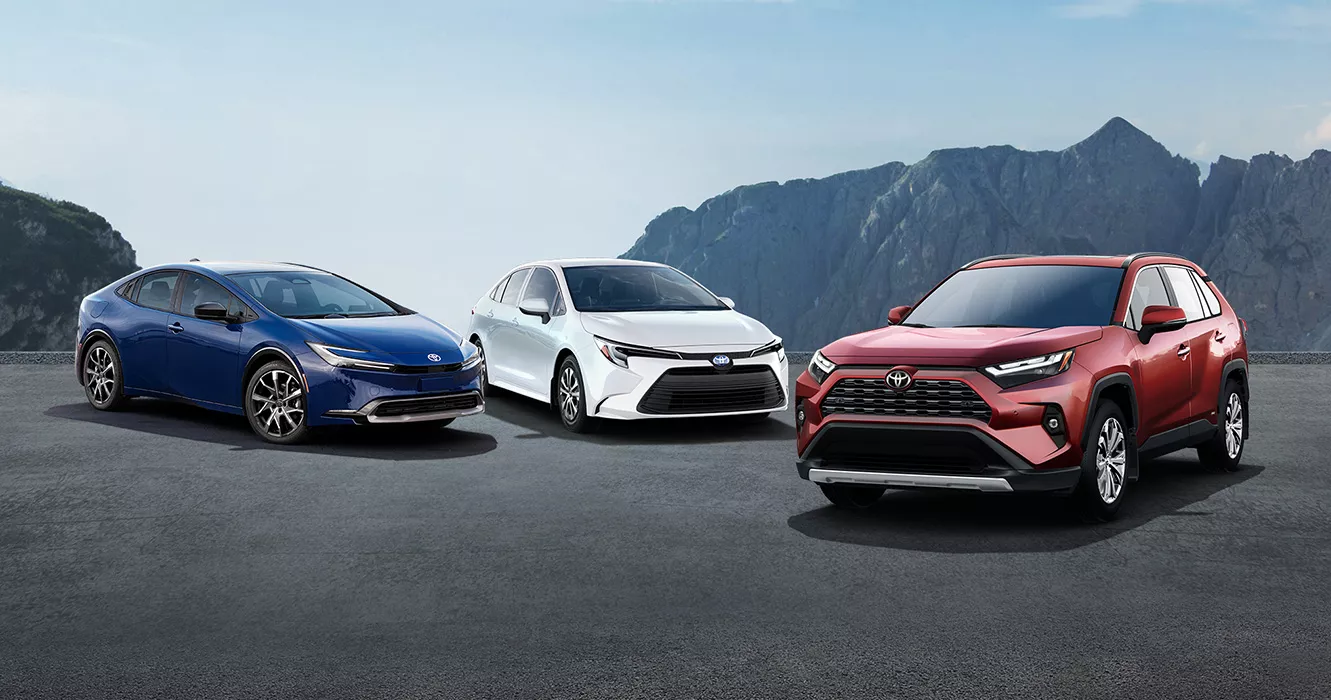
The Toyota Yaris Cross dominates Irish sales charts by offering a high-riding SUV driving position wrapped in a compact footprint that fits effortlessly into tight Dublin streets or narrow country lanes. Every model is a self-charging hybrid, meaning you don't need to plug it in to achieve real-world fuel economy of 4.5 to 5.0 litres per 100 kilometres.
Annual motor tax sits at €190 (Band B), making it one of the most economical choices on the market. It combines the bulletproof reliability of the standard Yaris supermini with extra ground clearance and versatile cabin space. However, choosing the right specification requires careful consideration of the front-wheel-drive and all-wheel-drive variants, as mechanical differences directly impact your boot space.
Powertrain Options and Real-World Performance
Under the bonnet, you get a 1.5-litre three-cylinder Atkinson-cycle petrol engine paired with an electric motor and an e-CVT automatic transmission. The line-up features the earlier 116 hp version and the punchier Hybrid 130 powertrain, which delivers cleaner throttle response when overtaking on national roads.
Power goes either to the front wheels or via an intelligent all-wheel-drive system known as AWD-i. Unlike traditional SUVs that use a heavy mechanical propshaft running down the middle of the chassis, the AWD-i version adds a separate 5kW electric motor onto the rear axle. This kicks in automatically when sensors detect slip on wet grass or icy boreens.
The compromise is stark: choosing AWD-i shrinks your boot capacity from a practical 397 litres down to 320 litres to accommodate the rear motor hardware. For most drivers tackling typical Irish commutes, the front-wheel-drive model is faster, cheaper, more efficient, and features the larger boot.
Irish Trim Grades and Equipment Selection
Toyota structures the range across several key tiers, with pricing starting around €30,640 for the entry-level Luna specification and climbing past €36,830 for the flagship GR Sport.
- Luna: The entry point includes 16-inch alloy wheels, a 9-inch infotainment touchscreen with wireless Apple CarPlay and Android Auto, full LED headlights, and the comprehensive Toyota Safety Sense suite.
- Sol: Widely considered the sweet spot in the range. It upgrades to 17-inch alloys, a larger digital instrument cluster, heated front seats, dual-zone climate control, and a wireless smartphone charging pad.
- GR Sport: Adds aggressive styling elements, sports seating, firmer suspension tuning, and 18-inch wheels. The stiffer setup translates to a sharper feel through corners, though you sacrifice a degree of ride comfort over broken surfaces.
Running Costs, Tax, and Insurance
Low operational expenditure explains why this compact crossover has surged to the top of registration charts.
Motor tax sits firmly in Band B at €190 per year, dictated by CO2 emissions ranging between 101 and 117 g/km depending on your wheel size and trim choice. Real-world fuel consumption regularly matches or beats official figures, hovering close to 4.5 L/100km during mixed urban and rural driving.
Insurance groups span from 16 to 22, which is notably lower than many boxy family hatchbacks or diesel SUVs. This keeps premiums manageable for younger motorists and returning emigrants rebuilding an Irish no-claims history.
Maintenance and the Toyota Relax Warranty
Toyota backs its vehicles with a standard 3-year or 100,000 km manufacturer warranty. However, under the Toyota Relax program, this protection extends by an additional 12 months (up to 10 years or 1 million kilometres) every time you service the car at an authorized Toyota dealer.
Hybrid traction batteries can similarly be covered for up to 15 years provided the vehicle passes an annual Hybrid Health Check during servicing. Skipping official dealer networks means sacrificing these valuable warranty extensions.
Common Issues and What to Watch For
While mechanical faults are rare, road testing highlights a few quirks worth noting before you buy:
- e-CVT Noise: Under hard acceleration, the engine revs settle into a sustained drone due to the nature of the planetary gear transmission. Quieter cruising resumes once you reach your target velocity.
- Firm Ride Quality: Over severe potholes, the suspension can feel abrupt, particularly on models equipped with larger 17-inch or 18-inch rims.
- 12-Volt Battery Wear: Urban stop-start driving patterns can place stress on the auxiliary 12V battery, which typically requires replacement around year five.
- Cabin Proportions: The front footwells feel narrower than competitors like the Renault Captur, so taller drivers should test-seat the car to verify long-term comfort.
For deeper specifications on competing crossovers, you can review the Hyundai UK lineup or explore official manufacturer data directly on Toyota Ireland.
Frequently Asked Questions
Does the Yaris Cross need to be plugged in to charge?
No. It is a full self-charging hybrid. The onboard petrol engine and regenerative braking system capture kinetic energy during deceleration to recharge the small lithium-ion battery automatically.
How does the boot size compare between FWD and AWD-i models?
The front-wheel-drive variant offers 397 litres of cargo capacity. The AWD-i variant reduces this space to 320 litres because the rear electric drive unit occupies space underneath the boot floor.
What is the annual motor tax for the Yaris Cross in Ireland?
Motor tax costs €190 per year, placing the vehicle into Band B based on WLTP carbon dioxide emissions between 101 and 117 g/km.
How long does the Toyota hybrid battery warranty last?
The high-voltage hybrid battery is covered for up to 15 years, provided you maintain annual servicing and pass the Hybrid Health Check at an authorized Toyota dealership.



