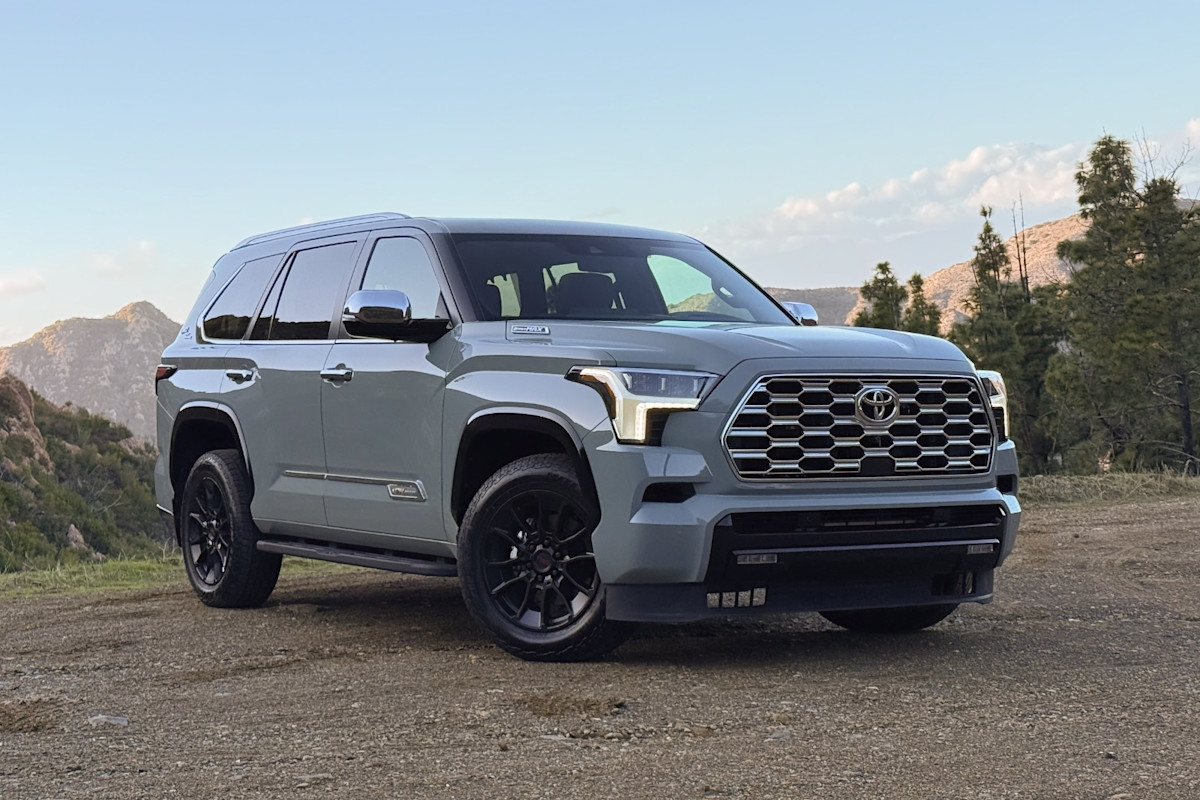
The Toyota SW4 2025 arrives with minor mechanical updates and pricing adjustments that continue to split opinions across global markets. Buyers often get tangled in internet gossip regarding whether this body-on-frame utility vehicle is literally a covered-bed pickup truck. It isn't, though they share factory DNA.
Market positioning places the SW4 between rugged commercial haulers and premium family cruisers. We'll break down the exact engine performance figures, regional price structures, and the real engineering separation between the SW4 nameplate and its pickup sibling.
Unpacking the Hilux SUV Rumor
For years, online forums have repeated the claim that the SW4 is just a Toyota Hilux with a factory-welded trunk lid. That rumor stems from shared internal assembly codes and platform origins, but factory reality is different.
While both vehicles use heavy ladder frames, Toyota tunes the SW4 chassis for passenger comfort rather than maximum cargo weight. The rear setup highlights this divergence. The pickup relies on heavy-duty leaf springs to handle high payloads in the bed. The SW4 swaps those out for a multi-link coil-spring rear arrangement. That mechanical shift changes how the back end settles over broken pavement and corrugations. To get more details on this development, comprehensive coverage can be read at The New York Times.
Interior architecture, acoustic glass placement, and mounting points for body panels don't match the pickup configuration. Calling the SW4 a "Hilux SUV" works as shorthand on social media, but it ignores the distinct engineering work Toyota puts into making the passenger variant behave like a station wagon rather than a commercial utility vehicle.
Engine Specs and Powertrain Options
Under the bonnet, the 2025 model relies on proven power units configured for reliability over raw speed. The lineup centers around the workhorse 2.8-litre turbodiesel four-cylinder engine.
Power outputs for the standard diesel sit around 201 horsepower (150 kW) with 500 Nm of torque when paired with the six-speed automatic transmission. Select markets also receive 48-volt mild-hybrid assist configurations on higher trims, adding minor electric torque fill off the line and smoothing out stop-start traffic transitions.
Performance figures break down as follows:
- Displacement: 2,755 cc four-cylinder common-rail diesel
- Maximum Output: 201 hp at 3,400 rpm
- Maximum Torque: 500 Nm between 1,600 and 2,800 rpm
- Transmission: Six-speed automatic with sequential shift modes
- Drivetrain: Part-time four-wheel drive with a low-range transfer case and a locking rear differential on GR-Sport variants
Cooling capacity remains a talking point for owners who tow heavy loads in hot climates. The intercooler and transmission cooler circuits handle sustained highway loads fine, but prolonged low-speed sand crawling pushes oil temperatures up quickly. If you're pushing through deep dunes, monitor your auxiliary temps closely.
Pricing Structure Across Global Markets
Pricing varies widely based on import tariffs, local assembly plants, and regional taxation. In South American and Southeast Asian markets where the vehicle holds massive market share, local currency conversions place the base variants competitively against mid-size competitors like the Ford Everest and Mitsubishi Pajero Sport.
Entry-level configurations start around the equivalent of $42,000 USD for basic two-wheel-drive diesel setups with fabric interiors and steel wheels. Mid-tier variants equipped with four-wheel drive, leather seating, and advanced driver assistance systems range from $52,000 to $63,000 USD. Top-tier performance-oriented trims, such as the GR-Sport variant featuring revised suspension dampening and aesthetic upgrades, push past $70,000 USD.
When budgeting for ownership, factor in regional fuel taxes. The non-hybrid diesel variants return solid highway economy around 8.0 liters per 100 kilometers, but city driving cycles push consumption closer to 10.5 liters per 100 kilometers.
Cabin Layout and Practicality
The interior prioritizes durability over minimalist luxury. Hard-wearing plastics dominate lower dash areas where boots and gear scrape, while touchpoints feature soft-touch materials.
Seating configurations accommodate up to seven passengers, though the third row remains best left to children or short trips. Adults sitting in the rearmost seats will find their knees pressed against the second-row seatbacks due to the elevated floorpan required to clear the rear axle housing.
Cargo volume expands drastically when you fold or tumble the third-row seats against the side pillars. Doing so opens up a flat loading floor capable of swallowing recovery gear, camping supplies, or luggage for a family road trip.
Frequently Asked Questions
Does the 2025 SW4 feature a full hybrid system?
No. Toyota offers a 48-volt mild-hybrid system on select diesel variants, which assists with smoother engine restarts and minor torque supplementation. It doesn't drive on electric power alone.
Can parts from a Hilux fit an SW4?
Front suspension components, steering rack assemblies, and engine internals share high parts interchangeability. However, rear suspension parts, exhaust routing, and body panels are entirely unique to the SW4.
What is the towing capacity?
Max braked towing capacity reaches 3,100 kilograms when using a properly rated tow bar assembly, though tongue weight limits must be monitored closely when loading the cargo area simultaneously.
Is the third row removable?
Yes, the third-row seats can be unbolted entirely if you prefer permanent cargo storage space over occasional seven-passenger capacity.



