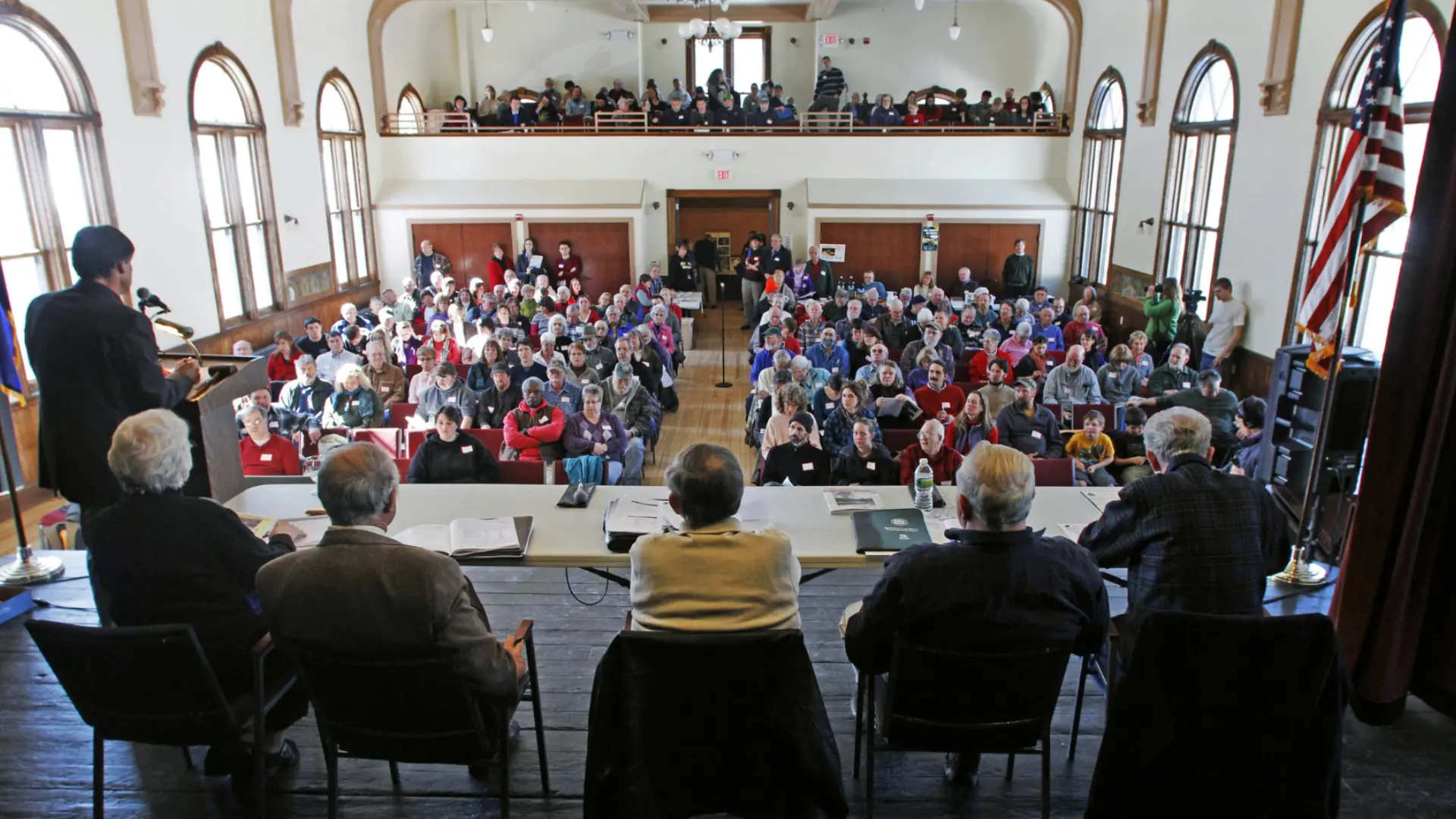
Deciding whether to write town hall as one word or two shouldn't slow down your writing process, but dictionaries and style guides offer specific rules. Town hall as two words is the standard noun form for a municipal building or an open public meeting. The closed compound townhall functions primarily as an adjective, a proprietary software name, or a brand identifier, though digital media has blurred these lines.
Standard style guides like The Associated Press Stylebook maintain that the open compound town hall is the correct spelling for general references and events. However, internet searches, corporate intranet menus, and software product titles frequently favor the single-word variant townhall. Knowing when to use each version prevents typos in formal documents while keeping your corporate communication aligned with modern web standards.
The Grammar Rules: Open Compound Versus Closed Compound
In English grammar, compound nouns evolve through predictable stages. They usually start as two distinct words (open compounds), transition to hyphenated terms, and eventually fuse into a single closed word (closed compounds).
The term town hall originates from physical architecture—a hall belonging to a town. Because "town" acts as a noun adjunct modifying "hall," traditional grammar dictates keeping them separate. You wouldn't write "cityhall" or "countyhall" in formal prose, so standard dictionaries list town hall as the primary entry.
Open Compound (Standard Noun):
We hosted a town hall meeting in the community center.

Closed Compound (Brand / Digital Modifier):
The quarterly townhall app crashed during the keynote.
When you use the term as a modifier or a specialized title, the closed form (townhall) creeps in. Digital communication rewards brevity, which explains why search engines and URL structures often merge the terms. Yet, strict editors still reject townhall as a standalone noun because it lacks the formal backing of major lexicographers like Merriam-Webster.
When to Use "Town Hall" (Two Words)
You should default to the two-word spelling town hall in almost all traditional writing contexts.
- Physical Locations: When referring to the actual municipal building where local government meets. ("We walked down to the historic town hall to pay our property taxes.")
- Public Meetings and Forums: When describing an open assembly where citizens or employees gather to ask questions and discuss policy. ("The mayor scheduled a town hall to address zoning changes.")
- Journalism and Formal Publishing: News organizations, academic papers, and official government reports universally adhere to town hall to maintain linguistic authority and formal tone.
Using town hall in these instances ensures your text reads professionally and satisfies editors who follow traditional style manuals.
When "Townhall" (One Word) Appears in Corporate Usage
While major dictionaries label the one-word variant as a misspelling or a nonstandard variant, corporate environments and tech companies embrace townhall for specific functional reasons.
- Software and Platform Names: If your company uses a specific virtual meeting platform or intranet portal branded as "Townhall," capitalize and close it as a proper noun. ("Log into Townhall at 2:00 PM for the company update.")
- UI Elements and Metadata: Web designers and content managers frequently use townhall in button labels, navigation menus, URLs, and SEO meta tags where space is limited and character counts matter.
- Internal Corporate Jargon: Tech startups and modern enterprises often treat all-hands meetings as a branded internal event, styling it as "the Q3 townhall" in slide decks and Slack channels.
Even so, if you're drafting external press releases or corporate governance documents, swap the single-word version back to town hall to avoid looking careless to external stakeholders.
Common Mistakes to Avoid
Writers often stumble by mixing up these forms or applying corporate shorthand to formal prose.
- Treating it as a verb: You can't "townhall" your team. Always phrase it as hosting a town hall or holding a townhall session.
- Inconsistent styling within a single document: If paragraph one uses "town hall," don't switch to "townhall" in paragraph three. Pick one convention—ideally the two-word standard—and stick with it throughout your article or report.
- Capitalizing generic instances: Unless you're referring to a proprietary software product named Townhall, keep it lowercase (town hall).
Frequently Asked Questions
Is townhall one word or two according to standard dictionaries?
Major dictionaries like Merriam-Webster list town hall as two words. The one-word version is generally recognized only as a brand name, a URL component, or nonstandard corporate jargon.
Can I use townhall as a verb in business writing?
No. Townhall is strictly a noun or an adjective. You should write that you are "hosting a town hall meeting" rather than saying you are "townhalling the team."
Why do companies prefer the one-word spelling?
Tech companies and digital marketers favor townhall because it looks sleeker in user interfaces, fits neatly into URLs, and mirrors the linguistic evolution seen in words like website or database.
Which spelling should I use for a press release?
Stick with the traditional two-word spelling town hall for press releases, news articles, and formal corporate communications to maintain maximum grammatical credibility.



