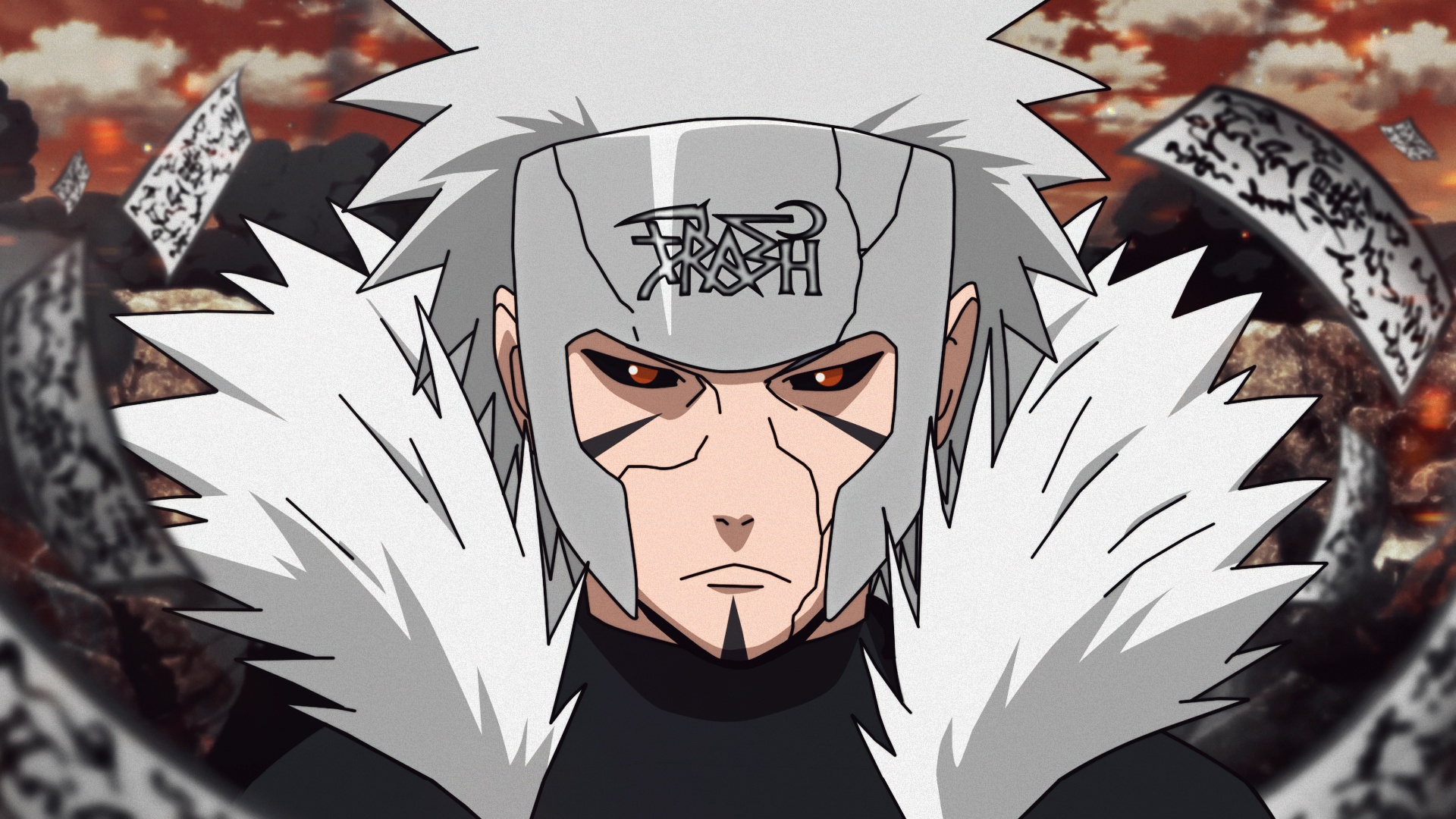
Tobirama Senju didn't inherit the Hidden Leaf Village; he engineered its survival. While his older brother Hashirama provided the grand dream of peace, it's Tobirama who built the actual machinery of statecraft, security, and administrative order that kept Konoha from tearing itself apart from day one. He operated as a cold pragmatist in a world of fierce idealists.
Stepping into the role of Second Hokage meant managing factional friction, establishing military standards, and preventing the newly forged village from collapsing back into clan warfare. His governance style relied on systemic control rather than charismatic optimism. This blueprint defined how every modern hidden village operated thereafter, though it left behind a complicated legacy of institutional paranoia and generational resentment.
Building the Konoha Infrastructure
When the Senju and Uchiha clans laid down their weapons to found Konohagakure, peace was precarious. Families that spent generations slaughtering each other now shared a wall. Tobirama recognized that shared ideals wouldn't stop blood feuds. He needed structural integration.
He established the Ninja Academy to strip away exclusive clan loyalties from a young age. Instead of children learning secret jutsu solely within isolated family compounds, they sat in standardized classrooms. They learned national history, survival tactics, and basic ninjutsu alongside peers from rival backgrounds. This unified curriculum forged a shared identity as Konoha shinobi first, clan members second.
To maintain order across expanding missions, Tobirama formalized the Jonin and Chunin rank system. By creating clear tiers of leadership, promotion, and operational responsibility, he transformed a loose band of mercenaries into a professional military force. Command structures ensured that no single clan could easily seize absolute power or operate outside official oversight.
The Shadow State: Intelligence and Enforcement
Peace required an iron grip, and Tobirama was willing to hold it. He recognized that external threats from rival nations and internal subversion required specialized, clandestine handling.
He formed the ANBU Black Ops, an elite tactical unit reporting directly to the Hokage. Operating outside normal military police protocols, the ANBU handled assassinations, high-stakes reconnaissance, and counter-intelligence. While this unit protected the village from catastrophic leaks and foreign infiltration, it also concentrated immense political power directly inside the executive office.
Beyond covert operations, Tobirama established the Konoha Military Police Force. He assigned this role primarily to the Uchiha clan. On the surface, this appeared to be an honor, recognizing their formidable combat prowess and legal authority within the village. In reality, it was a masterclass in containment. By locking the Uchiha into an insular internal security role, he kept them busy enforcing laws while physically isolating them away from the central administrative core of the village.
Innovation Through Forbidden Jutsu
Tobirama's genius extended deep into the technical side of ninjutsu. Unlike Hashirama, whose massive life force and Wood Release were gifts of nature, Tobirama was a creator of artifice. He invented jutsu that fundamentally altered warfare and intelligence gathering.
- Shadow Clone Technique (Kage Bunshin): By distributing his chakra evenly across solid, autonomous duplicates, he created the ultimate reconnaissance and training tool.
- Flying Raijin Technique (Hiraishin no Jutsu): A space-time ninjutsu allowing instantaneous teleportation via marked seals, making him nearly untouchable in close-quarters combat.
- Reanimation Jutsu (Edo Tensei): A controversial kinjutsu designed to resurrect the dead, originally conceived for reconnaissance or suicidal military deployment, though its later misuse by Orochimaru turned it into a weapon of mass destruction.
According to historical records from the Naruto Official Website, his technical innovations fundamentally shifted how shinobi approached combat, moving away from brute elemental force toward tactical precision and space-time manipulation.
The Seeds of Institutional Conflict
Every system has a breaking point, and Tobirama's pragmatism planted the seeds for Konoha's darkest internal tragedies. His deep-seated suspicion of the Uchiha clan—rooted in their susceptibility to the Curse of Hatred tied to the Sharingan—guided his administrative policies.
He didn't trust them, and over time, the Uchiha realized it. By segregating their living quarters to the outskirts of the village and keeping them under constant administrative surveillance, he turned a rival clan into an alienated underclass. Decades later, this institutionalized distrust culminated in the Uchiha Clan Downfall, proving that Tobirama's cold risk management created the very rebellion he tried so hard to prevent.
Frequently Asked Questions
What was Tobirama Senju's primary role in founding Konoha?
He acted as the chief administrator and strategist. While Hashirama secured the alliance with the Uchiha clan, Tobirama drafted the laws, built the institutional framework, and organized the village's military hierarchy.
Why did Tobirama create the Military Police Force for the Uchiha?
He gave the Uchiha control of the police force to integrate them into village governance while simultaneously keeping their power concentrated in an internal security role, away from the Hokage seat.
Did Tobirama invent the Shadow Clone technique?
Yes. He developed the Shadow Clone Technique, classifying it as a forbidden jutsu initially because the immense chakra drain makes it dangerous for ordinary shinobi to use safely.
How did Tobirama die?
During the First Shinobi World War, Tobirama sacrificed himself as a decoy against the Kinkaku Force of Kumogakure to allow his squad, including Hiruzen Sarutobi, to escape safely.



