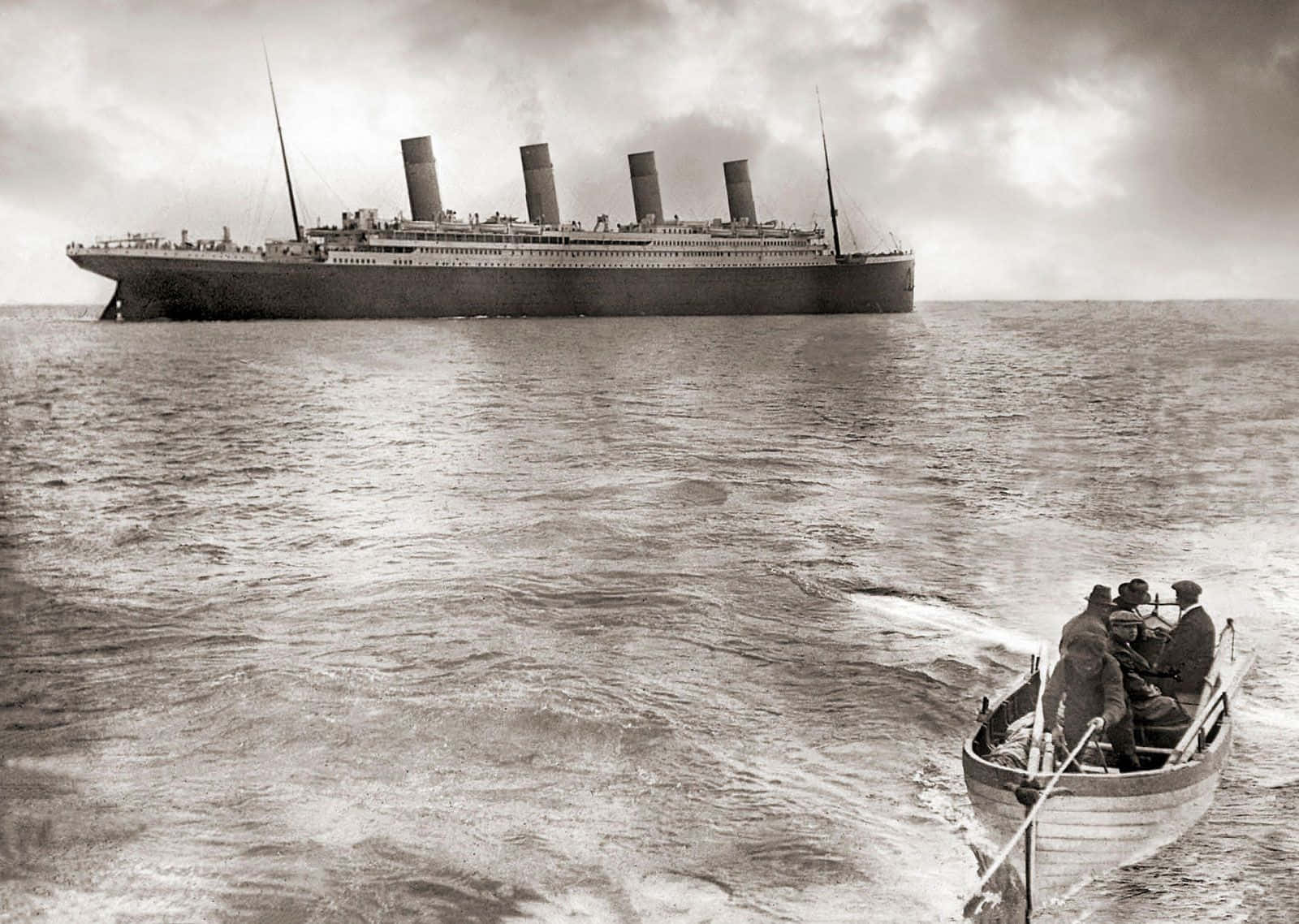
When people talk about famous ocean liners, two names almost always dominate the conversation. The RMS Titanic represents tragedy and Edwardian luxury, while the SS United States stands for mid-century American engineering and raw, unmatched speed. Comparing them isn't just about matching numbers on a page. It's about looking at two different eras of maritime philosophy, propulsion, and design.
Both ships were built to conquer the North Atlantic, yet they served entirely separate purposes. The Titanic was designed as a floating palace of immense scale and comfortable transit, prioritizing opulence and reliability over velocity. Decades later, the SS United States emerged as a Cold War troop carrier disguised as a luxury liner, engineered to sprint across the ocean faster than any competitor while backed by secret government funding.
Direct Comparison of Specs and Dimensions
Looking past the myths, the hard metrics reveal how ship design evolved over four decades. The Titanic was massive for its time in 1912, measuring 882 feet long with a beam of 92 feet and a gross tonnage of roughly 46,300. The SS United States dwarfed her successor when she launched in 1952, stretching 990 feet long with a 108-foot beam and coming in at over 53,000 gross tons.
- Length: Titanic at 882 feet versus SS United States at 990 feet.
- Beam (Width): Titanic at 92 feet versus SS United States at 108 feet.
- Propulsion: Titanic used reciprocating triple-expansion engines paired with a low-pressure turbine. The SS United States relied on powerful steam turbines designed for naval speed.
- Top Speed: Titanic peaked comfortably around 23 knots. The SS United States cruised past 35 knots, with unverified secret sprint speeds likely exceeding 38 knots.
Construction methods also tell a story of technological shift. Harland and Wolff built the Titanic using millions of heavy steel rivets to hold her massive hull plates together. In contrast, Newport News Shipbuilding constructed the SS United States primarily with extensive welding, creating a lighter, stronger, and more flexible frame capable of withstanding the immense stresses of high-speed cruising.
Propulsion and the Pursuit of Speed
Speed was the ultimate currency in the golden age of ocean travel. The Titanic wasn't built to break records; White Star Line deliberately conceded the Blue Riband to Cunard's Mauretania, focusing instead on luxurious comfort and smooth handling. Her reciprocating engines and central turbine generated roughly 50,000 horsepower, optimized for steady, reliable transatlantic crossings.
The SS United States operated under an entirely different mandate. Funded heavily by the Pentagon, the United States Navy wanted a vessel that could be rapidly converted into a troop transport capable of carrying 14,000 troops without refueling. This requirement meant secrecy surrounded her propulsion system. Her steam turbines generated well over 240,000 horsepower, driving two massive massive four-bladed propellers.
On her 1952 maiden voyage, she captured the eastbound Blue Riband with an average speed of 35.59 knots, then shattered the westbound record on the return leg. To this day, she holds the transatlantic speed record for an ocean liner.
Passenger Experience and Class Divides
The interior layouts of both ships reflected the social hierarchies of their respective centuries.
The Titanic featured a strict three-tier class system. First-class passengers enjoyed grand staircases, a Parisian café, squash courts, and expansive dining saloons decorated in period motifs. Second class offered comfortable, respectable quarters akin to first-class travel on older ships. Third class, while cleaner and more comfortable than immigrant ships of the past, remained strictly segregated in the bow and stern.
The SS United States featured a modern two-class layout (first and cabin class) with streamlined, mid-century modern styling. Because of strict U.S. maritime fire regulations, wood was almost entirely banned from the interior. Designers used glass, aluminum, and asbestos compounds to create a fireproof environment. While sleek and modern, many passengers noted that the ship felt sterile compared to the warm, wood-paneled grandeur of earlier liners.
Survival and Historical Legacy
Fate treated these two engineering marvels in radically different ways. The Titanic's career ended abruptly on her maiden voyage in April 1912 after striking an iceberg, exposing flaws in safety regulations and changing maritime law forever regarding lifeboat capacities and wireless communication.
The SS United States enjoyed a successful commercial career through the 1960s before jet travel rendered ocean liners economically unviable. Laid up in 1969, she spent decades languishing in Philadelphia while preservationists fought vainly to save her. Legal battles and financial hurdles eventually led to plans to sink the historic vessel off the coast of Florida to create the world's largest artificial reef. You can read more about maritime preservation efforts through the SS United States Conservancy.
Common Mistakes in Comparing the Two Ships
When enthusiasts discuss these vessels, several persistent myths tend to surface:
- Assuming size equals displacement: While the SS United States was longer, her lighter welded aluminum superstructure kept her total weight lean for her size compared to the heavily riveted iron and steel behemoths of the early 20th century.
- Confusing purpose with luxury: Many assume the SS United States was purely a luxury cruise ship, ignoring her vital Cold War military design specifications.
- Believing speed guarantees safety: High speed introduced unique hydrodynamic challenges, including intense hull vibration that required specialized engineering adjustments.
Frequently Asked Questions
Which ship was actually larger?
The SS United States was longer by over 100 feet and featured a wider beam. However, gross tonnage calculations varied by era, making direct interior volume comparisons complex.
Why was the SS United States faster than the Titanic?
The SS United States utilized advanced high-pressure steam turbines producing nearly five times the horsepower, paired with a lightweight, aerodynamically refined hull designed for military speed.
Did the SS United States ever sink?
No. After decades of sitting idle in port, she was acquired for deployment as an artificial reef in Florida waters to support marine life and diving.
Were wood interiors used on the SS United States?
Strict fire safety regulations prohibited most wood. Interior designers relied on fire-resistant materials like glass, metal, and specialized laminates to decorate the public rooms.