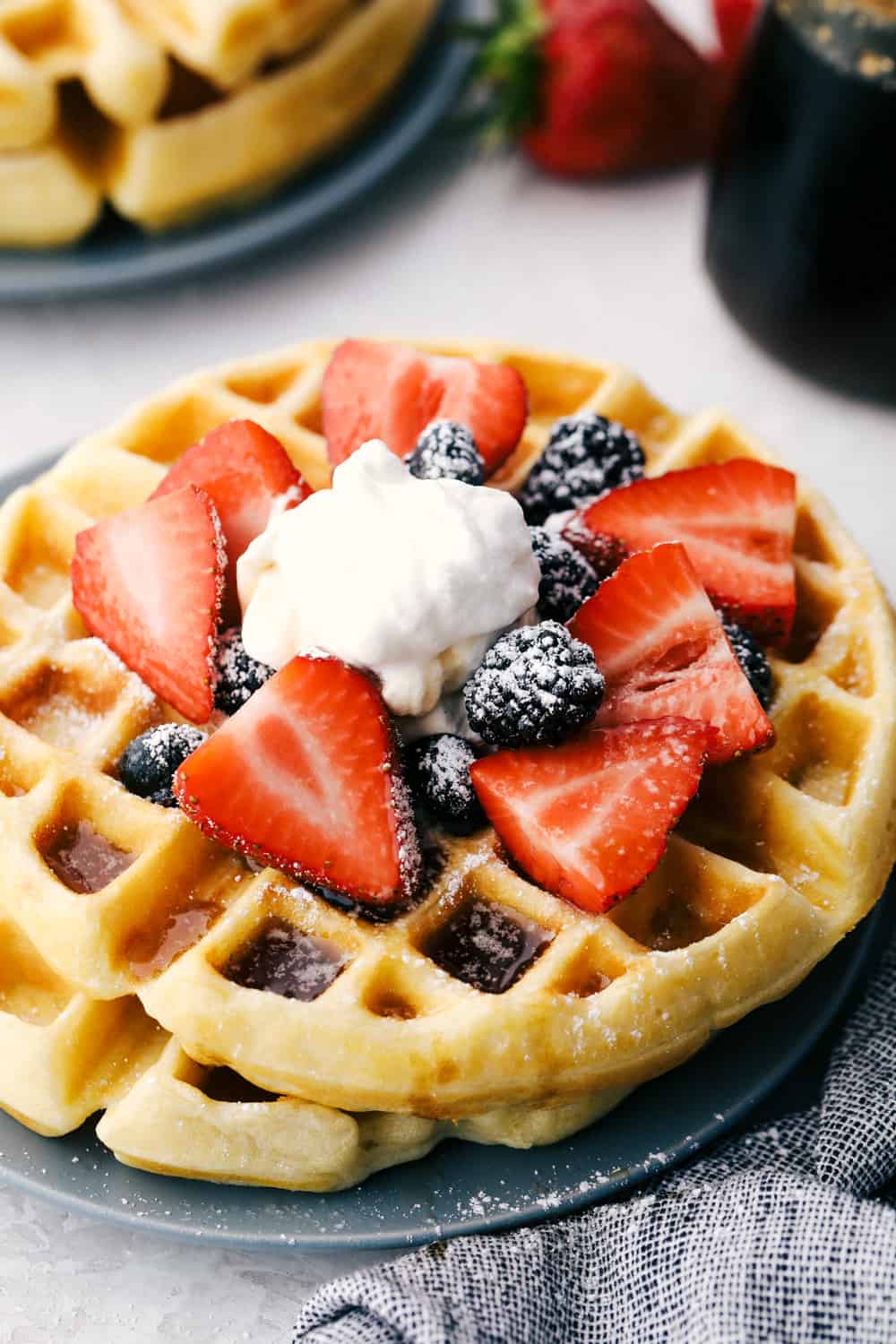
Waffles have evolved from medieval monastic wafer cakes into a global breakfast and brunch staple. Whether you prefer a crisp, airy Brussels-style square or a dense, pearl-sugar-crusted Liège creation, understanding the mechanics behind this popular baked food reveals why it continues to dominate cafe menus and social media feeds.
At its core, the appeal of a great waffle comes down to structural engineering: a high surface-area-to-volume ratio creates maximum crisp exterior crust while trapping butter, syrup, and fruit inside deep pockets. This balance of contrasting textures is what separates a mediocre breakfast item from a culinary phenomenon.
The Centuries-Old Evolution of Waffle Making
The history of the waffle stretches back to the Middle Ages in Europe. The earliest precursors, known as oublies, were simple communion-style wafers baked between heavy iron plates over open hearths. Guilds of oublieurs regulated the production of these light pastries across France and Belgium by the thirteenth century.
By the late sixteenth and seventeenth centuries, hinged iron plates were redesigned with the distinctive grid pattern we recognize today. This grid wasn't merely decorative; it functioned as a mechanical trap for melted butter and honey. The term "waffle" itself derives from the Dutch word wafel, rooted in old Germanic terms for honeycombs or woven fabric.
The modern spread of waffles accelerated with two major milestones:
- The Stovetop Patent: In 1869, Cornelius Swartwout patented the first stovetop hinge-handled iron in the United States, reducing burns and standardizing home baking.
- The 1964 World's Fair: The Vermersch family introduced authentic Brussels-style waffles to American audiences in New York, sparking a nationwide craze that cemented the "Belgian waffle" on diner menus.
Understanding the Major Styles
Not all waffles are created equal. Global culinary traditions have produced distinct regional styles with completely different batter compositions and textures.
Brussels Waffles
Brussels-style waffles use a pourable, yeast-leavened or egg-white-foamed batter. The result is a rectangular pastry with sharp, clean edges and deep, uniform wells. They are light, exceptionally crisp on the outside, and structurally neutral enough to support heavy toppings like fresh berries, whipped cream, or chocolate ganache. You can explore more about traditional preparation standards through culinary resources like Fine Dining Lovers.
Liège Waffles
In contrast, Liège waffles originate from eastern Belgium and are made from a rich, brioche-like yeast dough rather than a liquid batter. Chunks of Belgian pearl sugar are kneaded directly into the dough. As the waffle cooks in the iron, the pearl sugar melts and caramelizes against the hot metal, creating a sticky, crunchy outer crust and a chewy, dense interior.
American Style Waffles
Traditional American home waffles rely on chemical leavening agents—typically baking powder or baking soda—mixed into a quick batter containing flour, eggs, milk, and melted butter. They are thinner and crispier than Brussels waffles, designed to be mass-produced quickly on electric grid irons.
Anatomy of the Perfect Waffle: Key Techniques
Achieving professional results at home requires attention to a few physical and chemical principles:
- Whip the Egg Whites: Separating your eggs and whipping the whites to soft peaks before folding them into the batter at the very end introduces trapped air pockets that expand under heat, yielding a feather-light interior.
- Prioritize Fat Content: Butter or oil in the batter isn't just for flavor; it fries the outer shell against the hot iron plates, preventing the batter from sticking and ensuring a golden crunch.
- Control Temperature: Pouring batter onto a properly pre-heated iron is essential. If the iron is too cool, the batter steams instead of frying, resulting in a soggy, rubbery texture.
For detailed nutritional breakdowns and culinary science standards, consult the U.S. Department of Agriculture FoodData Central database.
Frequently Asked Questions
What is the difference between a Belgian waffle and a regular waffle?
A standard American waffle uses chemical leaveners like baking powder for a quick, thin texture. A true Belgian Brussels waffle uses yeast or whipped egg whites to create a much thicker, lighter pastry with deeper pockets designed to hold toppings.
Why do waffle irons need to be flipped?
Flipping a waffle iron distributes the liquid batter evenly across both hot plates before gravity pulls it down. This ensures uniform thickness and helps form an even, crisp crust on both sides.
Can you make waffle batter ahead of time?
Yes, but with caveats. Quick-bread batters lose their leavening power if left too long. If you're making a yeast-based batter or a fermented overnight waffle recipe, resting the batter in the refrigerator develops deeper, complex flavors through natural fermentation.
What causes a waffle to turn out soggy?
Soggy waffles usually happen when the waffle iron isn't hot enough, or when cooked waffles are stacked flat on a plate. Stacking traps steam, which softens the crisp exterior. Always cool cooked waffles in a single layer on a wire rack.



