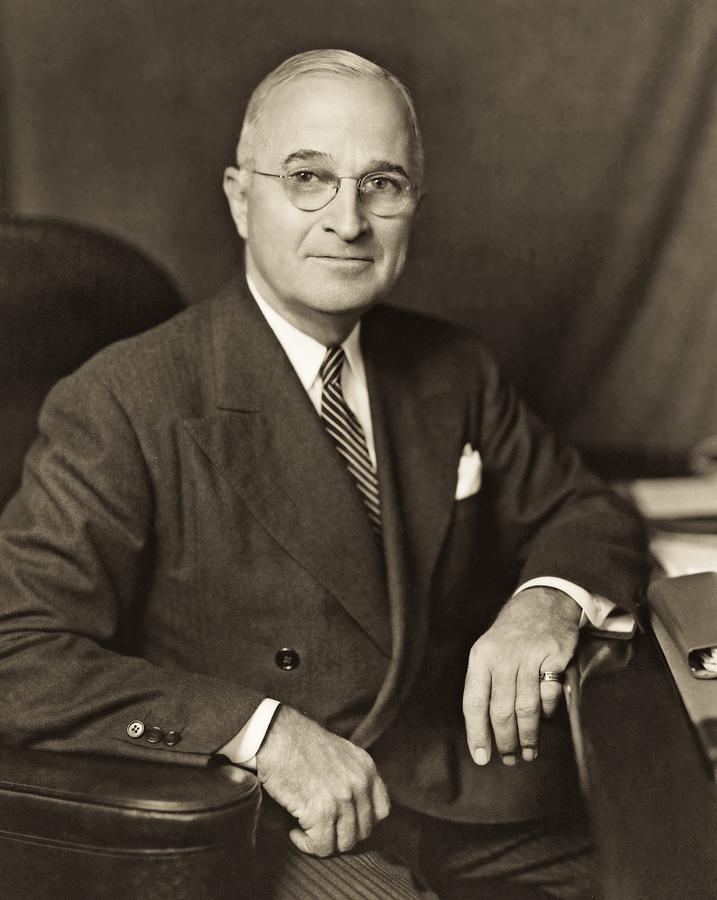
On March 12, 1947, President Harry S. Truman stood before a joint session of Congress to request $400 million in economic and military assistance for Greece and Turkey. That single address shattered a century and a half of peacetime isolationism, launching the United States into a permanent global leadership role. Known as the Truman Doctrine, this policy committed America to supporting free peoples resisting subjugation by armed minorities or outside pressures. It established the framework of containment that defined the Cold War for more than four decades.
The Geopolitical Catalyst: Greece, Turkey, and Britain's Retreat
To understand why American foreign policy shifted so dramatically, we have to look at the winter of 1947. Great Britain had long served as the primary Western power supporting Greece and Turkey. But post-war Britain was bankrupt, battered, and struggling to maintain its own domestic economy.
On February 21, 1947, the British government delivered a blunt message to the U.S. State Department: London would terminate all financial and military aid to Greece and Turkey by the end of March.
Greece was locked in a brutal civil war against communist-led insurgents, while Turkey faced intense Soviet pressure to grant joint control over the Dardanelles strait. If Athens fell, Soviet influence would dominate the eastern Mediterranean and threaten the Middle East. Undersecretary of State Dean Acheson recognized that a vacuum of power would invite immediate Soviet expansion. America had to step in, or watch Europe fragment entirely.
Selling Containment to an Isolationist Congress
Taking over Britain's role required a massive ideological and financial commitment. Yet, the American political landscape was hostile to foreign entanglements. Republicans had just won control of Congress in the 1946 midterm elections by campaigning on deep spending cuts and a return to domestic normalcy.
Acheson, Truman, and congressional leaders realized they had to frame the crisis in stark, urgent terms. Senator Arthur Vandenberg famously advised the administration to "scare the hell out of the American people" to secure bipartisan support.
Truman delivered. In his address to Congress, he framed the global struggle not merely as a regional boundary dispute, but as a total binary choice:
- The first way of life relied on representative government, free elections, individual liberty, and freedom from political oppression.
- The second way of life relied on terror, oppression, controlled press, and the subjugation of individual will.
By framing the issue as a defense of freedom against totalitarianism, Truman successfully pushed past congressional resistance. Congress overwhelmingly approved the $400 million aid package, permanently altering the scope of presidential war-making and foreign aid powers.
Mechanics of Containment: Economic Aid Meets Military Force
The strategy outlined in Truman's speech operationalized a concept first championed by diplomat George F. Kennan: containment. Rather than attempting to roll back communism in places where it was already established, the U.S. would deploy economic and military resources to block its spread anywhere else.
This doctrine operated on two distinct pillars: financial rehabilitation and military alliances.
Economic Reconstruction
Truman's team understood that communism thrived in poverty, desperation, and social chaos. Hungry populations were far more susceptible to radical totalitarian promises. This realization birthed the European Recovery Program, better known as the Marshall Plan, which pumped over $13 billion into rebuilding Western European infrastructure.
Military Security Pacts
Economic stability alone couldn't deter a direct military invasion. The doctrine paved the way for permanent peacetime military alliances. In 1949, the United States joined European allies to form the North Atlantic Treaty Organization (NATO), creating a collective security shield that guaranteed an attack on one member was an attack on all.
You can read the complete historical text and archival notes on the National Archives Truman Doctrine Milestone Page.
Long-Term Repercussions and Global Consequences
While the immediate goal of saving Greece and Turkey succeeded, the broader architecture of the Truman Doctrine had massive, unintended consequences that played out over decades.
By pledging support to "free peoples" anywhere fighting outside subjugation, the executive branch created a blank check for future interventions. Later administrations used this exact logic to justify involvement in proxy wars, covert coups, and direct military conflicts across the globe.
Key Structural Shifts
- The Imperial Presidency: Foreign policy authority shifted heavily away from Congress toward the White House and the newly created Department of Defense, CIA, and National Security Council.
- Militarization of Diplomacy: Foreign aid transitioned rapidly from humanitarian reconstruction to military hardware sales and security assistance.
- Global Entanglements: The U.S. committed to maintaining hundreds of military bases abroad, ending any premiss of geographic isolation.
For deeper analysis into how early Cold War strategy developed, explore the overview provided by the Office of the Historian at the U.S. Department of State.
Common Misconceptions About the Shift
Many casual observers misunderstand the scope and intent of the 1947 shift. Clearing these up helps reveal how foreign policy actually evolved.
- Misconception 1: It was designed to destroy existing Soviet communism. In reality, containment aimed only to stop expansion, not to liberate Eastern Europe. Direct confrontation was avoided to prevent a nuclear catastrophe.
- Misconception 2: It applied equally to every nation. Strategic and economic value dictated American intervention. Human rights abuses by right-wing authoritarian regimes allied with the U.S. were routinely overlooked as long as those regimes remained staunchly anti-communist.
- Misconception 3: Congress immediately embraced it. The vote was heavily contested. Isolationist factions worried about imperial overreach and massive long-term tax burdens.
Frequently Asked Questions
What exact event triggered the creation of the doctrine?
The immediate trigger was the British government's announcement in February 1947 that it could no longer fund military and economic operations in Greece and Turkey due to domestic bankruptcy.
How did the Truman Doctrine differ from the Monroe Doctrine?
While the Monroe Doctrine sought to keep European powers out of the Western Hemisphere and maintain regional isolation, the Truman Doctrine actively projected American power globally to counter Soviet influence anywhere on earth.
Did the doctrine succeed in Greece and Turkey?
Yes. American economic infusions and military guidance helped the Greek government defeat the communist insurgency by 1949, and Turkey successfully resisted Soviet territorial demands, remaining a key Western strategic asset.
Was the Marshall Plan part of the Truman Doctrine?
It was the economic extension of the same overarching containment strategy. While the doctrine focused on emergency political and military aid to stop immediate collapse, the Marshall Plan provided long-term economic reconstruction to stabilize Western Europe.
https://www.youtube.com/watch?v=516wVVxIBTY
This video provides an overview of the origins of the Truman Doctrine and how it shaped the Cold War.



