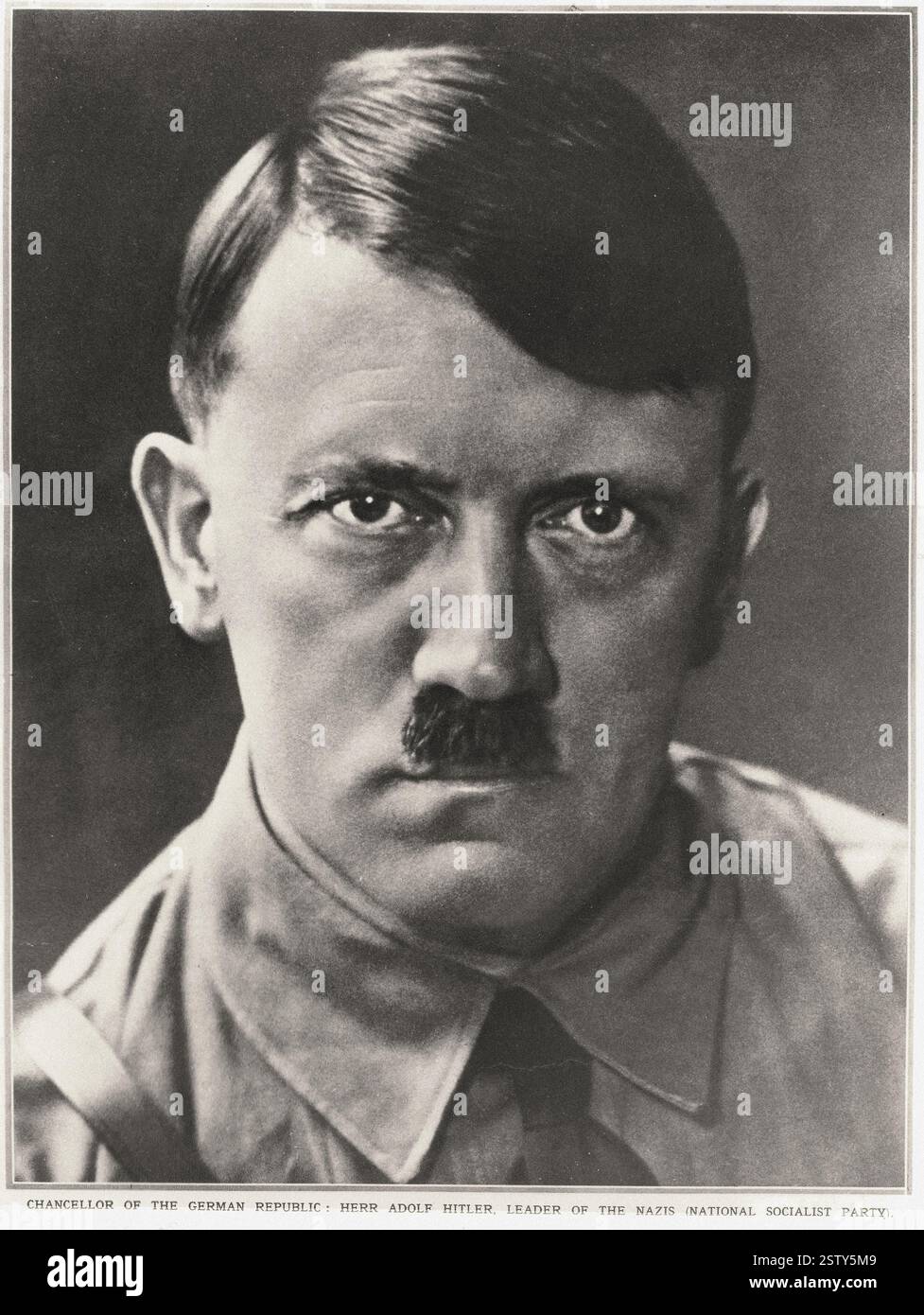
Analyzing the published words of Adolf Hitler requires looking past the surface propaganda to understand how political messaging took root in Weimar Germany. Long before the destruction of the Second World War, the ideological framework of the Nazi regime was mapped out in manifestos, articles, and personal notes. Scholars studying the dictator's literary footprint don't just examine Mein Kampf; they look at the wider collection of texts that shaped his worldview, including volumes recovered from his personal library now housed at the Library of Congress.
The Core Texts of the National Socialist Movement
The primary documents produced by the Nazi leadership served a dual purpose: they acted as ideological training manuals and political propaganda. Understanding how these texts functioned requires examining the specific structural pillars that sustained the regime's worldview.
Mein Kampf and the Blueprint of State Ideology
Published in two volumes between 1925 and 1926, Mein Kampf combined autobiography with political theory. While contemporaries often dismissed it as rambling, the text laid out explicit objectives that the regime later executed.
- Racial Hierarchy: The text framed human history as a biological struggle between races, positioning the "Aryan" at the top while dehumanizing minority groups.
- Lebensraum: Hitler argued that Germany's survival depended on territorial expansion eastward, targeting lands in Eastern Europe and the Soviet Union.
- Totalitarian Control: The book outlined methods for mass mobilization, emphasizing the utility of emotional propaganda over rational discourse.
Secondary Writings and Speeches
Beyond his main manifesto, Hitler's collected speeches, official party papers, and the Zweite Buch (his unpublished second book) refined his political strategy. These documents illustrate a shift from fringe agitation to state-sanctioned policy. They reveal how economic grievances were weaponized, shifting public focus away from institutional failures and toward manufactured internal enemies.
Inside the Dictator's Personal Library
Published writings tell only part of the story. Historians like Timothy Ryback have examined the thousands of volumes that filled Hitler's private collection, discovering marginalia, dog-eared pages, and handwritten notes that offer a window into his intellectual influences.
Many of these books—ranging from nineteenth-century nationalist tracts to pseudo-scientific racial theories—reveal an obsession with fringe ideologies. Marginal notes left in volumes of geopolitical theory and philosophy show a reader who consumed texts selectively, extracting passages that validated pre-existing prejudices while ignoring contradictory evidence.
Common Methodological Pitfalls in Historical Analysis
When researchers and students analyze Hitler's published writings, certain errors frequently distort historical understanding:
- Treating propaganda as objective policy: Assuming every public rhetorical flourish translated directly into immediate, organized state programs without accounting for bureaucratic friction and internal regime rivalry.
- Isolating texts from historical context: Reading Mein Kampf or party decrees without examining the hyper-inflation, social instability, and political trauma of Weimar Germany that made such radical messaging appealing to disillusioned segments of the population.
- Overestimating intellectual depth: Mistaking obsessive, derivative ideological fixations for sophisticated political philosophy.
Frequently Asked Questions
Where is Adolf Hitler's personal library located today?
The bulk of Hitler's surviving personal library—approximately 1,200 volumes—is held within the Third Reich Collection at the Library of Congress in Washington, D.C. Additional smaller collections reside at institutions such as Brown University.
Why did contemporaries ignore the warnings in Mein Kampf?
Many political opponents and foreign leaders dismissed the book as crude, unfeasible rhetoric rather than a literal action plan, failing to recognize that totalitarian movements often execute their stated goals quite openly.
What role did marginalia play in understanding Hitler's reading habits?
Handwritten notes and annotations found in his personal books show which concepts resonated with him, providing concrete evidence of the authors and philosophical traditions that influenced Nazi ideology.
How did the dissemination of Mein Kampf change after 1933?
Once the Nazi party seized power, the book became a ubiquitous state-sponsored artifact, distributed to newlyweds and given to soldiers, transforming it from a fringe tract into an instrument of mandatory societal indoctrination.



