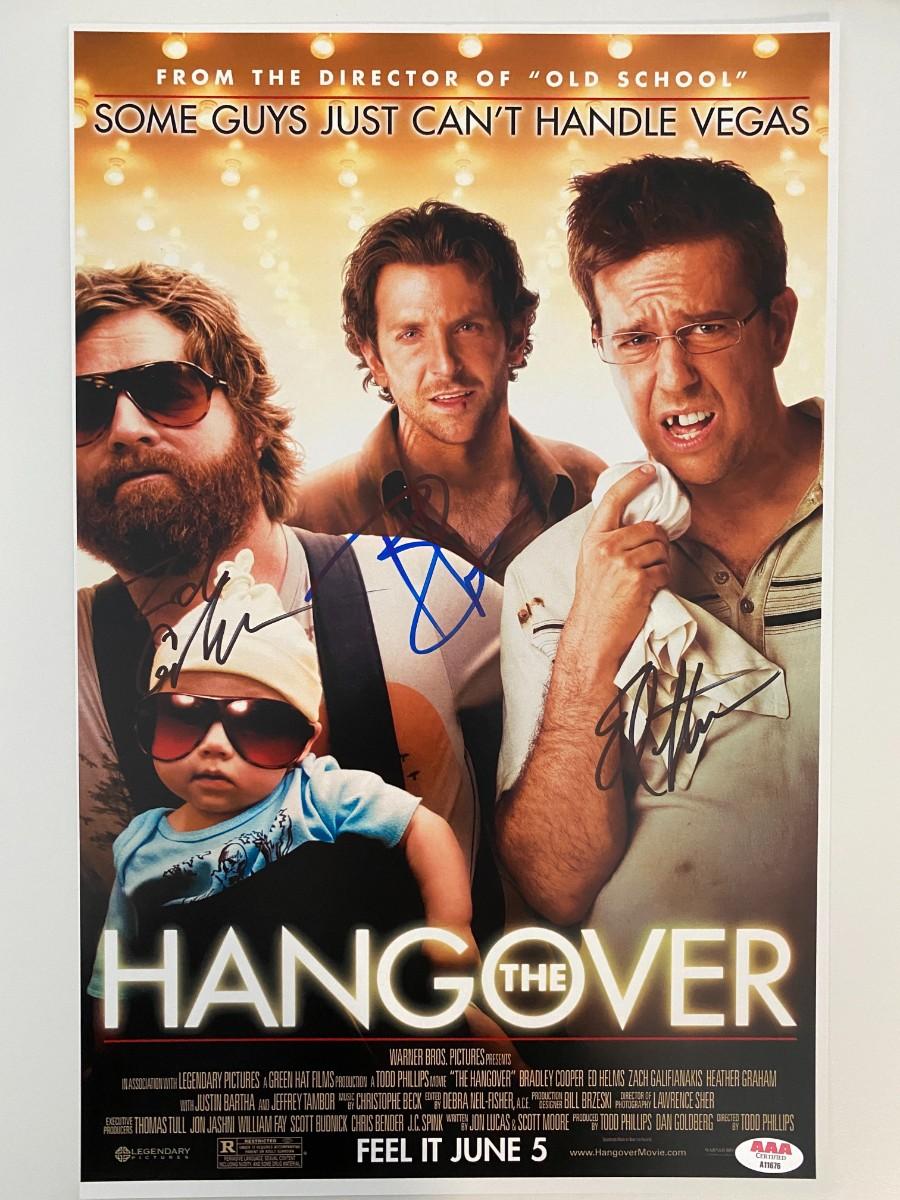
When Warner Bros. greenlit a low-budget, R-rated bachelor party movie in 2008 with no bonafide box office headliners, studio executives anticipated a modest box office return. Instead, The Hangover grossed over $467 million worldwide, launched three leading men into superstardom, and permanently rewired the anatomy of studio comedies. The secret wasn't just Todd Phillips's rapid-fire direction or Jon Lucas and Scott Moore's script; it was a rare lightning-in-a-bottle casting dynamic. The actors didn't just play their parts—they actively improvised, redefined, and elevated stock archetypes into an enduring pop culture blueprint.
To understand why this specific ensemble worked where dozens of subsequent raunchy comedies failed, you have to look beyond the viral one-liners. This analysis breaks down the casting chemistry, the on-set friction, the commercial fallout, and the lasting legacy of a comedy that redefined Hollywood's risk tolerance.
The Chemistry of Chaos: Breaking Down the Ensemble
An ensemble comedy succeeds or fails based on how convincingly its characters grate on one another. The casting directors deliberately assembled a quartet representing four distinct social boxes: the predatory alpha, the neurotic conformist, the oblivious eccentric, and the missing MacGuffin.
Bradley Cooper portrayed Phil Wenneck, the high school English teacher whose charismatic exterior masked a deeply cynical, adrenaline-chasing narcissist. Before The Hangover, Cooper was largely known for supporting roles or romantic comedies where his movie-star looks carried the weight. Phil required something sharper. Cooper played him with a sharp-edged cruelty that made the character strangely compelling; he wasn't just a fun guy on a trip, he was a bad influence dragging his friends down a rabbit hole.
Ed Helms stepped in as Stu Price, the dentist trapped in an abusive relationship with a controlling girlfriend. Helms brought a background from The Daily Show and the U.S. version of The Office, mastering the art of repressed panic. Where Cooper pushed forward with arrogant confidence, Helms provided the brake pedal. His physical comedy—most notably screaming in high registers and dealing with a missing molar—relied on a total lack of dignity.
Zach Galifianakis played Alan Garner, a role originally slated for Jonah Hill or Jack Black. Galifianakis brought a bizarre, deadpan stand-up sensibility to the screen. Alan wasn't just stupid; he operated on a completely different psychological plane. By wearing a baby carrier on his chest and delivering absurd non-sequiturs with utter sincerity, Galifianakis made a potentially unlikable weirdo into an oddly lovable mascot.
Rounding out the group was Justin Bartha as Doug Billings, the functional groom whose disappearance sets the plot in motion. While Bartha spent the vast majority of the runtime trapped on a Caesar Palace roof, his absence anchored the stakes. Without Doug, the other three men wouldn't be forced into their descent through Las Vegas underworld tropes.
Why the Competitor Falls Short: Missing the Production Reality
Most retrospectives of the film rely on superficial summaries of plot beats—the tiger in the bathroom, Mike Tyson punching Ed Helms, or the roof sequence. They fail to examine the structural risks Todd Phillips took during production.
The studio originally balked at casting Zach Galifianakis and Bradley Cooper together because neither carried proven box-office clout. Production almost stalled multiple times over budget cuts and insurance concerns regarding real tigers and Las Vegas strip clubs. Furthermore, the script underwent major re-writes during principal photography. The actors spent weeks living in the suite at Caesars Palace where they shot the film, fostering a genuine, slightly abrasive camaraderie that bled into their performances.
When analyzing how these actors transformed the project, critics often overlook the script's tight mechanical structure. It operates as a mystery procedural disguised as a hangover movie. The audience pieces together clues alongside the characters—a wristband from a hospital, a stolen police cruiser, an unknown infant in the closet. The actors had to play absolute panic while executing precise comic timing to ensure the mystery beats landed without slowing down the momentum.
The Improvised Magic and Script Deviations
Much of the film's iconic dialogue wasn't written on the page. Todd Phillips famously encouraged loose alternative takes after covering the scripted dialogue.
- The Tiger Scene: The interaction with Mike Tyson was entirely built around the actors reacting in real-time to the absurdity of the situation. Tyson later admitted he was struggling with substance abuse during filming, yet the actors maintained complete professional focus while a live Bengal tiger paced four feet away.
- Alan's Monologues: Galifianakis improvised several of his deadpan explanations about "wolf packs" and math formulas. His commitment to playing these lines with straight-faced intensity prevented the scenes from dipping into cartoonish parody.
- Stu's Song: The "Three Best Friends" keyboard ditty performed by Ed Helms in the hotel suite was largely shaped during table reads and on-set jam sessions, capturing the awkward humiliation of men trapped in regression.
According to financial breakdowns archived by Box Office Mojo (or major tracking databases like The Numbers), the film's production budget sat at roughly $35 million. It went on to break records for an R-rated comedy, proving that uninhibited character work could out-earn sanitized PG-13 tentpoles.
Common Misconceptions About The Hangover's Legacy
Pop culture histories often misattribute the film's success to pure shock value. This narrative misses the technical precision required to make raunchy comedy work.
- Myth: It was an overnight studio priority. Warner Bros. executives were actually terrified of the movie's dark edges, drug use, and nudity. They even offered the cast backend buyout deals to minimize studio exposure before test screenings blew the roof off the theater.
- Myth: The sequels matched the original formula. The Hangover Part II and Part III attempted to scale up the chaos by increasing the stakes (bangkok cartels, mafia gold), but they lost the relatable, claustrophobic panic of ordinary men dealing with a lost night in Vegas. True comedy requires grounded stakes.
- Myth: It ruined studio comedy. While critics often blame The Hangover for spawning a wave of lazy, gross-out imitators throughout the early 2010s, the original film itself relied on tight character dynamics rather than cheap bodily fluids.
Frequently Asked Questions
Did the actors really lose a tooth during filming?
No. Ed Helms actually had a dental implant removed for his role as Stu, having lost the adult tooth permanently years earlier. Whenever he played the character with a missing tooth, it was a real physical modification, which added authentic discomfort to his expressions.
Was Mike Tyson sober during the filming of the movie?
Mike Tyson has stated in multiple interviews that he was struggling with severe addiction issues during that period of his life and was introduced to the cast while under the influence, but he credited the production with inspiring him to clean up his life later on.
How much did the main actors make from the first film's massive profits?
While their initial salaries were relatively low due to the modest $35 million budget, Cooper, Helms, and Galifianakis successfully negotiated lucrative back-end profit participation deals for the sequels, netting tens of millions of dollars each for Parts II and III.
Why did Justin Bartha spend most of the movie on a hotel roof?
Doug's absence was a deliberate narrative choice to maintain comedic tension. By removing one member of the group, the remaining three were forced into direct, escalating conflict with each other and their chaotic surroundings without a voice of moderation.



