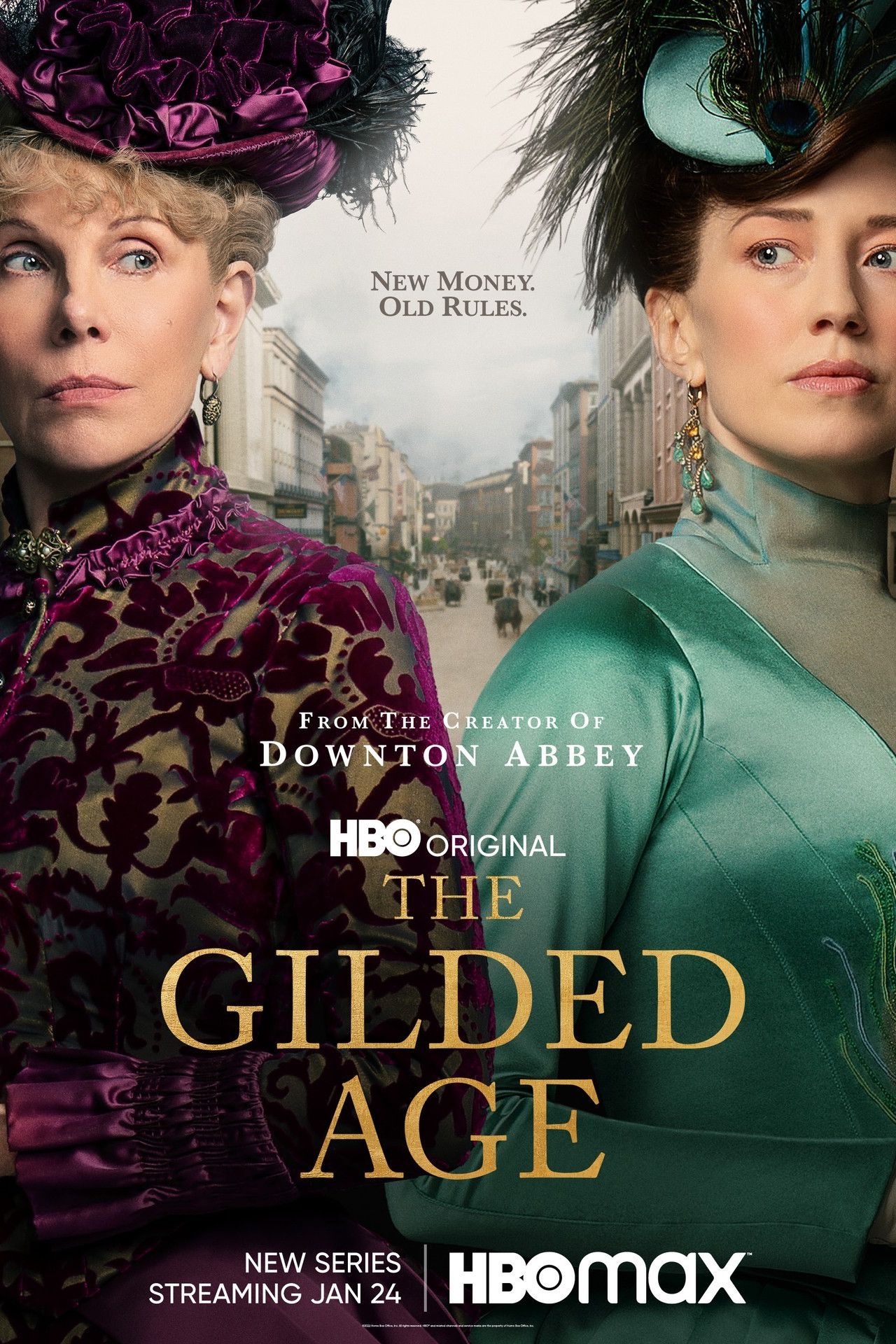
When Julian Fellowes brought his signature class-conscious storytelling from British country houses to late-nineteenth-century New York, viewers didn't just get a visual feast of corsets and gaslit mansions. They got a sprawling ensemble balancing fictional ambition with genuine historical legacy. Understanding The Gilded Age cast means looking past the velvet drapery to see how real historical titans inspired the fictional characters driving HBO's hit drama.
The series anchors its narrative in a massive cultural fault line: old money families whose fortunes traced back to colonial roots versus new money industrialists who made staggering fortunes during the post-Civil War economic boom. From executive mansions on Fifth Avenue to the servants' quarters below stairs, every performance anchors a precise social hierarchy. Let's break down the central players, the real history behind them, and what makes this ensemble tick.
The Russell Family: New Money Ambition
At the epicentre of the new money onslaught stands the Russell family. They're fabulously wealthy, aggressively modern, and entirely unwelcome by the established aristocracy.
Bertha Russell (Carrie Coon)
Bertha is the ambitious matriarch whose entire existence is a calculated campaign to breach the fortress of old New York society. Carrie Coon plays her with a chilling, single-minded focus that never quite loses our sympathy. Bertha doesn't just want a seat at the opera; she wants to rewrite the guest lists, buy the boxes, and dictate who matters.
Historically, Bertha is heavily modeled after Alva Vanderbilt. In real life, Alva forced her way into the tight-knit circle of New York's elite—led by the formidable Mrs. William Backhouse Astor Jr.—by throwing a legendary fancy-dress ball in 1883 that cost the modern equivalent of millions. When conservative gatekeepers realized they couldn't freeze her out anymore, the old guard broke.
George Russell (Morgan Spector)
As a ruthless railroad tycoon, George wields economic power that dwarfs the old money inheritance. Morgan Spector brings a simmering intensity to a man who can crush a union or ruin a rival financier by breakfast, yet treats his wife and children with genuine, modern devotion. George isn't just a villainous robber baron; he's a loving partner who acts as Bertha's enforcer when high society slams doors in her face.
George's character draws from titans like Jay Gould and Cornelius Vanderbilt. These industrialists built transcontinental rail networks, cornered markets, and reshaped the American landscape, often leaving regulatory wreckage and bitter labor strikes in their wake. The show explores this tension directly, especially during explosive confrontations with union organizers.
Larry Russell (Harry Richardson) and Gladys Russell (Taissa Farmiga)
The Russell children navigate the gilded cage their parents built. Larry is an aspiring architect trying to make an honest name for himself in a world that scoffs at trade, while Gladys serves as her mother's primary social bargaining chip—a prize asset to be married off to a titled European aristocrat, much like the real-life "dollar princesses" of the era.
The Van Rhijn and Brook Households: Old Money Tradition
Across the street from the modern marble palace of the Russells sits an older, more understated brownstone. Inside, the rules of 1882 dictate every breath.
Agnes van Rhijn (Christine Baranski)
Agnes is the high priestess of old New York, guarding the gates with acid-tongued wit and zero tolerance for interlopers. Christine Baranski delivers every cutting line like a polished dagger. Agnes represents the aristocracy that viewed the new industrialists as crude upstarts who bought their way in with dirty money.
She's proud, stubborn, and terrified of irrelevance. Yet beneath the aristocratic armor, Agnes displays fierce loyalty to her sister and her household, even when her financial situation grows precarious.
Ada Brook (Cynthia Nixon)
Ada serves as Agnes's softer, more empathetic counterpart. While Agnes clings to every outdated social convention, Ada maintains a quiet warmth and a capacity for sympathy that often clashes with her sister's rigid worldview. Cynthia Nixon plays Ada with gentle nuance, grounding the household's emotional core and occasionally surprising everyone by standing up to her formidable sister.
Marian Brook (Louisa Jacobson)
As the audience surrogate, Marian arrives in New York penniless after her father's death, forced to rely on her estranged aunts. Louisa Jacobson portrays Marian's gradual awakening to the realities of class, romance, and independence. Through Marian's eyes, we witness both the suffocating restrictions placed on upper-class women and the fierce survival instincts required to navigate them.
Peggy Scott (Denée Benton)
Peggy's storyline expands the series beyond the glittering white drawing rooms of Fifth Avenue. As an aspiring young Black journalist from Brooklyn, Denée Benton brings remarkable dignity and intellectual rigor to a role that highlights a vital, often-erased part of American history.
Peggy's journey introduces viewers to the vibrant Black middle class of late-nineteenth-century New York. Through her work at the New York Globe and her interactions with real historical figures like T. Thomas Fortune, Peggy exposes the deep racial prejudices that persisted even as industrial wealth boomed all around them. Her narrative provides essential context about the era's civil rights struggles.
The Downstairs World: Servants and Social Order
No historical drama about this period works without examining the labor that makes luxury possible. The below-stairs staff operates under its own strict hierarchy, mirroring the rigid class structures of the drawing rooms above.
Mr. Bannister (Simon Jones) and Mrs. Bruce (Cathy Moriarty)
As the butler and housekeeper for the Van Rhijn household, Bannister and Bruce maintain traditional standards with practiced solemnity. Simon Jones portrays Bannister's fierce professional pride, especially when his authority is challenged by modern efficiencies or rival staff members from the Russell house.
Jack Treacher (Ben Ahlers)
Jack starts as a lowly footman with an inventive mind, dreaming of horology and mechanical clocks. His storyline tracks the emergence of self-made technical innovation during an era where working-class mobility was exceptionally rare, offering a glimpse into how ordinary people carved out futures amidst rapid industrialization.
Supporting Players and Real Historical Figures
The ensemble expands through a rich tapestry of social climbers, journalists, and European aristocracy.
- Aurora Fane (Kelli O'Hara): A society matron who dares to befriend Bertha Russell early on, acting as a bridge between the old guard and the new.
- Ward McAllister (Nathan Lane): The arbiter of high society taste, heavily based on the real-life socialite who famously declared that only "four hundred" people mattered in New York society. You can read more about his historical influence via the New-York Historical Society.
- Mrs. Astor (Donna Murphy): The undisputed queen bee of the old guard, whose approval or dismissal could make or break a family's social standing.
Behind the Scenes: Casting and Production Realities
The production scale of the series required assembling hundreds of background actors fitted in custom period-accurate costumes designed by The Costume Designers Guild. Because the show recreates lost architecture—such as the original Metropolitan Opera House and long-demolished mansions—the casting choices had to match the grandiose visual language of production designer Bob Shaw.
Casting directors Cindy Tolan and Bernie Telsey populated the series with veteran Broadway talent, giving the dialogue a theatrical crispness that sets it apart from typical television period pieces. This theatrical training explains why verbal sparring matches between Christine Baranski and Carrie Coon feel so electric.
Frequently Asked Questions
Is The Gilded Age based on a true story?
While the main characters like the Russells and Van Rhijns are fictional, they are directly inspired by real historical families and events. The social war between old money and new money in 1880s New York is thoroughly documented history, and figures like Ward McAllister and T. Thomas Fortune appear as themselves.
Where was The Gilded Age filmed?
Principal photography takes place across historical locations in New York and Rhode Island. Production frequently utilizes preserved Gilded Age mansions in Newport, alongside historic streetscapes in Troy, New York, to recreate 1880s Manhattan before skyscrapers transformed the skyline.
How historically accurate are the costumes?
The costume department goes to great lengths to ensure authenticity, using corsets, heavy silks, and authentic embroidery techniques of the 1880s. However, costume designers occasionally brighten colors or soften silhouettes slightly to appeal to modern aesthetic sensibilities on high-definition screens.
Will there be future seasons exploring later decades?
HBO renewed the series for subsequent seasons, following the characters deeper into the 1890s as the social landscape continues to shift toward the turn of the century.


