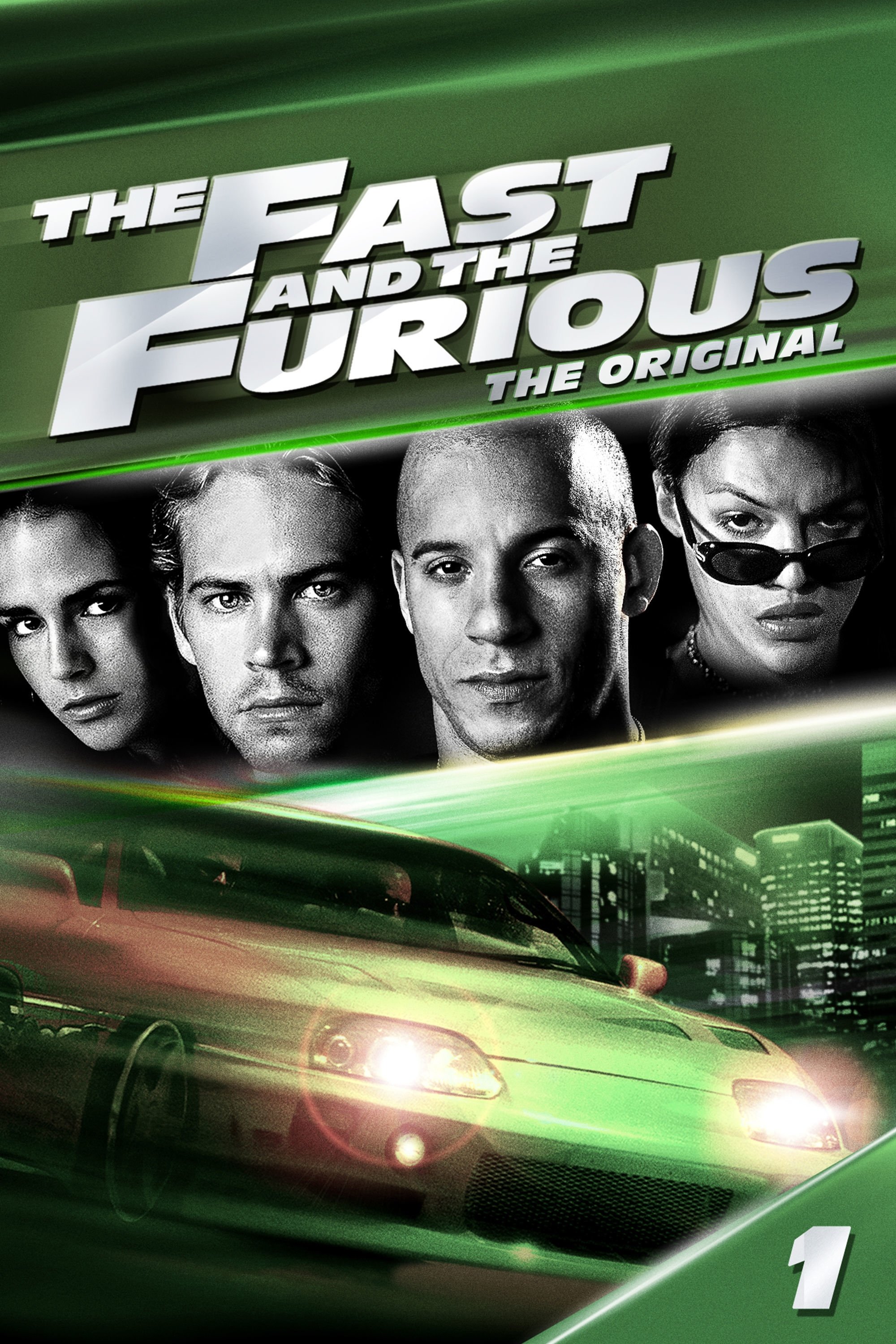
When Universal Pictures released a modest street racing thriller in the summer of 2001, nobody anticipated a cultural phenomenon. Critics dismissed it as a fleeting youth-culture cash-in, and the studio had low expectations for its commercial legs. Yet, The Fast and the Furious defied the odds. It didn't just spawn a multi-billion-dollar franchise; it completely redefined modern blockbuster cinema by centering its universe on an eclectic, highly diverse ensemble cast whose off-screen chemistry and on-screen grit turned a B-movie premise into global myth-making.
At its core, the franchise's enduring longevity isn't just about souped-up Dodge Chargers or gravity-defying stunts. It's about an accidental family of actors who grew alongside their characters over two decades. From Vin Diesel's brooding gravitational pull to the late Paul Walker's effortless charm, this unlikely lineup forged a template for modern action franchises, proving that character dynamics and emotional stakes will always outlast CGI spectacle.
The 2001 Blueprint: Finding Lightning in a Bottle
The original film was a gamble on unknowns and unconventional star pairings. Rob Cohen's 2001 picture adapted a Vibe magazine article about underground street racing in Queens, transplanting the kinetic subculture to the sun-baked asphalt of Los Angeles. The central conflict hinged on a dynamic that shouldn't have worked on paper: a bulky, deep-voiced theater actor named Vin Diesel playing an ex-con street patriarch, and a blonde, surfer-esque television actor named Paul Walker playing an undercover police officer.
Diesel's Dominic Toretto was an imposing figure who spoke in low, measured cadences, carrying an aura of old-school machismo that felt throwback and contemporary all at once. Walker's Brian O'Conner brought a vulnerable, wide-eyed earnestness. They weren't traditional action heroes cut from the polished mold of Arnold Schwarzenegger or Sylvester Stallone. They looked like guys you might actually spot modifying engines in an East LA garage on a Friday night.
Supporting them were Michelle Rodriguez as Letty Ortiz and Jordana Brewster as Mia Toretto. Rodriguez injected an immediate dose of raw toughness and authenticity into a genre that often relegated women to passive eye candy. Letty wasn't just tagging along; she was wrenching on cars and commanding the room. This tight four-person nucleus formed the emotional bedrock of everything that followed, establishing a code of loyalty that fans latched onto instantly.
The Pivot: From Underground Racers to Global Operatives
As the franchise evolved, it had to reinvent itself to survive. After experimental detours like 2 Fast 2 Furious and The Tokyo Drift chapter—which introduced Lucas Black and shifted the geographic focus—the series faced a creative crossroads. The solution wasn't to shrink the scope, but to supercharge the ensemble by recruiting heavyweight additions who could match Diesel's heavy-hitting screen presence.
The turning point arrived with 2011's Fast Five, which pivoted the series away from street racing into high-stakes global heist territory. The most critical casting choice of this era was Dwayne Johnson as Diplomatic Security Service agent Luke Hobbs. Pitting Diesel's stoic street brawler against Johnson's relentless, muscle-bound lawman created a classic cinematic clash of titans. It injected a fresh layer of testosterone and blockbuster muscle that appealed to action fans who hadn't cared about carburetors or nitrous oxide.
Later entries continued this strategy of stunt-casting established action royalty to keep the universe fresh. Jason Statham stepped in as Deckard Shaw, transitioning seamlessly from ruthless villain to reluctant ally. Kurt Russell, John Cena, and Charlize Theron added layers of espionage intrigue, transforming a street-level turf war into a sprawling, James Bond-scale geopolitical soap opera.
The Power of Found Family and Off-Screen Bonds
What separates this franchise from other action properties like Mission: Impossible or the Marvel Cinematic Universe is the blurring line between fiction and reality. The actors didn't just play a crew; they cultivated a narrative of brotherhood that bled into their public personas.
Vin Diesel became the self-appointed guardian of the brand's mythology, frequently emphasizing that the franchise is built around the concept of familia. This wasn't merely a marketing catchphrase. When tragedy struck with the sudden death of Paul Walker in 2013 during the production of Furious 7, the franchise faced an existential crisis. Rather than digitally erasing him or recasting the role with a different actor, the production leaned into heartfelt vulnerability. Using visual effects alongside Walker's brothers, Caleb and Cody, the filmmakers crafted a respectful farewell that resonated deeply with audiences worldwide.
That emotional transparency created unprecedented audience loyalty. Fans watched the actors grow older, start families, and weather real-world tragedies together. When the characters toast Corona beer on screen, viewers feel included in an ongoing generational tradition.
Common Missteps in Analyzing Action Ensembles
Many pop-culture critics misunderstand why the series succeeded, often attributing its multi-billion-dollar box office purely to escalation—bigger explosions, crazier physics, cars in space. While spectacle matters, relying solely on escalation is a trap that has sunk numerous other action franchises.
- Ignoring character grounding: Action without emotional consequence feels weightless. The franchise works because the high-concept stunts are anchored by personal stakes among people we care about.
- Treating diversity as an afterthought: Long before forced corporate checkboxes became standard in Hollywood, this series naturally featured a multicultural, global cast that reflected the actual demographics of car culture and international audiences.
- Failing to adapt the ensemble: Stagnation kills franchises. By rotating new stars in and out while keeping the core anchors intact, the producers prevented audience fatigue.
Frequently Asked Questions
Was Vin Diesel in every single movie in the franchise?
No. Vin Diesel sat out 2 Fast 2 Furious (2003) and only made a brief cameo appearance at the very end of The Fast and the Furious: Tokyo Drift (2006) to set up future continuity before returning full-time for 2009's Fast & Furious.
How did the series handle Paul Walker's character after his passing?
Following Walker's death in November 2013, production on Furious 7 was paused. Universal Pictures utilized body doubles, unused archival footage, and advanced computer-generated imagery with the assistance of his brothers to complete Brian O'Conner's remaining scenes, retiring the character with a peaceful, emotional send-off rather than killing him off.
Who was the first major non-racing star added to the cast?
While Ludacris and Tyrese Gibson joined early in the second installment, Dwayne Johnson’s introduction in 2011's Fast Five marked the definitive shift toward blockbuster action stars, fundamentally changing the scale and box office potential of the entire cinematic universe.
What inspired the original 2001 film?
The film was directly inspired by a May 1998 Vibe Magazine article titled "Racer X," written by Ken Li, which detailed the underground street racing subculture operating in the neighborhoods of New York City and Southern California.



