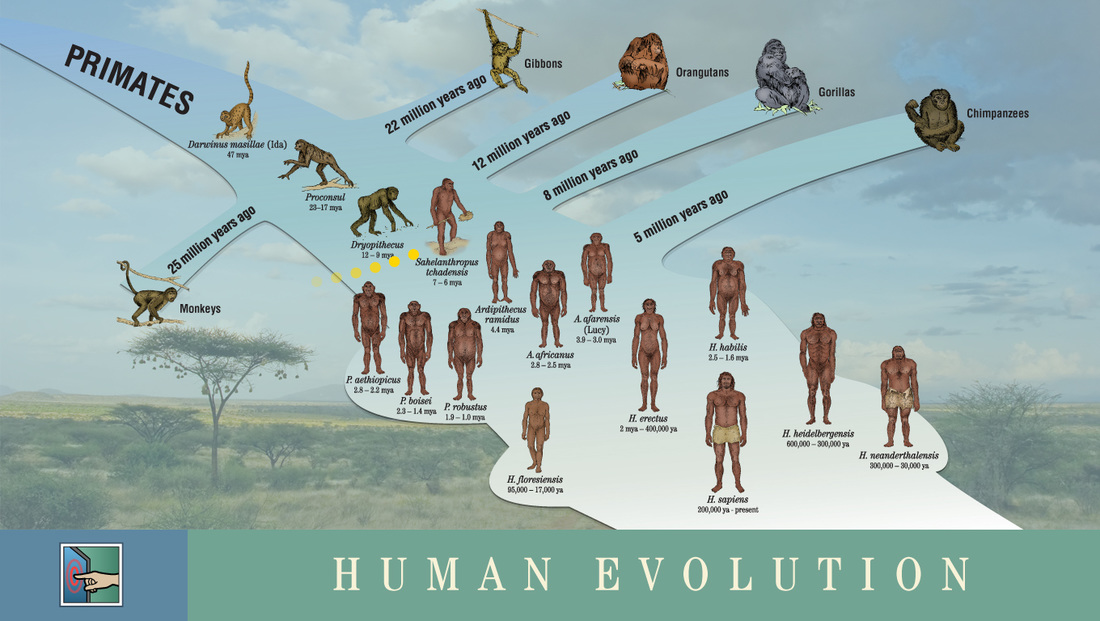
The evolution of technology isn't a neat, straight line from sharp rocks to quantum computers. It's a messy series of accidental discoveries, stubborn failures, and sudden leaps that completely rewired how humans live, work, and communicate. If you trace the timeline back millions of years, you find that every major era was defined by a fundamental shift in how we harnessed energy and information.
Understanding this trajectory requires looking past dusty dates and dusty inventions. We need to examine how tools changed human behavior, shaped economies, and created problems that the next wave of innovation had to solve.
From Stone Tools to Ancient Engineering
Long before written records, early humans relied on basic flint and stone implements to survive. These weren't sophisticated inventions, but they represented a massive cognitive leap: the realization that objects could be modified to reshape the environment.
The Control of Fire
Nothing changed early human survival quite like mastering combustion. Fire provided warmth, scared off predators, and made tough meat edible, which freed up metabolic energy for brain development. It also created the first social hubs. Communities gathered around hearths, passing down survival knowledge and sparking early communication traditions.
The Wheel and Writing
Fast forward to antiquity, and technology shifted from pure survival tools to structural scale. The invention of the wheel around 3500 BCE transformed logistics, letting societies transport heavy loads and trade across longer distances.
Soon after, writing systems emerged in Mesopotamia and Egypt. For the first time, human thought didn't die with the thinker. Knowledge could be stored, taxed, and transmitted across generations.
- Stone Age: Focus on physical survival and simple material modification.
- Bronze and Iron Ages: Metallurgy allowed for durable weapons and heavy agricultural plows.
- Antiquity: Monumental architecture and administrative tools like codexes and abacuses.
The Industrial Leap and Mechanical Power
For centuries, technological progress crawled at the speed of human or animal muscle. That changed in the late 18th century when factories replaced cottage industries.
The steam engine didn't just pump water out of coal mines; it decoupled human output from biological limits. Suddenly, a single factory could generate the power of hundreds of horses. Railroads shrank continents, turning weeks-long journeys into hours-long commutes and forcing societies to synchronize clocks for the first time.
The Rise of Mechanized Production
Textile mills and assembly lines changed labor structures entirely. People moved off farms and into dense urban centers, creating modern working-class economies. This era also introduced mass pollution and harsh factory conditions, proving that technological progress often carries a steep social and environmental cost.
The Electric Age and Global Communication
If steam powered the muscles of the industrial world, electricity became its nervous system. In the 19th century, inventors like Michael Faraday and Thomas Edison turned invisible electromagnetic forces into domestic lighting, urban transit, and instant communication via the telegraph.
Messages that once took weeks to cross an ocean now traveled via undersea telegraph cables in minutes. The world shrank again, paving the way for radio, television, and the early telephone networks that knitted distant communities together.
The Digital Transformation
The shift from mechanical engineering to computing represents the fastest structural change in human history. It began with vacuum tubes and massive room-sized mainframes during the mid-20th century, built primarily for military calculations and cryptographic code-breaking.
The invention of the transistor and later the microprocessor changed everything. Computers went from billion-dollar state assets to desktop appliances, and eventually, pocket-sized supercomputers.
The Internet and Hyper-Connectivity
The creation of packet-switching protocols and the World Wide Web created a global digital commons. Information became frictionless. You didn't need to visit a physical library to read a historical document; you could pull it up on a screen anywhere on Earth.
- 1940s: Electronic computers emerge using vacuum tubes.
- 1970s: Personal computing enters the consumer market.
- 1990s: Commercial internet adoption connects global households.
- 2007: Smartphones integrate cameras, GPS, and internet access into a single handheld device.
For more details on global technology governance and digital policies, you can look at the International Telecommunication Union.
Modern Frontiers and What Comes Next
Today, we're living through another inflection point. Artificial intelligence, renewable energy grids, and biotechnology are blurring the lines between physical biology and digital systems.
Unlike past eras where machines replaced physical labor, modern systems increasingly automate cognitive tasks. This shift forces us to ask difficult questions about privacy, labor markets, and the ethical use of autonomous systems. Historical context shows us that every new tool requires new guardrails.
Frequently Asked Questions
What was the single most important technology in human history?
Most historians point to writing or the control of fire. Fire enabled biological evolution, while writing enabled cumulative cultural and scientific progress that wouldn't get lost when a generation passed away.
How did the Industrial Revolution change daily life?
It shifted populations from rural farming communities to industrial cities, introduced standardized time zones, created mass-produced goods, and fundamentally altered the nature of employment and family structures.
Why is the digital age different from previous technological revolutions?
Previous eras replaced or amplified physical labor through mechanical power. The digital age automates information processing, data storage, and decision-making, moving the locus of innovation from muscle to mind.
What are the main challenges facing current technological development?
Current challenges include managing the environmental impact of data centers, protecting personal data privacy, addressing job displacement caused by automation, and ensuring equitable access to advanced digital tools worldwide. To explore ongoing technological research initiatives, visit the National Science Foundation.



