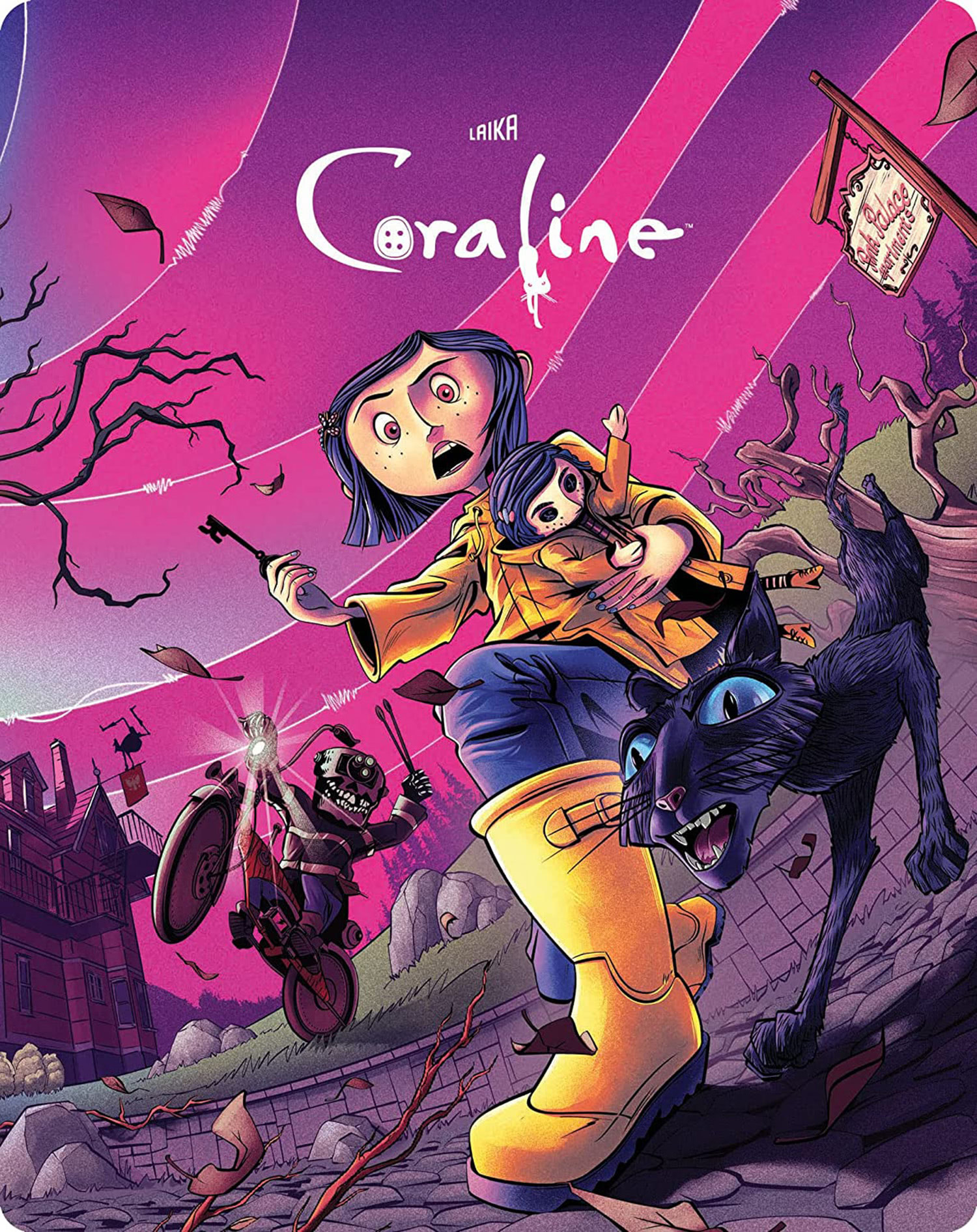
When Henry Selick brought Neil Gaiman's chilling novella to the screen in 2009, Coraline established a new benchmark for stop-motion animation. It proved that children's cinema could embrace genuinely dark, gothic horror without diluting its stakes. At the heart of this modern classic is a trio of standout vocal performances from Dakota Fanning, Teri Hatcher, and Keith David. Without ever sharing a recording booth, these actors anchored a tactile, handmade universe where the mundane slips seamlessly into the monstrous.
Stop-motion animation relies entirely on the actor's vocal track as a structural blueprint long before a single puppet moves under the studio lights. The physical performance gets translated frame-by-frame by animators who study every inflection, pause, and breath. This separation between actor and physical frame creates a unique challenge. The voice work has to carry all the emotional weight, tension, and character evolution on its own.
Dakota Fanning and the Weight of Reluctant Heroism
Coraline Jones isn't your typical cheerful animated heroine. She's moody, perpetually bored, frustrated by distracted parents, and deeply resentful of her dreary new surroundings at the Pink Palace Apartments. Dakota Fanning, who was roughly fourteen years old during recording, gave the character a weary skepticism that avoids sounding whiny.
Fanning balanced youthful curiosity with genuine irritation. When Coraline complains about the persistent rain or her father's bizarre culinary experiments, her delivery feels grounded in real adolescent exhaustion. That grounding is essential for the story's mechanics to work. If Coraline didn't feel like a real, frustrated child, her willingness to open a mysterious small door behind the wallpaper wouldn't feel earned.
As the narrative shifts from mild curiosity to genuine peril in the Other World, Fanning's performance tightens. The initial boredom transforms into sharp survival instincts. She doesn't scream through her adventures; she plots, she questions, and she shows a quiet grit. Her vocal restraint kept the character relatable, ensuring audiences stayed emotionally locked into her terrifying ordeal against the Beldam.
Teri Hatcher and the Anatomy of Maternal Horror
The true genius of Coraline rests on Teri Hatcher's dual performance as both the overworked, stressed real mother and the seductive, chilling Other Mother (the Beldam). Crafting a villain who starts as a comforting, attentive caregiver and slowly curdling into a spider-like predator requires immense vocal control.
In the real world, Hatcher adopted a raspy, distracted tone—a mother fried by deadlines and domestic fatigue. But in the Other World, her voice transforms. It becomes smooth, sweet, and singsong, layered with a faux-maternal warmth that feels just slightly too eager. Listen closely to her delivery during the button-sewing sequence; Hatcher managed to make a mundane domestic offer sound like an inescapable trap.
This duality works because Hatcher never played the Beldam as a cartoon villain from minute one. The terror comes from the slow realization that the warmth is predatory. By the final act, when the facade cracks entirely and her voice grows sharp, metallic, and desperate, the transformation feels complete. It's a masterclass in vocal suspense that terrifies children and unnerves adults to this day.
Keith David and the Mythic Gravitas of the Cat
While Fanning and Hatcher carry the emotional core of the film, Keith David's performance as the nameless black cat provides the narrative's philosophical backbone. Unlike the verbose humans and supernatural entities, the cat speaks in dry, measured observations. He doesn't offer to save Coraline; he simply points out the rules of the strange realm she has stumbled into.
David's deep, resonant baritone brings an ancient, mythic weight to the role. He speaks with an unbothered detachment that suggests he has seen hundreds of Coraline-like children make the exact same mistakes. When he warns her about the Beldam's games, his delivery carries no panic—only the cold, factual certainty of an apex predator who understands magic better than the witches do.
This gravitas anchors the fantasy elements. In a world made of yarn, silicone, and wire, the cat feels eternal. His chemistry with Fanning's vocal tracks—established through alternating recording sessions where they could only react to read-throughs—created a dynamic of reluctant camaraderie that grounds the film's climax.
The Stop-Motion Process Behind the Voices
Translating these vocal performances into Laika's physical puppets required an exhaustive technical pipeline. Animators didn't use motion capture. Instead, they listened to the vocal tracks repeatedly, mapping out the precise syllable timings and emotional cadence before moving any silicone parts.
- Audio Blueprint: Voice actors recorded their dialogue in isolation studios months before animation began, establishing the pacing and emotional peaks of every scene.
- Facial Replacement: Laika utilized rapid prototyping and 3D printing to create thousands of distinct facial plate segments, matching the specific mouth shapes required for Fanning's and Hatcher's syllable deliveries.
- Body Language Translation: Animators studied the vocal intensity to dictate physical traits, such as the slumped posture of real-world Coraline versus the rigid, predatory posture of the Other Mother.
This painstaking synergy means that every subtle sigh or sharp intake of breath recorded in the booth directly shaped how the puppet moved across the screen. You can explore more about stop-motion techniques and Laika's history on Laika Studios.
Common Mistakes When Analyzing Animated Voice Work
Many casual viewers overlook the distinct mechanics of voice acting in animation, often falling into a few common analytical traps.
- Treating voice acting like dubbing: Some assume voice actors simply read lines over completed animation. In high-end stop-motion, the voice comes first, serving as the foundational timeline for the entire visual medium.
- Ignoring vocal subtraction: Great voice acting isn't just about big screams or dramatic monologues. Performances like Fanning's rely heavily on small adjustments—sighs, hesitations, and quiet understatements.
- Underestimating tonal shifts: Hatcher's success proves that a villain's voice doesn't need to be booming or gravelly. Quiet, hyper-attentive sweetness can be far more unsettling than overt aggression.
Frequently Asked Questions
Did Dakota Fanning and Teri Hatcher record their lines together?
No. Like the vast majority of animated features, the actors recorded their dialogue individually in isolation booths. Their interactions were stitched together entirely through the vision of director Henry Selick and the editorial team.
Why did Laika choose stop-motion over CGI for Coraline?
Director Henry Selick and the creators at Laika preferred the tactile, handmade quality of physical puppets. The slight imperfections in the fabric, clay, and silicone give the film a unique, tangible gothic texture that digital animation often struggles to replicate.
Is the cat in Coraline supernatural?
Yes. The cat possesses the unique ability to slip between the real world and the Other World through shimmering boundaries that other characters cannot perceive. He serves as a cryptic guardian spirit rather than an ordinary house pet.
How long did it take to animate the film?
Production on Coraline took roughly four years, with the stop-motion animation phase alone consuming about 18 months. Animators averaged only a few seconds of finished footage per week due to the extreme precision required for the puppets and miniature sets.



