Mathematical constants provide the fixed structural anchor needed to measure, model, and understand a universe governed by constant change. Without these unchanging values, equations would lack stable reference points, and modeling physical phenomena like planetary motion or financial growth would be impossible.
Understanding these values requires looking past simple arithmetic numbers. A mathematical constant is an unchanging value defined by an unambiguous property, appearing naturally across geometry, number theory, and calculus. They link abstract logic to concrete reality, acting as fixed pillars within dynamic systems.
What Defines a Mathematical Constant?
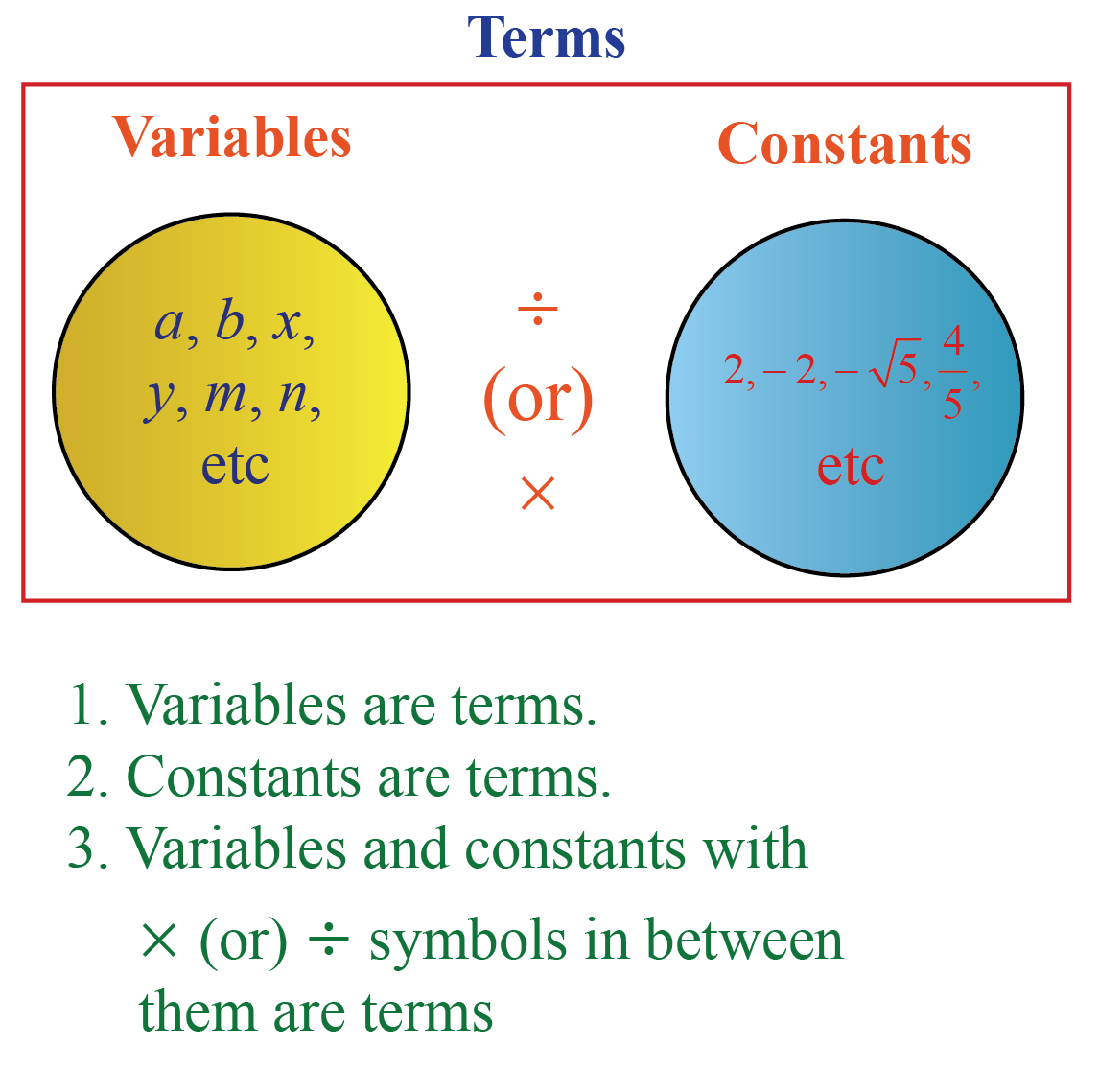
A constant stands apart from standard variables because its value never fluctuates. While variables like $x$ or $y$ shift to represent unknown quantities or changing inputs, a constant maintains a strict, unyielding identity.
These numbers typically emerge from deep structural properties of space, geometry, or arithmetic rather than arbitrary human choices. They fall into distinct categories based on how they behave within equations:
- Algebraic Constants: Numbers that serve as roots of non-zero polynomials with rational coefficients, such as $1$ or the imaginary unit $i$.
- Transcendental Constants: Numbers that are not algebraic, meaning they cannot be the root of any finite polynomial with integer coefficients. Famous examples include $\pi$ and $e$.
- Proportionality Constants: Fixed numeric ratios that scale physical or geometric dimensions proportionally, though their values can depend on the chosen system of units.
The Big Three: Pi, Euler's Number, and the Imaginary Unit
Certain constants dominate mathematics because they govern entire domains of thought. Examining how they function reveals why they remain indispensable.
Pi ($\pi$) and Geometry
Representing the ratio of a circle's circumference to its diameter, $\pi$ is roughly $3.14159$. Its significance stretches far beyond simple circle geometry. Because circles embody rotational symmetry, $\pi$ appears naturally in trigonometric functions, wave mechanics, Fourier analysis, and probability distributions like the Gaussian bell curve. It bridges linear measurements with cyclic phenomena.
Euler's Number ($e$) and Growth
Euler's number, approximately $2.71828$, is the base of the natural logarithm. It governs systems characterized by continuous growth or decay. If you invest money at 100% interest compounded continuously, your growth is dictated by $e$. It surfaces in population dynamics, radioactive decay, and the cooling of objects because the rate of change in these systems is directly proportional to their current size.
The Imaginary Unit ($i$)
Defined strictly as the square root of $-1$, the imaginary unit $i$ unlocks the complex number system. Polynomial equations that have no solutions in real numbers find precise solutions when $i$ enters the equation. Electrical engineers and physicists rely on $i$ to model alternating current circuits, quantum wavefunctions, and fluid dynamics without getting bogged down by multi-variable real equations.
How Constants Stabilize Dynamic Systems
In a dynamic universe, change happens continuously. Differential equations track these changes by relating a function to its rates of change. Constants act as the calibration factors that make these differential equations match physical reality.
Consider population growth modeled by the equation:
$$\frac{dP}{dt} = kP$$
Here, $P$ is population, $t$ is time, and $k$ is a constant growth rate. While the population $P$ changes dynamically every second, the constant $k$ dictates the speed and scale of that change. Without fixed constants embedded in the formulas, predicting weather patterns, orbital trajectories, or economic inflation trends would yield random outputs instead of precise forecasts. You can read more about how mathematical and physical constants interact via resources like Encyclopædia Britannica.
Common Misconceptions About Constants
People often hold misunderstandings about how constants operate in mathematical frameworks. Clearing these up helps clarify their true nature.
- Misconception: Constants are always discovered through physical measurement. While physical constants (like the speed of light) require empirical measurement, true mathematical constants are derived through pure logic, geometry, and set theory.
- Misconception: Constants have a finite, exact decimal representation. Many vital constants are irrational or transcendental, meaning their decimal expansions go on forever without repeating. Writing $\pi$ or $e$ as decimals always involves rounding.
- Misconception: Constants never change across different mathematical geometries. In non-Euclidean geometries, the fundamental properties of shapes shift, meaning relationships involving spatial constants adapt to curved space.
Frequently Asked Questions
Are mathematical constants the same as physical constants?
No. Mathematical constants like $\pi$ or $e$ are abstract, unchanging values rooted in logic and geometry. Physical constants like the gravitational constant or Planck's length describe measurable properties of our specific universe and could theoretically differ in another universe.
Why do transcendental constants appear so often in nature?
Transcendental constants emerge because they describe optimal scaling laws, symmetry limits, and continuous growth patterns. Nature favors efficiency and symmetry, which naturally forces these mathematical limits to the surface.
Can a mathematical constant ever change?
By definition, no. A mathematical constant has a fixed value anchored by an unambiguous definition. If a value changes depending on context or operational rules, it is a variable or a parameter, not a constant.
How many digits of pi or e have been calculated?
Supercomputers have calculated trillions of digits for constants like $\pi$ using advanced algorithms. However, practical engineering and scientific calculations rarely require more than a few dozen decimal places to achieve absolute precision.


