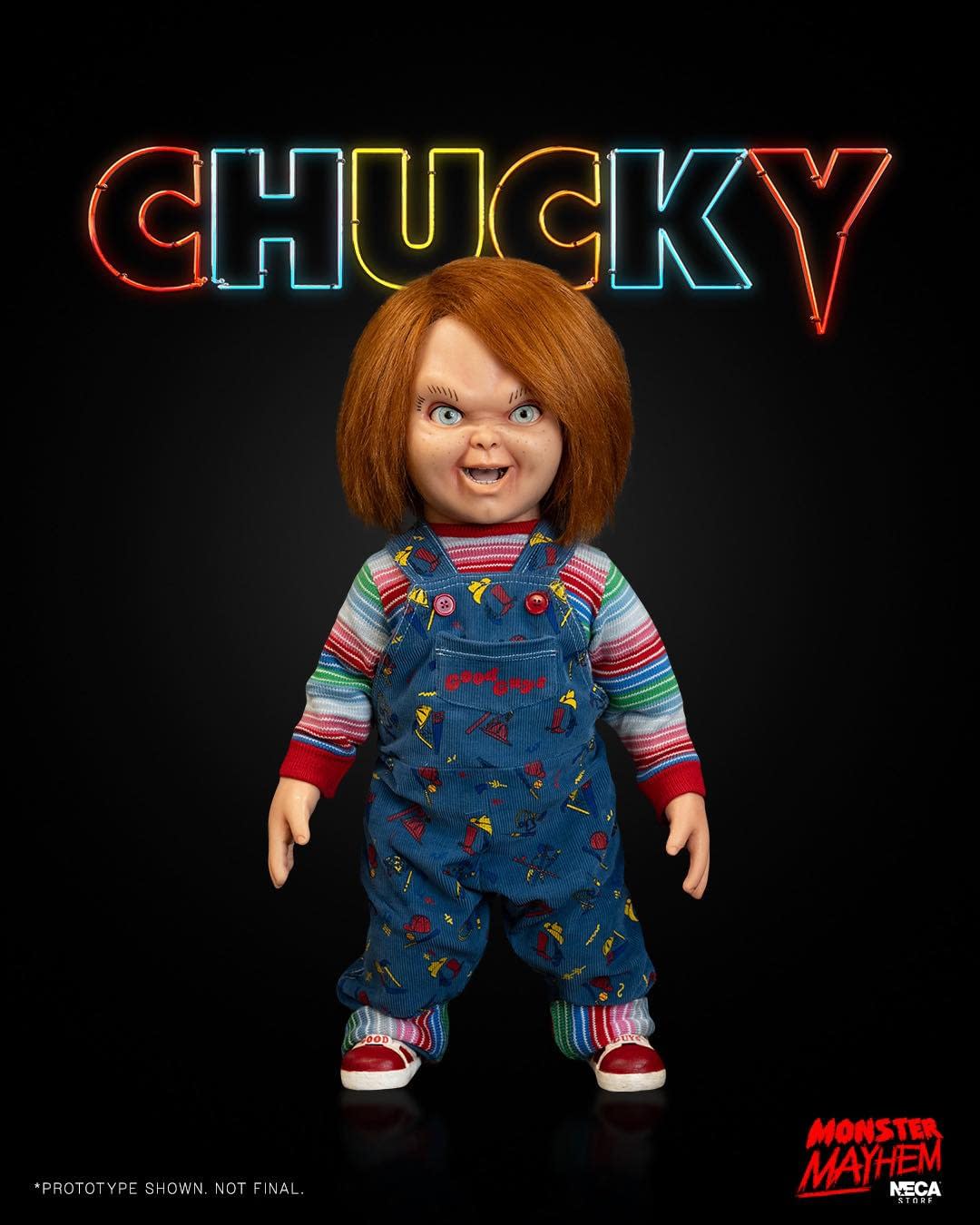
In 1988, a movie about a serial killer's soul possessing a plastic doll hit theaters and shouldn't have worked. Yet Child's Play defied the odds, spawning an enduring franchise that spans multiple sequels, a reboot, and a critically acclaimed television series. Chucky isn't just a horror villain; he's a remarkably adaptable pop culture figure who survived changing cinematic eras by transforming from a straightforward slasher into a self-aware, campy icon.
Understanding Chucky's longevity requires looking past the red hair and striped shirt to examine how horror evolves. While Michael Myers and Jason Voorhees remained stoic, silent forces of nature, Chucky talked back. He cracked jokes, insulted his victims, and leaned heavily into dark humor. That distinct personality turned a standard-issue killer into a beloved anti-hero of horror comedy.
The Origins of Child's Play and the 1980s Slasher Boom
The late 1980s were a crowded marketplace for slasher villains. Franchises like Halloween, Friday the 13th, and A Nightmare on Elm Street dominated the box office. Screenwriter Don Mancini wanted to write a satire on consumerism and the obsession with children's toys, tapping into the real-world frenzy over products like Cabbage Patch Kids.
Originally conceived as a darker thriller titled Batteries Not Included (later Blood Buddy), the story centered on a young boy named Andy Barclay whose new "Good Guy" doll comes to life after being infused with the soul of voodoo-practicing serial killer Charles Lee Ray. Director Tom Holland brought the script to life, relying heavily on practical effects, animatronics, and small actors or stunt performers to make the doll move convincingly on screen.
Unlike other slashers who hunted teenagers in summer camps or suburban neighborhoods, Chucky operated inside the domestic sphere. The horror stemmed from betrayal: the toy children trusted most was actually a sadistic killer. The original film was a modest box office success, grossing over forty million dollars on a nine-million-dollar budget, proving that audiences were hungry for a fresh spin on the subgenre.
The Evolution of Chucky Across Sequels
As the franchise progressed through the 1990s, the tone shifted dramatically. Child's Play 2 (1990) and Child's Play 3 (1991) delivered standard slasher thrills, but the diminishing returns of the traditional formula prompted a creative overhaul.
The turning point arrived with Bride of Chucky (1998), directed by Ronny Yu. This installment fully embraced dark comedy and camp, introducing Jennifer Tilly as Tiffany Valentine, Chucky's equally unhinged former girlfriend who also ends up trapped in a doll. By leaning into self-parody and meta-humor, the franchise avoided the fatigue that killed off many contemporary horror series.
Seed of Chucky (2004) pushed the boundaries even further into absurd Hollywood satire, exploring gender identity and family dynamics through the lens of a killer doll couple and their non-binary child, Glen/Glenda. While polarizing among fans who preferred straight horror, Seed cemented Chucky's status as a queer icon and a master of reinvention.
Return to Roots and Modern Television Success
After two decades of leaning hard into comedy, creator Don Mancini steered the franchise back toward its suspenseful roots with Curse of Chucky (2013) and Cult of Chucky (2017). Released direct-to-video, these entries blended modern digital effects with classic practical puppetry, treating the horror elements with renewed seriousness while maintaining the character's signature snark.
The ultimate validation of Chucky's cultural staying power came with the Chucky television series, which premiered on Syfy and USA Network in 2021. The show allowed Mancini to expand the mythology across multi-episode arcs, exploring teen angst, suburban hypocrisy, and the complicated history of Charles Lee Ray before he became a doll.
The series demonstrated why Chucky outlived most 1980s horror icons. He adapts to the cultural moment, interacting with Gen Z teenagers, navigating modern technology, and commenting on contemporary social issues without losing his anarchic edge. You can read more about the series' production and legacy through coverage on Variety.
Common Misconceptions About the Franchise
Many casual viewers confuse the 2019 Child's Play remake with the main continuity. That film, starring Mark Hamill as the voice of a malfunctioning, AI-driven Buddi doll, was produced without the involvement of Don Mancini or Brad Dourif, the iconic voice of the original character. While an interesting sci-fi take on smart home technology, it exists entirely separate from the canonical universe that Mancini built over three decades.
Another frequent misunderstanding involves the voodoo mythology surrounding Charles Lee Ray. While early films attributed Chucky's animation to Damballa, the franchise eventually treats the magic system with tongue-in-cheek flexibility, focusing more on the psychological torment Chucky inflicts on his victims than strict theological rules.
Frequently Asked Questions
Who provides the iconic voice of Chucky?
Actor Brad Dourif has voiced Chucky in almost every film and television appearance since 1988, earning widespread acclaim for his raspy, maniacal vocal performance. His daughter, Fiona Dourif, also stars in the later sequels and television series.
Is Chucky based on a true story?
No, Chucky is entirely fictional, though Don Mancini drew inspiration from consumer crazes like Cabbage Patch Kids and urban legends surrounding haunted toys like Robert the Doll.
How many official movies are in the franchise?
The main continuity consists of seven feature films (Child's Play through Cult of Chucky), alongside the 2019 remake and the multi-season television series.
Why didn't the 2019 remake feature Don Mancini?
MGM held the rights to the original 1988 film, allowing them to produce a reboot without Mancini's permission. Mancini and producer David Kirschner retained control over the original continuity, continuing the story through the television series.



